By Staff Reporter
RAWALPINDI: Pakistan’s senior military leadership pledged Monday to take “all measures necessary” to secure the country’s water rights under the Indus Waters Treaty, according to a statement from the armed forces’ media wing, as tensions with India over the decades-old water-sharing agreement continue to simmer.
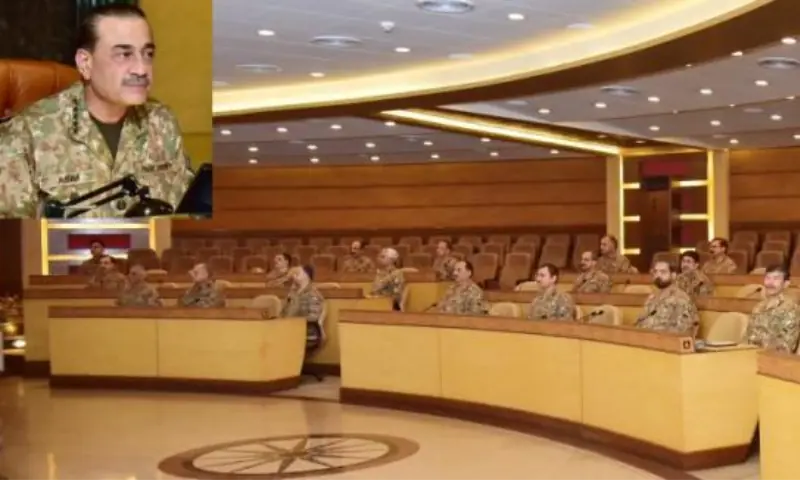
The pledge came out of the 276th Corps Commanders’ Conference, held at General Headquarters in Rawalpindi and chaired by Field Marshal Asim Munir, who holds the dual posts of chief of army staff and chief of defence forces. The Inter-Services Public Relations directorate, the military’s press arm, in a statement said the forum “reaffirmed the guidance” issued in an April 2025 directive from Pakistan’s National Security Committee, which followed New Delhi’s decision that same month to hold the Indus Waters Treaty in abeyance.
India took that step after an attack in occupied Kashmir killed 26 people; Indian officials blamed Pakistan for orchestrating the assault, an allegation Islamabad has repeatedly denied. Pakistan, in turn, has accused India of pursuing reservoir and diversion projects on treaty-governed rivers in violation of the 1960 World Bank-brokered agreement — a claim India has not publicly addressed in detail.
The treaty, one of the most durable water-sharing arrangements between two rival nuclear powers, had survived multiple wars between India and Pakistan since its signing. Its unilateral suspension by India last year marked an unprecedented rupture, and Monday’s statement suggests the dispute remains unresolved more than a year later.
“The forum expressed resolute commitment to undertake all measures necessary to ensure availability of Pakistan’s rightful share of water as per the directives of the government and inspirations of the people of Pakistan,” ISPR statement said.
Militant Threats and Cross-Border Strikes
Much of the closed-door conference, according to the ISPR statement, focused on security threats the military says originate from Afghan territory. Commanders said they had observed a rise in “externally supported hybrid warfare and disinformation campaigns” aimed at destabilising Pakistan, a trend the military dated to the aftermath of last year’s conflict with India, which Pakistani officials refer to as “Marka-e-Haq.”
The forum specifically named two alleged militant networks — one the government calls “Fitna al Khawarij,” its designation for the outlawed Tehreek-i-Taliban Pakistan and associated groups, and another it calls “Fitna al Hindustan,” a term Pakistani officials use for groups they say are backed by India.
Commanders said Pakistan retains the “unequivocal right” to defend its population from terrorism and would continue intelligence-based operations against militant hideouts in Afghan border regions, under an effort designated Operation Ghazab-lil-Haq. That campaign began on the night of February 26, Pakistani officials say, after cross-border fire from Afghan Taliban forces prompted retaliatory strikes.
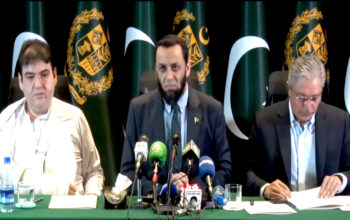
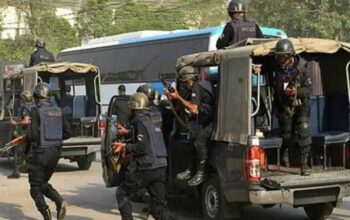
The most recent round of strikes came June 28, following a string of attacks inside Pakistan, including one targeting a paramilitary Rangers facility in Karachi that killed three officers. Pakistan’s information minister, Attaullah Tarar, said the resulting strikes killed 29 militants linked to Jamaatul Ahrar and Tehreek-i-Taliban Pakistan.
“The forum condemned all such forms of state-supported financing, facilitation or sponsorship of proxies and underscored that any attempts to use hybrid means to destabilise Pakistan would continue to be countered with strategic clarity and firm resolve,” ISPR said.
The current cycle of hostilities dates to February, when Afghanistan launched artillery strikes into Pakistani territory, which Kabul described as retaliation for earlier Pakistani air raids on suspected militant camps along the border. That escalation collapsed a ceasefire brokered by Qatar in October, which had briefly halted a previous round of fighting that killed dozens of civilians, security personnel, and militants on both sides. Diplomatic efforts by China, Russia, Qatar, and Turkey to mediate a lasting resolution between Islamabad and Kabul have so far failed to produce one, though the intensity of cross-border clashes has diminished somewhat since the ceasefire’s collapse.
Pakistani officials say they have repeatedly pressed the Taliban administration in Kabul to shut down militant sanctuaries operating from Afghan soil, without success. The Taliban government has not publicly responded to Monday’s renewed accusations.
Kashmir and Regional Diplomacy
The conference also addressed the disputed Kashmir region, with commanders condemning human rights violations and demographic changes in the occupied region and reiterating a long-standing Pakistani position that self-determination for Kashmiris, in line with United Nations Security Council resolutions, is central to lasting regional stability. India has consistently rejected characterisations of its governance in the region as illegitimate and considers the area an integral part of Indian territory.
Separately, commanders credited the government with playing a constructive role in mediating dialogue between the United States and Iran, and reaffirmed Pakistan’s stated commitment to peaceful conflict resolution and international law.
The gathering closed with remarks from Field Marshal Munir, who directed commanders to accelerate work on a “multi-domain transformation plan” and urged continued vigilance across what the military describes as conventional, sub-conventional, and hybrid threats. Commanders also paused to honor members of the armed forces, law enforcement, and civilians killed amid the ongoing violence, calling their deaths foundational to the country’s security and unity.
Copyright © 2021 Independent Pakistan | All rights reserved