By Staff Reporter
ISLAMABAD: Pakistan has opened a quiet, previously unreported channel of mediation between Libya’s rival eastern and western power centers, according to two Pakistani officials familiar with the matter, a role that would mark a striking expansion of Islamabad’s diplomatic reach if it produces results, Reuters reported.
The effort, which the officials said got underway late last year at the request of both Libyan sides, unfolds against the backdrop of a monthslong campaign by the United States to broker a political settlement in a country that has been carved in two since the civil war that followed the 2011 NATO-backed uprising that toppled Muammar Qadhafi.
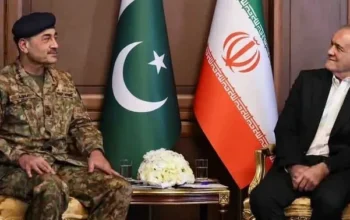
Pakistan’s move into Libyan diplomacy follows on its involvement earlier this year in indirect talks between the United States and Iran, a role that Trump administration officials have credited repeatedly. One of the Pakistani officials said the United States is “fully aware and involved” in Islamabad’s Libya effort — an assessment that, if accurate, suggests Washington sees value in a third-party channel even as its own diplomats pursue a parallel track.
Saudi Arabia is also backing the initiative, according to the officials, who spoke on condition of anonymity because they were not authorised to discuss the matter publicly. Riyadh and Islamabad signed a mutual defence pact last year, part of a broader deepening of security ties between the two countries.
Neither Pakistan’s Foreign Office nor the military’s press wing responded to requests for comment. Officials representing Libya’s eastern and western administrations did not respond either, nor did the foreign ministries of Qatar, Turkey, Saudi Arabia, or the United States.
A country split for more than a decade
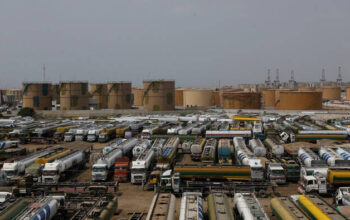
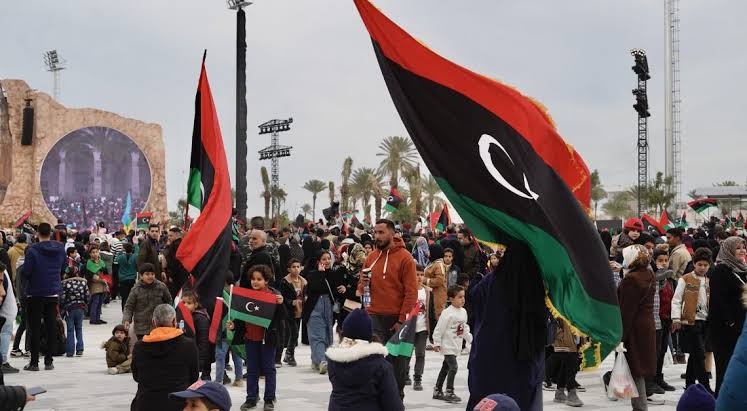
Libya has had no single, functioning national government since 2014, when the country splintered into competing camps: the U.N.-recognized Government of National Unity, based in Tripoli and led by Prime Minister Abdulhamid Dbeibah, and the eastern-based Libyan National Army, under the command of Field Marshal Khalifa Haftar. Successive rounds of internationally brokered talks — including a formal ceasefire in 2020 — have failed to produce a lasting political settlement, and oil-rich Libya remains a proxy battleground for a shifting array of foreign patrons.
Analysts caution that Pakistan enters that arena as a comparatively minor player. The United States, the United Arab Emirates, Turkey, and Egypt have spent years jockeying for influence inside Libya, and Islamabad has nothing like their historical stake in the outcome. But Pakistan does have one asset those larger powers cannot easily claim: working relationships with both Libyan camps.
On the eastern side, Pakistani officials have been pursuing closer defence ties with Haftar’s forces, including discussions over the possible sale of Pakistani-made JF-17 fighter jets and Super Mushak trainer aircraft — a prospective arrangement complicated by the U.N. arms embargo that has applied to Libya since 2011. Reuters reported in December that the two countries had discussed a defence package valued at more than $4 billion, following a visit to Benghazi by Pakistan’s army chief, Field Marshal Asim Munir.
More recently, the western-based unity government has also sought direct engagement with Islamabad, according to a previously unreported document described to Reuters. Two Pakistani officials said Qatar and Turkey — one of the unity government’s most significant international backers — were among those who urged Pakistan to step into a mediating role.
Military diplomacy precedes the political track
The clearest public marker of the deepening relationship came June 24, when Munir met in Rawalpindi with Lieutenant General Saddam Haftar, the deputy commander of the Libyan Arab Armed Forces and son of Khalifa Haftar. The Libyan general was received with a ceremonial guard of honor at General Headquarters, and the two sides discussed regional security and expanded military cooperation, according to a statement issued afterward by ISPR. It was the second meeting between the two men this year, following an earlier session in February.
Days after the Rawalpindi meeting, Haftar travelled to Washington, where he met with Secretary of State Marco Rubio. The State Department said afterward that Rubio welcomed the efforts of Libyan leaders to move past their divisions and reiterated American support for Libyan unity — a carefully calibrated statement that stopped short of endorsing any specific formula for how that unity might be achieved.
According to Reuters, one proposal now under discussion — which one Pakistani official cautioned remains a work in progress — would establish a transitional arrangement lasting 36 months under a newly created Government of National Consensus and Presidential Council. Under that framework, Dbeibah would continue as prime minister while Saddam Haftar would take on the chairmanship of the Presidential Council. The elder Haftar’s faction, which already controls many of Libya’s largest oil fields and other key infrastructure, would be granted authority over the national budget under the proposed terms.
A Pakistani official described Islamabad’s anticipated role as an active one — helping ensure that whatever arrangement is eventually signed actually holds, rather than simply brokering an initial agreement and stepping back.
Skepticism about durability
Libya’s history is littered with agreements that collapsed under the weight of the same disputes — control of security posts, the rules governing elections, and the division of oil revenue — that have defeated past reconciliation attempts. Tarek Megerisi, director of the geopolitical advisory firm Inclusive Peace and Transition, said there is no assurance that a Libya deal, once signed, would prove any more durable than past accords, pointing to a comparable agreement last year between leaders of Rwanda and the Democratic Republic of Congo that has struggled to hold.
Jalel Harchaoui, a Libya specialist affiliated with the Royal United Services Institute in London, said Washington’s own diplomatic push, while intensive, has yet to settle on a clearly defined structure for a settlement.
It remains unclear how closely Pakistan is coordinating its Libya effort with the other governments involved in the file, including the Gulf states and Turkey, whose competing interests have long shaped — and often complicated — the search for a Libyan political settlement.
For Islamabad, the emerging Libya role fits a pattern evident elsewhere this year: a foreign policy establishment eager to translate its relationships across a fractured Middle East into diplomatic capital that would have been difficult to imagine even a few years ago, when Pakistan’s regional influence was measured almost entirely by its dealings with its immediate neighbours.
Copyright © 2021 Independent Pakistan | All rights reserved