By Staff Reporter
ISLAMABAD: Three years into a losing battle against one of the world’s fastest-growing populations, Pakistan’s government has drafted an unlikely ally into the effort: Field Marshal Syed Asim Munir, the country’s top military officer.
Federal Health Minister Syed Mustafa Kamal disclosed Munir’s involvement on Thursday during a joint session of the Senate Standing Committee on National Health Services and the Senate Functional Committee on Human Rights, telling lawmakers that Prime Minister Shehbaz Sharif had personally assembled a high-level committee — with the field marshal as a member — after years of failed efforts to slow the country’s birth rate.
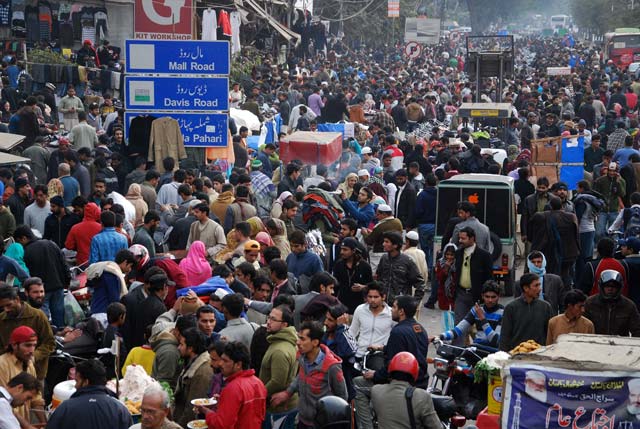
The disclosure came as the committee, jointly chaired by Senators Amir Waliuddin Chishti and Samina Mumtaz Zehri, convened to examine what has become one of the country’s most persistent policy failures. Pakistan is already the world’s fifth-most-populous nation, and demographers project it will overtake Indonesia to become the fourth-most-populous by 2030.
Kamal told the panel that Sharif had called repeated high-level meetings on the issue and that the resulting committee also includes the finance and planning ministers, alongside Munir.
“The government is treating this issue with the highest priority, and important policy decisions are being taken at every level,” Kamal said.
A funding formula under fire
Much of the minister’s testimony centered on an unintended consequence buried inside Pakistan’s fiscal architecture: the National Finance Commission Award, the formula that determines how federal resources are divided among the provinces.
Under the current NFC formula, 82 percent of that distribution is based on population size — meaning, in effect, that provinces are financially rewarded for growing larger and penalised for shrinking.
“If a province succeeds in reducing its population growth, its NFC share declines, whereas a province with a larger population receives more funds,” Kamal told the committee, arguing the incentive structure works directly against the government’s stated goals. He proposed capping the population-linked portion of the formula at 50 percent, down from 82 percent.
The minister also pointed to a more basic obstacle: access. He said limited availability of contraceptives has long been a driver of Pakistan’s high birth rate, and confirmed the government has now granted tax exemptions on contraceptive products to help close that gap. Pakistan records roughly 6.7 million births each year, Kamal said, and he estimated that broader access to family planning services could cut annual population growth by about 1.5 million people.
A constitutional roadblock
Lawmakers on the committee pressed Kamal on a more fundamental question — whether the federal government has any real authority to act at all.
Population welfare was formally devolved to the provinces under Pakistan’s 18th Constitutional Amendment, and Kamal confirmed as much under questioning. Committee members noted that federal policy cannot simply be imposed on provincial governments in a devolved area, complicating any push for a unified national response.
When members called for legislation to address unchecked population growth, representatives from the Ministry of Law told the committee that Parliament lacks the constitutional authority to legislate on matters exclusively assigned to the provinces.
A representative of the Council of Islamic Ideology offered one note of consensus, telling the committee there is no sectarian objection to measures aimed at slowing population growth. The committee subsequently directed the Ministry of Law, religious scholars and relevant parliamentary bodies to begin consultations toward a unified, consensus-based strategy, with another joint meeting expected in the coming days.
Balochistan nursing students left in limbo
The session also surfaced a separate controversy involving a scholarship program that sent 150 students from Balochistan to Islamabad, including 47 admitted to nursing programs at the Health Services Academy.
Senator Jan Mohammad told the committee that the students spent two years studying in Islamabad before discovering that the nursing degree program they had been promised did not exist, and that the diploma they were actually being awarded is not recognized by the Pakistan Nursing Council.
Mohammad said the World Bank had already disbursed 36 million rupees for the program and called for a formal investigation, describing the situation as official negligence and “an injustice to Balochistan.”
Kamal told the committee the matter would be resolved within a week and pledged that the government would not allow the Balochistan students to be treated unjustly. The committee separately directed that the directors general of health and nursing in Balochistan appear before it to account for the failure.
Copyright © 2021 Independent Pakistan | All rights reserved