By Staff Reporter
QUETTA: Pakistani security forces killed nine more militants in Balochistan province in the past day, state media reported on Saturday, pushing the overall death toll in a widening five-day-old military offensive to 88.
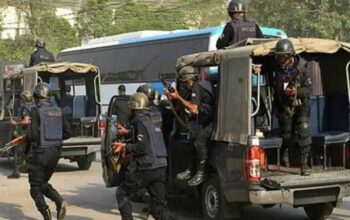
The latest killings brought to 52 the number of fighters slain specifically under Operation Shaban, the joint campaign by the Pakistan Army, the paramilitary Frontier Corps, and provincial police that has pushed into the mountainous interior of the restive southwestern province since July 5. The broader tally of 88 also includes militants killed in separate intelligence-based raids conducted across Balochistan over the same period, according to state-run Pakistan Television, which cited unnamed security sources.
“Operation Shaban continues across Balochistan as the Pakistan Army, Frontier Corps and police intensify coordinated air and ground operations against terrorist hideouts,” the broadcaster said in a post on the social media platform X, attributing the account to security sources. “The operation will continue until the last terrorist is eliminated,” it added.
The offensive was launched after gunmen stormed a police post at the Mangi Dam pumping station in Ziarat district, touching off a mass-casualty attack that has come to define the current wave of violence in Balochistan. Security officials say the assailants killed nine police officers, including two station house officers, in the initial assault, then abducted 18 additional officers at gunpoint. The bodies of the abducted men were later recovered in the Zarghoon Gar mountains, according to security sources.
The tallies reported by Pakistani authorities have risen in stages over the past week and have not been independently verified. State-run Radio Pakistan reported Friday that 79 militants had been killed since July 5; by Saturday, state media put the cumulative figure at 88. Casualty figures in the operation have been supplied exclusively by security sources and have not been confirmed by an independent body.
Balochistan Chief Minister Sarfraz Bugti said Friday that a separate attack, this one targeting a police station in the Zedi area of Khuzdar district, had been thwarted earlier that morning. “The writ of the state will be maintained in Balochistan at any cost; terrorists cannot escape their fate,” Bugti said.
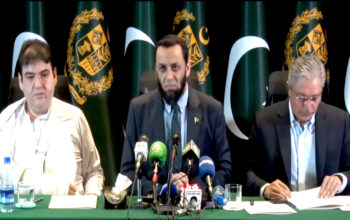
The scale of the crackdown reflects mounting pressure on Islamabad after a string of attacks in Balochistan in recent days left 42 people dead, including security personnel and civilians, according to security sources. Prime Minister Shehbaz Sharif traveled to Quetta on Thursday to chair a meeting of the Provincial Apex Committee on the National Action Plan, Pakistan’s central counterterrorism policy framework, alongside Chief of Defence Forces and Chief of the Army Staff Field Marshal Asim Munir.
“One thing is decided: it is a mutual and singular decision of the civil and military leadership that we must end terrorism collectively,” Sharif told the committee, describing the resolve to confront the militant threat as shared across Pakistan’s civilian government and armed forces.
The Ziarat attack that precipitated the offensive drew a detailed public accounting from the military earlier in the week. Lieutenant General Ahmed Sharif Chaudhry, director general of Inter-Services Public Relations, the armed forces’ media wing, said Wednesday that militants he described as India-backed had attacked the checkpoint but were met with fierce resistance. Police killed 15 militants in the initial engagement, Chaudhry said, even as nine officers were killed and others were taken hostage before reinforcements arrived.
Pakistani officials have attributed the current campaign of violence to Fitna al-Khawarij, the government’s designation for militants linked to the outlawed Tehreek-i-Taliban Pakistan, which Islamabad alleges receives backing from India. Indian officials have repeatedly and publicly denied supporting militant groups operating inside Pakistan, and the claim of Indian sponsorship has not been independently substantiated.
The violence in Balochistan is unfolding against the backdrop of a longer deterioration in security across Pakistan’s western frontier. Attacks in Balochistan and the neighbouring province of Khyber Pakhtunkhwa have surged since 2021, when the Taliban returned to power in neighbouring Afghanistan. Islamabad has responded with its own cross-border campaign, Operation Ghazab lil-Haq, which Pakistani authorities say has killed scores of Afghan Taliban fighters and allied militants in strikes targeting camps it says are staged from Afghan territory.
Tensions between the two governments escalated further in October 2025, when fighting broke out along the Pakistan-Afghanistan border after what Pakistani officials described as unprovoked attacks by Afghan Taliban forces and allied fighters on Pakistani border posts. More than 200 Taliban fighters and allied militants were killed in the clashes, according to Pakistani accounts, while 23 Pakistani soldiers were killed defending the posts.
Repeated rounds of talks between Islamabad and the Taliban government in Kabul have failed to produce a lasting agreement, a stalemate Pakistani officials attribute to the Taliban’s unwillingness to act against militant groups operating from Afghan soil. Afghan officials have disputed that characterisation. For now, security sources in Quetta say, the operation in Balochistan is expected to continue without a fixed end date, its scope determined by the military’s own assessment of when militant networks in the province’s interior have been dismantled.
Copyright © 2021 Independent Pakistan | All rights reserved