By Staff Reporter
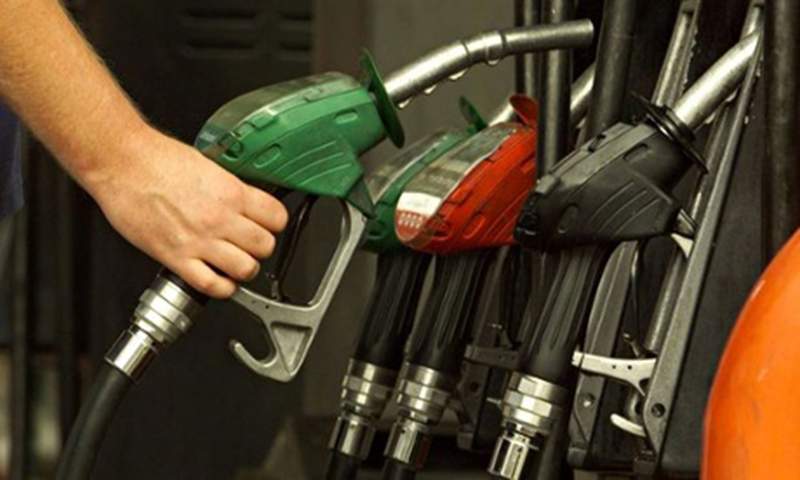
ISLAMABAD: Pakistan raised petrol and diesel prices on Friday, reversing a brief reprieve from the previous week, as renewed fighting between the United States and Iran pushed global crude prices toward their sharpest weekly gain in months.
The Petroleum Division said in a notification that petrol would rise by 13.18 rupees a litre to 310.71 rupees, while high-speed diesel, the fuel that powers much of Pakistan’s freight and agricultural machinery, would increase by 13.80 rupees to 323.30 rupees. The new prices take effect on Saturday and will remain in place for one week.
The increase erases the modest relief consumers received a week earlier, when the government cut both fuels by 1.97 rupees a litre. It marks the latest swing in a pricing cycle that has gripped Pakistan since war broke out between the United States, Israel and Iran on Feb. 28, a conflict that has repeatedly rattled oil markets and forced Islamabad to revise domestic fuel prices on a weekly basis.
Prices for both fuels remain well below the peaks reached on April 3, when petrol touched 458.41 rupees a litre and diesel hit 520.35 rupees, the highest levels on record. Both had climbed sharply from pre-war levels of 266 rupees and 281 rupees, respectively, in the first week of March, before easing as fears of a prolonged shutdown of Gulf shipping lanes receded.
RENEWED STRIKES REVIVE SUPPLY FEARS
The latest increase follows a fresh escalation this week, after Iranian forces struck U.S. military installations in Gulf states on Thursday in response to American strikes on Iran’s southern coastal and eastern provinces. The exchange has delayed a full reopening of the Strait of Hormuz, the narrow waterway that before the war carried about 20% of the world’s daily oil and gas supplies.
Brent crude was down 52 cents, or 0.68%, at $75.78 a barrel by 1735 GMT on Friday, while U.S. West Texas Intermediate fell 83 cents, or 1.15%, to $71.25, as traders weighed hopes that shipping through Hormuz would eventually resume. Even so, both benchmarks remained on course to close the week sharply higher, extending a rally that began with the latest round of U.S.-Iran hostilities.
Pakistan imports the bulk of its oil and calculates domestic fuel prices using the average international price over each review period, along with the rupee’s exchange rate, freight costs and applicable taxes, rather than reacting to day-to-day swings in crude markets.
TAX BURDEN ADDS TO PUMP PRICES
A significant share of the pump price reflects government levies. Under conditions attached to Pakistan’s International Monetary Fund programme, the government doubled its climate support levy to 5 rupees a litre from July 1, while trimming the petroleum levy by a corresponding amount.
The petroleum levy on diesel now stands at about 80 rupees a litre. Combined with a 16-rupee customs duty, the climate support levy and an inland freight equalisation margin, total taxes on diesel amount to roughly 101 rupees a litre.
Petrol carries a petroleum levy of about 70 rupees a litre in addition to the climate support levy, with total taxation, including a 20-rupee customs duty, reaching about 95 rupees a litre. The government also levies about 21 rupees a litre on kerosene and 16 rupees a litre on light diesel oil.
Petrol and diesel remain the government’s largest sources of fuel-tax revenue, with combined monthly sales of roughly 700,000 to 800,000 tonnes, dwarfing kerosene’s monthly demand of about 10,000 tonnes.
IMPACT ON HOUSEHOLDS AND INFLATION
The price increases are likely to be felt widely across the economy. Petrol is used mainly in motorcycles, rickshaws and small private vehicles, making it a significant expense for middle- and lower-middle-income households that rely on it for daily commuting.
Diesel’s reach extends further into the broader economy. It fuels trucks, buses, trains and agricultural equipment including tractors, tube wells and threshers, and its price is widely regarded as a key driver of inflation. Higher diesel costs typically feed through to transport charges for goods, pushing up the price of vegetables and other food staples across the country.
Copyright © 2021 Independent Pakistan | All rights reserved