By Staff Reporter
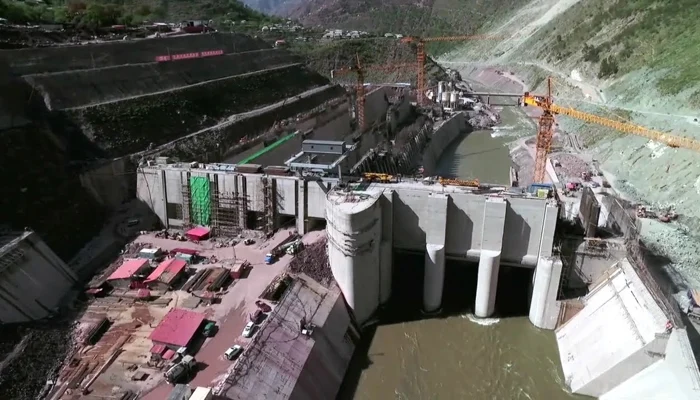
ISLAMABAD: Neelum-Jhelum Hydropower Project, one of the country’s most expensive power installations, will remain offline until at least March 2028 — nearly four years after a tunnel collapse forced its shutdown — as the state utility overseeing the plant works to determine what caused the failure and how to fix it.
The disclosure came Friday from Lieutenant General Muhammad Saeed (retired), chairman of the Water and Power Development Authority, in testimony before the Senate Standing Committee on Water Resources. The more than 500 billion-rupee plant, known as NJHPP, has sat idle since April 2, 2024, when a tunnel supplying water to its turbines collapsed.
Saeed told lawmakers that investigations into the collapse are ongoing, and that seismic-risk assessments flagging the project’s location had been on record before construction began. He said Wapda remains committed to restoring the facility and expects generation to resume within roughly 20 months.
Despite the setback, Saeed characterized the project as a success overall, telling the committee it has already recovered about 80% of its construction cost through the cheaper electricity it supplied before the shutdown.
The hearing, chaired by Senator Jam Saifullah Khan, also produced a second disclosure: Wapda has absorbed a loss of roughly 23 billion rupees ($80 million) after the original contractor on the Nai Gaj Dam project in Sindh province submitted a fraudulent bank guarantee in 2009. Wapda terminated the contract and blacklisted the contractor, and the matter is now before Pakistan’s Supreme Court. The committee backed the ministry’s handling of the case and pressed for the dam’s completion, noting it is designed to irrigate roughly 28,000 acres once finished.
Senator Saifullah told ministry officials the committee would back a transparent, independent inquiry into both the cause of the tunnel collapse and the cost overruns that have accompanied the Neelum-Jhelum project, framing the review as a matter of accountability for future infrastructure spending.
A Deepening Water Crisis
The tunnel collapse and its costly aftermath unfolded against a broader warning from Wapda’s chairman: Pakistan, already ranked among the world’s most water-stressed nations, has not completed a major dam since the Mangla and Tarbela projects more than 50 years ago. By contrast, Saeed noted, India has built thousands of dams — large and small — over the same period. He told the committee the country faces an increasingly acute water shortage in the decades ahead absent a shift in investment.
That shortage is already visible underground. The committee heard that groundwater levels are falling beyond sustainable thresholds across several districts in Punjab’s agricultural heartland — including Okara, Vehari, Sahiwal, Multan and Lahore — driven by overextraction for irrigation. Lawmakers called on authorities to adopt international best practices for groundwater conservation and more efficient irrigation methods to protect the resource while sustaining farm output.
Provincial officials painted an uneven picture of how the crisis is being tracked and managed:
- In Sindh, irrigation authorities said roughly 80% of the province’s groundwater is saline, and that a provincial groundwater law is currently being drafted. Saifullah asked the provincial government to submit the draft to the committee for review.
- Khyber Pakhtunkhwa officials said no comprehensive groundwater assessment has been conducted in the province, citing a lack of piezometer installations needed to monitor water tables.
- In Balochistan, authorities reported that annual groundwater extraction now exceeds available supply, producing a deficit across 18 groundwater basins. Officials outlined plans to expand monitoring, build recharge dams, and deploy GIS-based decision-support systems to manage the shortfall.
Funding Gap
The committee also reviewed the status of several other water projects, including the Hingol and Harpo dams, the Kachhi Canal, and the RBOD-I and RBOD-III drainage schemes, along with broader waterlogging and drainage issues.
In a closing review of Public Sector Development Programme allocations for the current fiscal year, lawmakers voiced concern over what they described as a significant funding shortfall for water and power projects — underscoring the gap between the scale of Pakistan’s water infrastructure needs and the budget currently earmarked to meet them.
Copyright © 2021 Independent Pakistan | All rights reserved