By Staff Reporter
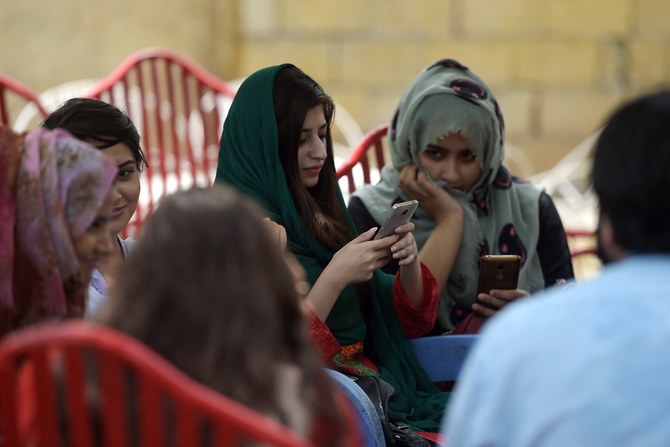
ISLAMABAD: Pakistan has recorded the fastest reduction in its mobile internet gender gap of any country tracked globally, according to the government, narrowing the divide between men’s and women’s usage from 38 percent in 2024 to 8 percent this year.
Shaza Fatima Khawaja, the minister for information technology and telecommunication, presented the figures on Monday at the ninth Organisation of Islamic Cooperation ministerial conference on women, held in Islamabad, telling delegates that Pakistan now had “the fastest closing gender digital divide in the world.”
“In 2024, when I took office, we were at a 38 percent gender digital divide. In 2025, it came down to 25 percent,” Khawaja said. “The 2026 report shows that we’re down to eight percent of gender digital divide in mobile internet usage.”
The proportion of Pakistani women using mobile internet has risen from 33 percent to 45 per cent over the past two years, she added — a figure that appears to capture data up to 2025, since separate industry research puts current usage higher still.
That industry research, compiled independently by the GSMA, the trade body for mobile network operators, corroborates the broad trend. Its Mobile Gender Gap Report 2026, published last month, found Pakistan’s divide narrowed from 25 percent in 2024 to 8 percent in 2025, as women’s mobile internet use climbed from 45 percent to 53 percent while men’s usage held roughly steady. The GSMA identified Pakistan as the strongest performer among the 14 low- and middle-income countries it surveyed.
A narrower gap in usage, a wider one in ownership
The improvement in usage, however, sits alongside a starker and less-publicised statistic: Pakistan retains the widest gender gap in mobile phone ownership of any country in the GSMA survey. Some 93 percent of Pakistani men own a handset, against 68 percent of women — a 25-point gap that dwarfs the usage gap Khawaja highlighted.
The distinction matters because access is not the same as ownership. The GSMA found that 28 percent of Pakistani women who use mobile internet do so entirely on someone else’s phone, typically a husband’s, father’s or brother’s, compared with just 4 percent of men. Daily internet use among women who own their own internet-enabled handset stands at 94 percent; among those reliant on a shared device, it falls to 48 percent, with almost a third saying the arrangement limited how much they could go online.
Nighat Dad, founder of the Digital Rights Foundation, a Lahore-based advocacy group, has argued that shared access curtails women’s privacy and autonomy rather than eliminating the divide. Women who borrow a phone often avoid searching for health information or reporting harassment because their activity is visible to the device’s owner, she has said, describing the pattern as “digital dependence” rather than digital inclusion.
The GSMA report also found literacy and digital skills were the most commonly cited barrier to internet use among Pakistani women who were aware of mobile internet but did not use it, reported by 40 percent of respondents. Pakistan was the only country in the survey where social norms ranked as the second-most-cited obstacle, with 23 per ent of women citing family disapproval, against 14 percent of men.
Government programmes behind the shift
Khawaja attributed the narrowing usage gap in part to state intervention. The government has distributed 10mn free mobile phone connections to women nationwide, she said, alongside a push to bring women onto digital financial platforms. A further 900,000 women opened digital wallets this year alone, she told the conference, building on more than 800,000 wallets created during a Ramadan digital payments drive earlier in the year and roughly 7mn free SIM cards issued to underserved women, according to figures the ministry disclosed in April.
The minister has previously linked the digital-inclusion push to a broader economic goal: formalising Pakistan’s informal sector, which she has said accounts for roughly half of gross domestic product. The effort is coordinated in part through the Digitalisation for Women Economic Empowerment project, a four-year programme running to 2028 that is funded by the Korea International Cooperation Agency and overseen by a steering committee the ministry chairs from the UN Women country office in Islamabad.
Pakistan’s gains against a wider global backdrop
Pakistan’s reported progress stands out against a global picture of slow, uneven improvement. The GSMA’s 2026 report found women across low- and middle-income countries remain 12 percent less likely than men to use mobile internet, leaving an estimated 810mn women offline worldwide, against 595mn men. More than two-thirds of those women live in Sub-Saharan Africa and South Asia, where the gender gap in mobile internet adoption stands at 26 percent and 25 percent respectively — among the widest of any region.
Claire Sibthorpe, the GSMA’s head of digital inclusion, said on the report’s release that “there has been a slow narrowing of the mobile gender gap since 2022, [but] much more is needed,” warning that the spread of artificial intelligence tools risked widening digital inequality further unless more women secured affordable, independent access to mobile internet. The GSMA estimates that closing the internet gender gap across low- and middle-income countries could add $1.3tn to their combined GDP by 2030.
Conference sets wider agenda
The figures were presented at a two-day gathering that drew delegates from 57 OIC member states to Islamabad on July 12 and 13, under the theme “Socio-Economic and Political Empowerment of Women in the OIC Countries: Challenges and the Way Forward.” The conference was structured around three sub-themes: women’s political and professional participation, their access to economic resources and financial systems, and efforts to bridge gender gaps in technology.
The meeting was scheduled to conclude with the adoption of an “Islamabad Declaration,” intended to set a shared framework for advancing women’s empowerment across OIC states, and with Pakistan formally assuming the conference’s two-year chairmanship from Egypt. The gathering followed the previous ministerial conference, held in Cairo in 2021.
Copyright © 2021 Independent Pakistan | All rights reserved