By Staff Reporter
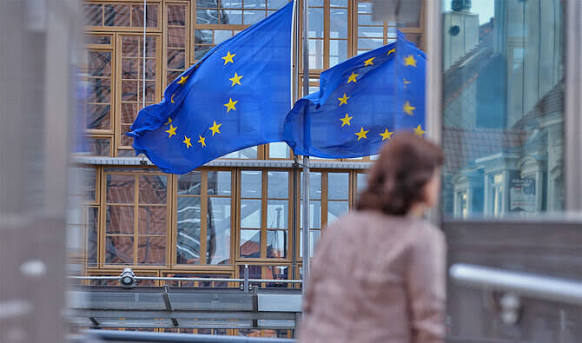
ISLAMABAD: The European Union said on Thursday that Pakistan had regressed in several areas of human rights over the past two years despite a series of legislative reforms, and warned that Islamabad must address the shortcomings to retain preferential access to European markets under a revised trade scheme due to take effect in 2027.
The warning was contained in the European Commission’s latest report on the implementation of its Generalised Scheme of Preferences Plus, or GSP+, covering the 2023-2025 monitoring period. The report, jointly published with the EU’s High Representative for Foreign and Security Policy, is the final assessment under the current GSP regulation before a more stringent framework takes hold.
“During the 2023-2025 monitoring period, Pakistan has been facing compliance issues with its GSP+ obligations,” the report said. “It has regressed in a number of areas while positive change was limited.”
GSP+ grants developing countries duty-free access to the European market in exchange for implementing 27 international conventions covering human rights, labour rights, environmental protection, climate action and governance. Pakistan has been among the largest beneficiaries of the scheme since joining in 2014.
The Commission said Pakistan’s continued eligibility beyond 2027 would hinge on measurable progress in areas where concerns have persisted.
“To ensure further GSP+ eligibility and compliance with international commitments, including in view of the revised GSP rules as of 2027, key priorities for future engagement include: ensuring accountability for human rights violations; increased efforts against torture; prison and capital punishment reforms; reversing negative developments in relation to enforced disappearances and violations of freedom of expression,” the report said.
Under the revised framework, all existing beneficiaries — including Pakistan — will be required to reapply for preferential status and demonstrate compliance with tightened sustainability and governance standards.
LEGISLATIVE GAINS, LIMITED IMPACT
The Commission’s country assessment, contained in an accompanying Staff Working Document, acknowledged a number of legislative measures adopted during the reporting period. These included the establishment of a National Commission for Minorities, a narrowing of the scope of the death penalty, the continuation of a de facto moratorium on executions, implementing rules under the Anti-Torture Act, a Domestic Violence Bill for the Islamabad Capital Territory, and the country’s first conviction for marital rape.
It also credited Pakistan’s National Strategy on Technology-Facilitated Gender-Based Violence, ratification of an International Labour Organization protocol on forced labour, and reforms narrowing the application of capital punishment. The National Commission for Human Rights, the report said, had emerged as an important institution in advancing the country’s human rights obligations.
But the Commission cautioned that these steps remained largely procedural. “Most progress is of legislative and administrative nature and needs to be translated into real improvements on the ground,” it said.
DISAPPEARANCES, PRESS FREEDOM UNDER SCRUTINY
The report said significant concerns persisted around the rule of law and civil society space, noting that enforced disappearances and extrajudicial killings had increased without accountability for perpetrators.
It devoted extensive attention to the issue of enforced disappearances, saying cases continued to rise, particularly in Balochistan and Khyber Pakhtunkhwa, while Pakistan’s Commission of Inquiry on Enforced Disappearances had failed to secure accountability. The Commission also criticised the continued absence of legislation specifically criminalising the practice.
Rights groups have repeatedly accused Pakistani security agencies of forcibly disappearing political activists, ethnic Baloch campaigners and other critics — allegations the government has consistently denied.
On press freedom, the Commission said conditions had deteriorated despite the adoption of legislation intended to protect journalists. It said members of the media faced intimidation, harassment and violence, along with strategic lawsuits against public participation, or SLAPPs, aimed at preventing journalists and lawyers from carrying out their work.
The report pointed to amendments to cybercrime, anti-terrorism and blasphemy legislation — including the Pakistan Electronic Crimes Act, known as PECA — saying vague provisions on hate speech, defamation, terrorism and false news had created a chilling effect on dissidents, journalists, human rights defenders and religious and ethnic minorities. Those found in violation, it said, risked imprisonment, asset confiscation or restrictions on foreign travel.
Pakistani officials have defended the PECA amendments as necessary to counter misinformation, online harms and threats to national security.
JUDICIARY AND POLITICAL RIGHTS
The Commission also raised concerns over recent constitutional amendments, which it said had drawn criticism for undermining judicial independence and compounding existing weaknesses in fair trial guarantees and access to justice.
“Latest constitutional amendments have… raised concerns about the impact of such reforms on the independence of the judiciary, accountability of the military, and respect for the rule of law,” the report said.
The Commission said its findings had been shaped in part by persistent complaints over the integrity of Pakistan’s 2024 electoral process, measures taken against opposition figures and supporters, and what it described as further increased military influence.
“Political rights are negatively affected among others by abusive judicial proceedings, and detention of opposition supporters and leaders, including of a former prime minister, with concerns in terms of fair trial and detention conditions, including in relation to access to lawyers, visitors and medical assistance,” the report said.
It also found that military trials in Pakistan fell short of international standards, stating they did not meet the requirements of Article 14 of the International Covenant on Civil and Political Rights, which guarantees the right to a fair and public hearing before an independent, impartial and competent tribunal, along with adequate legal representation.
MINORITIES, LABOUR AND MIGRATION
The report flagged continuing discrimination against religious minorities, particularly the Ahmadi community, along with persistent violence against women and children, high numbers of out-of-school children, child marriage, child labour and prison overcrowding.
It also urged Pakistan to strengthen protections for migrants and refugees following the country’s Illegal Foreigners Repatriation Plan, under which more than two million Afghan nationals have been sent back to Afghanistan since late 2023. The repatriation drive has drawn criticism from the United Nations and rights organisations; Islamabad has said it is necessary on security and immigration grounds.
On labour rights, the Commission welcomed Pakistan’s ratification of the 2014 ILO Protocol to the Forced Labour Convention and an expansion of labour inspection mechanisms, but said enforcement remained weak. Forced labour, it said, continued to affect large numbers of workers, and child labour was declining only gradually despite new provincial action plans.
The report additionally acknowledged Pakistani efforts to strengthen social protection programmes, advance prison reforms, introduce measures against gender-based violence, expand education initiatives and improve institutional human rights mechanisms.
TRADE STAKES
The findings carry significant economic weight. Pakistan is the largest beneficiary of the EU’s GSP+ arrangement. EU imports from Pakistan totalled 9.4 billion euros in 2022, before falling to 7.9 billion euros in 2023 amid weaker European demand, and recovering to 8.3 billion euros in 2024, according to the report. A separate Commission figure put Pakistan’s 2024 exports to the EU at 7.5 billion euros, or $8.7 billion.
The EU remains Pakistan’s largest export market, accounting for 28 percent of the country’s total exports. Textiles and clothing make up between 70 and 76 percent of Pakistani exports to Europe.
Around 90 percent of Pakistan’s exports to the EU were eligible for GSP+ preferences during 2022-2024, the report said, with utilisation averaging 93 percent and rising to 95 percent in 2024. The Commission estimated Pakistan benefited from approximately 732 million euros in tariff exemptions last year alone, equivalent to roughly 9 percent of its exports to the bloc.
LOOKING TO 2027
The Commission said Pakistan’s performance on environmental protection, climate action and sustainable development — alongside its human rights and governance record — would remain subject to regular monitoring under the revised GSP framework once it takes effect in 2027.
“It is vital to ensure accountability for human rights violations to counter the prevailing sense of impunity,” the report said.
Copyright © 2021 Independent Pakistan | All rights reserved