By Staff Reporter
ISLAMABAD: The government is preparing contingency plans to shield the economy from a new round of turmoil in the Middle East, as an intensifying exchange of fire between the United States and Iran unravels a ceasefire that Islamabad helped broker just last month.
Prime Minister Shehbaz Sharif told senior officials on Thursday that regional instability could once again threaten a fragile recovery, ordering ministries to prepare for renewed pressure on fuel supplies and prices even as he described the domestic economy as currently stable.
The warning came hours after Iran and the US traded intensified strikes for a tenth consecutive day, marking the most serious breach yet of the Islamabad Memorandum of Understanding, a Pakistan-mediated truce signed on June 17 that had briefly paused hostilities between the two countries.
The US carried out waves of air strikes on early Thursday targeting sites near Iran’s southern coast, the heaviest single-day bombardment since the truce took hold. Iran retaliated with missile and drone strikes against American military installations in neighboring countries, including a large-scale barrage aimed at a recently expanded US air base in Jordan.
The renewed hostilities have again disrupted traffic through the Strait of Hormuz, the corridor through which roughly a fifth of the world’s oil and gas trade passes, sending global energy prices higher and reviving fears of a broader supply shock.
Government Signals Preparedness, Not Panic
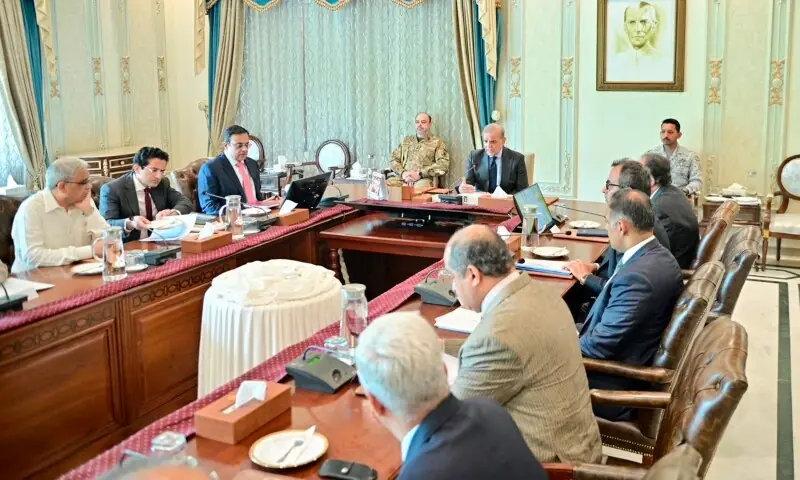
Chairing a high-level review of the economic fallout from the fighting, Sharif struck a measured tone, saying Pakistan’s economy remained on stable footing but that authorities needed to move quickly if conditions worsened.
“There are concerns that escalating tensions in the region could negatively affect the country’s economy in the future,” Sharif said, according to a statement from the Prime Minister’s Office. He directed officials to draft a comprehensive contingency plan that would allow for swift action should the regional crisis deepen.
Officials briefed the prime minister that Pakistan currently holds sufficient petroleum reserves to cover domestic demand, and that steps have already been taken to secure future supplies. Sharif credited the government’s response to an earlier bout of regional tension — triggered by fighting between the US and Iran earlier this year — with keeping fuel markets under control, saying subsidies had cushioned the impact of price increases on motorcyclists, rickshaw drivers and transport operators.
He also directed authorities to coordinate with provincial governments to crack down on parties attempting to engineer artificial shortages of petroleum products, a recurring concern during past periods of supply anxiety.
Austerity Drive Could Return
Sharif used the meeting to revive language from earlier this year, when Islamabad introduced temporary austerity measures — including curbs on non-essential official travel and reduced government operations — in response to the initial shock from US-Iran hostilities and their impact on global shipping and energy costs.
“Just as the public fully supported the previous austerity campaign, we must adopt the same spirit of austerity at the national level,” Sharif said, thanking citizens for their cooperation with the government’s earlier fuel and energy conservation drive, which he described as a meaningful contribution to the country’s economic resilience.
The meeting was attended by Federal Ministers Ahad Khan Cheema, Muhammad Aurangzeb, Ali Pervaiz Malik and Awais Khan Leghari, Minister of State Bilal Azhar Kayani, Special Assistant to the Prime Minister Tariq Bajwa, State Bank of Pakistan Governor Jameel Ahmad, and other senior officials.
Truce Under Strain
The flare-up threatens to derail a diplomatic process that had positioned Pakistan as an unlikely broker between Washington and Tehran. The Islamabad MoU, signed last month, had been designed to guide the US and Iran toward a comprehensive settlement within 60 days of its signing.
Pakistan’s Foreign Office said Thursday it continues to press both sides to step back from the conflict. Spokesperson Tahir Hussain Andrabi told a weekly briefing in Islamabad that Islamabad remains committed to its mediating role despite the setback.
“While the implementation of the MoU is facing challenges, Pakistan will continue to encourage all sides to end violence and resume technical-level talks in accordance with the MoU,” Andrabi said.
Andrabi pushed back on any suggestion that Pakistan had stepped back from its diplomatic efforts, saying the government was closely tracking developments and remained convinced that negotiation, rather than continued military action, offered the clearest path out of the crisis.
“We express the hope for an early normalisation of the situation in the Strait of Hormuz and underscore the importance of ensuring the continued safety, security and freedom of maritime navigation,” he said.
Copyright © 2021 Independent Pakistan | All rights reserved