By Staff Reporter
ISLAMABAD: Pakistan’s Foreign Office renewed its appeal on Thursday for the United States and Iran to halt their exchange of strikes and return to the negotiating table, acknowledging for a second consecutive week that the fragile peace framework it helped broker is coming under mounting strain.
Speaking at the ministry’s weekly briefing, spokesperson Tahir Andrabi said implementation of the Islamabad Memorandum of Understanding — the agreement signed by Washington and Tehran on June 17 with Pakistan serving as principal mediator — is “facing challenges,” a diplomatic understatement for what has become the most serious breakdown in the accord since it was signed a month ago.
“Pakistan will continue to encourage all sides to end violence and resume technical-level talks in accordance with the MoU,” Andrabi told reporters, reaffirming the position Islamabad has held since the deal’s implementation began to falter.
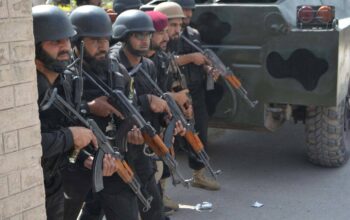
The briefing came as American and Iranian forces continued to trade fire for a sixth straight day. US warplanes struck Iranian coastal defence installations and missile sites, while Iran answered with retaliatory attacks on American military positions in Bahrain, Jordan and Kuwait — a pattern of escalation that has drawn Gulf states directly into a conflict many had hoped was cooling.
“As hostilities have continued over the past week, Pakistan reiterates its call on all parties to exercise maximum restraint and refrain from any actions that would further undermine peace and stability,” Andrabi said, adding that Islamabad remains convinced there is “no alternative to sustained engagement, dialogue and diplomacy” in achieving lasting stability in the region.
The spokesperson pointed to Pakistan’s own foundational role in the peace process, describing the June accord as an “enduring framework for promoting peace, mutual respect and shared prosperity,” and insisted that history offers no alternative to negotiated settlements. “All conflicts and disputes are resolved through dialogue at the negotiation table,” he said.
A deal already showing cracks
The Islamabad MoU was, by any measure, one of the more improbable diplomatic achievements of the year — a framework hammered out after direct talks in Switzerland and formally signed by President Trump and Iranian President Masoud Pezeshkian on June 17, with Trump putting his signature to the document from Versailles, France, during a dinner with French President Emmanuel Macron following the G7 summit. Pezeshkian signed in Tehran hours later.
The agreement called for an end to hostilities, a 60-day window for toll-free commercial passage through the Strait of Hormuz, and the beginning of a longer negotiating track meant to resolve the thorniest disputes between the two countries, chief among them Iran’s nuclear program and the question of who controls passage through the strait.
It did not last. Just over a week after the ink dried, Iran struck a commercial vessel transiting Hormuz, an act Washington treated as a violation of the truce and answered with strikes of its own. The cycle repeated through the following weeks, each round of violence chipping away at what had briefly looked like a durable peace. By last week, President Trump had declared the ceasefire “over,” even as he left open the possibility that negotiators might continue talking.
Andrabi’s remarks on Thursday reflected Pakistan’s determination to keep that door from closing entirely, even as the ground beneath the agreement continues to shift. The Foreign Office has emphasised in recent days that its mediation efforts have not lapsed, and Andrabi rejected any suggestion that Islamabad has stepped back from the process, saying the country’s diplomatic engagement is ongoing.
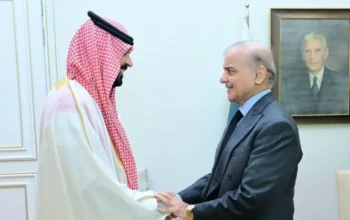
He noted Prime Minister Shehbaz Sharif’s July 10 phone call with the Qatari emir, during which the two leaders agreed on the importance of sustained diplomatic engagement — one of several conversations Pakistani officials have held this month with regional counterparts as part of what the Foreign Office describes as continued outreach to “key interlocutors across the region in support of our efforts in de-escalation, dialogue and peaceful resolution.”
Strait of Hormuz emerges as central flashpoint
Much of the renewed fighting has centred on the Strait of Hormuz, the narrow waterway between Iran and the Arabian Peninsula through which roughly a fifth of the world’s oil and gas shipments passed before the war began. Iran announced Sunday that it had closed the strait to shipping; the United States responded by reimposing the naval blockade of Iranian ports that had been lifted under the June agreement. Between the closure and the military operations now underway in and around the strait, transit through one of the world’s most critical shipping corridors has slowed to a fraction of its prewar volume.
Andrabi underscored what he called the “importance of ensuring the continued safety, security and freedom of maritime navigation” through the strait, and said the disruption is inflicting real economic damage well beyond the immediate combatants.
“Many countries, particularly those in the Global South, are being adversely affected by the situation in the Strait of Hormuz,” he said, adding that Pakistan “recognises the urgent need to address the impact of the current situation on global energy supplies and other economic commodities, including trade and food security.” He expressed hope for “an early normalisation” of conditions in the waterway.
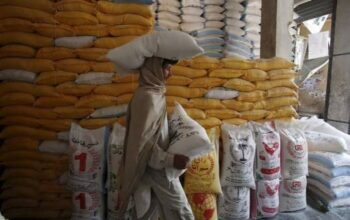
The economic consequences have already reached Pakistani consumers directly. The government raised prices for petrol and high-speed diesel by more than 13 rupees on July 10, a hike tied to the broader run-up in global crude prices. Oil markets have continued climbing since; Brent crude touched a four-week high this week, with traders citing the reimposed blockade and the intensifying exchange of strikes as the principal drivers of the increase.
A process built, then strained, in Islamabad
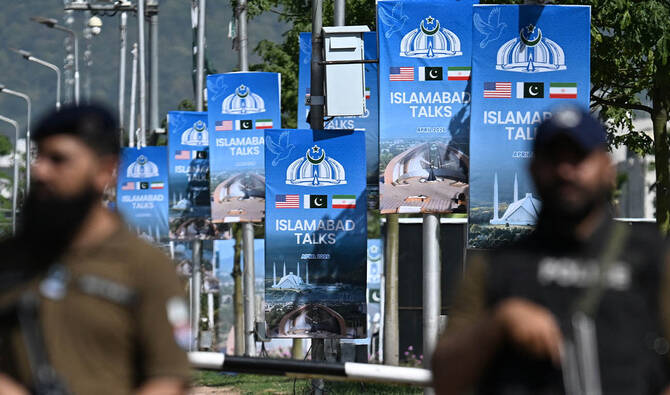
Pakistan’s role as mediator between Washington and Tehran has been, by regional standards, an unusual one — the product of monthslong shuttle diplomacy that began after the war’s outbreak in late February and culminated in direct negotiations hosted in Islamabad in April, followed by the June signing. Qatar has served alongside Pakistan as a co-mediator, and the two countries issued a joint statement on June 20 following the Switzerland talks that laid out the terms under which both governments hoped hostilities might end for good.
That framework is now the subject of open dispute. Whether it can be salvaged — or whether the current round of strikes marks its effective end — remains, as of Thursday, an open question that Pakistani officials are not yet prepared to concede.
Copyright © 2021 Independent Pakistan | All rights reserved