By Staff Reporter
ISLAMABAD: A South Korean state-owned power producer has taken its grievances over two long-delayed hydropower projects in Pakistan directly to Prime Minister Shehbaz Sharif, warning that a $1 billion investment now risks being shelved after nearly a decade of preparatory work.
Korea South-East Power Co. — a unit of Korea Electric Power Corp. and known as KOEN — told Sharif in a letter that its plans for two run-of-the-river plants on the Swat River in Khyber Pakhtunkhwa have cleared every procedural hurdle Pakistan’s regulatory framework requires, only to stall at the final step: a tariff determination that Nepra, the national power regulator, has withheld for three years.
The company’s chief executive officer, Kim Min Young, described the situation in terms that read more like appeal than complaint. “We write to you today with the greatest respect, and with candour, because we no longer know where else to turn,” Kim wrote, according to a copy of the letter reported by Dawn newspaper on Thursday.
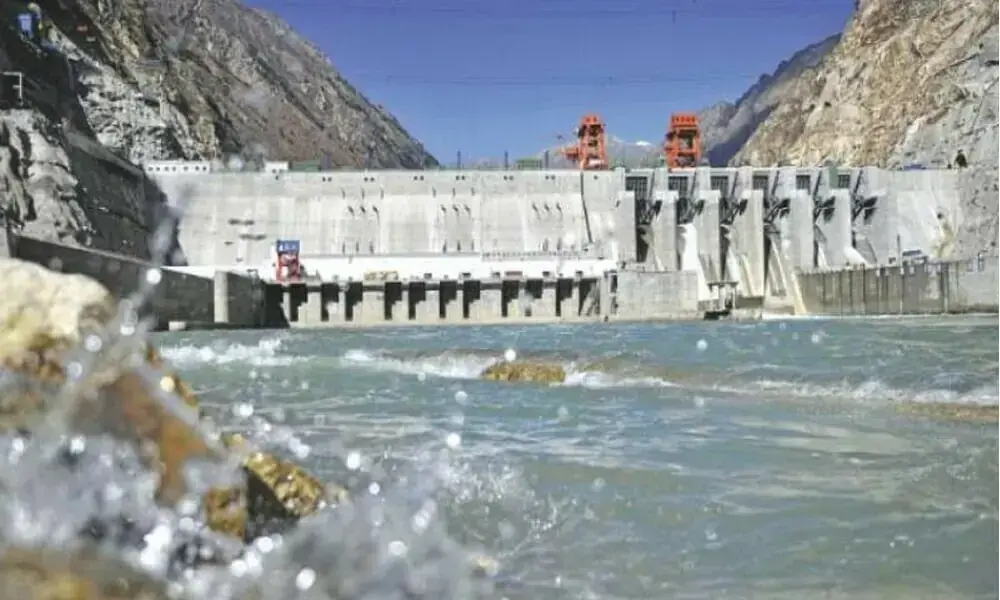
KOEN has been developing the 229-megawatt Asrit Kedam and 238-megawatt Kalam Asrit projects since 2016, targeting combined output of 467 megawatts for an investment of roughly $1 billion. The firm has already committed about $25 million to on-the-ground work, Kim said.
A Timeline of Compliance, and Delay
The letter lays out a sequence the company argues shows sustained good faith on its part. KOEN signed a memorandum of understanding with the Khyber Pakhtunkhwa government in 2017, secured letters of intent from the Pakhtunkhwa Energy Development Board, and has kept performance guarantees active continuously, with the latest extension running to June 2027. Both projects were folded into Pakistan’s Indicative Generation Capacity Expansion Plan for 2022 to 2031, and the company obtained its generation license from the National Electric Power Regulatory Authority in June 2023.
What has not arrived, Kim said, is a tariff. Nepra admitted KOEN’s tariff petition in June 2023 and held a public hearing that July 17. Pakistan’s own regulatory framework — Rule 16 of the Nepra Tariff Standards and Procedure Rules of 1998 — sets a four-to-six-month window for such determinations to be issued.
“Three years have now passed since that hearing, and the tariff has still not been determined,” the letter states.
KOEN said it escalated the matter through Nepra’s own channels before turning to Sharif’s office. The company appealed to the Nepra Appellate Tribunal in June 2024, and the tribunal directed Nepra the following month, on July 23, to resolve the tariff question. That order remains unenforced two years later, according to the letter.
When a draft version of Pakistan’s next capacity plan, covering 2025 to 2035, omitted both projects, KOEN said it lodged formal objections at Nepra’s public hearing and filed detailed follow-up comments in May. A Nepra spokesperson, responding to queries, said the projects had not been “optimised” within the draft plan and remained “pending for consideration.”
Diplomatic Channels, Same Result
The company said it has also pursued the issue through diplomatic and ministerial channels. South Korea’s trade minister raised the projects with Pakistan’s commerce minister in April, and the commerce minister met a KOEN delegation on June 30. The company said it kept Pakistan’s foreign ministry apprised throughout and credited the ministry with supporting its case.
“Every one of these doors received us with courtesy,” Kim wrote. “Not one has produced the decision.”
Investment at Risk as Capacity Plan Nears Approval
The company’s appeal has taken on new urgency because the draft 2025-2035 capacity plan — which excludes both Swat River projects despite their inclusion in the prior plan — is expected to be approved soon. KOEN warned that approval without the two projects would leave its $1 billion investment stranded indefinitely.
“After nearly 10 years of effort, we feel helpless, and we believe the investment is now in real danger,” the letter said.
KOEN said it recognizes Pakistan’s current surplus generation capacity and does not intend to add to it prematurely, offering to align the projects’ commercial operation dates with the country’s actual power needs. Its request to Sharif, the company said, is narrower: a determined tariff, and continued treatment of both projects under the Power Generation Policy of 2015, the framework under which it made its original investment decision.
The dispute surfaces as Islamabad and Seoul work to deepen economic ties. Commerce Minister Jam Kamal Khan and South Korean Trade Minister Yeo Han-koo agreed in May to advance talks on a Comprehensive Economic Partnership Agreement and broaden investment cooperation, building on a formal negotiation process the two sides launched in January 2025 when Jam Kamal and then-counterpart Inkyo Cheong signed a joint declaration to begin talks.
Copyright © 2021 Independent Pakistan | All rights reserved