By Staff Reporter
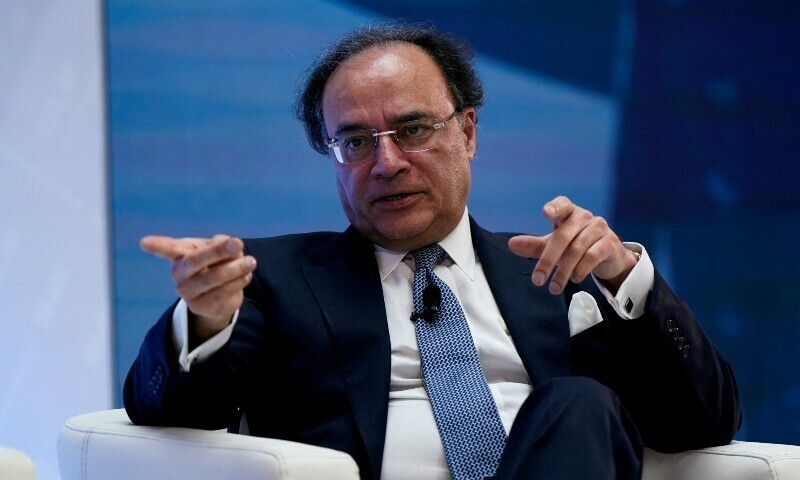
ISLAMABAD: Pakistan will push to expand its currency swap arrangement with China beyond its current 30 billion yuan ceiling when the facility comes up for renewal in 2027, Finance Minister Muhammad Aurangzeb said, as the South Asian nation works multiple fronts to shore up foreign exchange reserves still stretched thin by years of external borrowing.
Aurangzeb said the full 30 billion yuan line — roughly $4.2 billion — has already been drawn down entirely, though the government has not yet settled on how much more it will request when the facility expires. He described recent discussions with his Chinese counterpart and the People’s Bank of China governor as encouraging but preliminary.
“They were open to it, but there is a process which has to be followed,” Aurangzeb told Reuters. “We do plan to make a formal request at the time of the renewal.”
The swap line is one piece of a broader financing strategy that has left Islamabad courting Beijing, Gulf capitals and Washington simultaneously — a balancing act Aurangzeb dismissed as untroubled by competing loyalties.
Separately, Aurangzeb said he expects Washington to respond within two months to Pakistan’s request for a $10 billion exchange stabilization facility, a proposal running alongside parallel talks with the Export-Import Bank of the United States and the US International Development Finance Corporation.
EXIM financing would likely back Pakistan International Airlines’ purchase of Boeing aircraft, now that the carrier has completed privatization. DFC support, meanwhile, is being eyed for a $5 billion initiative to modernize the country’s aging oil-refining infrastructure.
Asked whether pursuing capital from both Washington and Beijing at once carried diplomatic risk, Aurangzeb characterized it as complementary rather than contradictory.
“China has been a long-standing strategic partner for us,” he said, “and we have very good, at the leadership level now, understanding and relationship with the Trump administration. We are very fortunate to have this kind of relationship with both important economic and superpowers.”
Oil-Price Risk Looms Over Growth Target
Aurangzeb also addressed the fallout from elevated crude prices tied to the latest round of Middle East hostilities, saying Pakistan had weathered the initial shock from US and Israeli strikes on Iran without major disruption — but warned that the path ahead is murkier.
“If this conflict goes into, unfortunately, November or December, you know, this is something which will be an area of concern for us,” Aurangzeb said, cautioning that an extended standoff could jeopardize the government’s 4% growth target for the fiscal year.
The country has secured enough oil stocks to cover consumption through September and is well-positioned for October, according to Aurangzeb, who said an institutionalized monitoring mechanism is now reviewing supply conditions daily. Officials have already begun planning for November import needs.
Despite the energy-price uncertainty, Aurangzeb said Islamabad has no intention of seeking additional financing from the International Monetary Fund or requesting emergency support beyond its existing program.
“As of now, our considered view is that it’s manageable,” he said.
An IMF mission is scheduled to arrive next week to conduct the fourth review of Pakistan’s $7 billion Extended Fund Facility program, alongside the third review of its Resilience and Sustainability Facility. Aurangzeb expressed confidence heading into the talks.
“From our perspective, we are in good stead with the quantitative benchmarks, and we are largely compliant with the structural benchmarks,” he said.
Copyright © 2021 Independent Pakistan | All rights reserved