By Staff Reporter
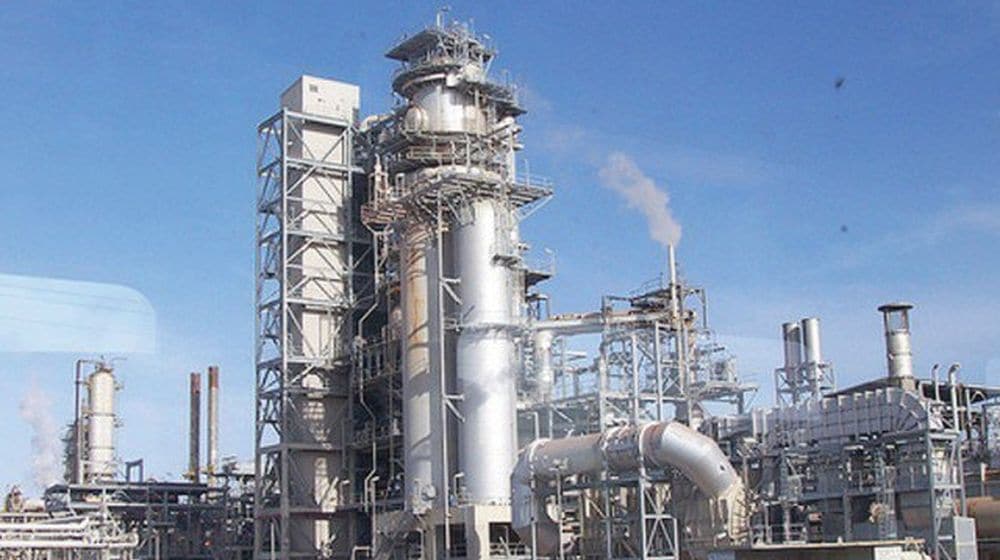
ISLAMABAD: Pakistan approved a long-delayed overhaul of its oil refining industry, clearing the way for roughly $6 billion in investment to modernize aging plants and reduce the South Asian nation’s dependence on imported fuel.
Prime Minister Shehbaz Sharif signed off on amendments to the Pakistan Oil Refining Policy 2023 at a meeting of the Cabinet Committee on Energy on Tuesday, ending six years of regulatory limbo that had stalled upgrade plans across the country’s refining sector. The revised framework, known as the Brownfield Refining Policy, will govern the modernization of Pakistan’s five existing refineries and supersedes all prior refining policies.
Sharif told the committee that implementation must proceed without delay, according to a statement from the Prime Minister’s Office. He directed ministries and regulators to move quickly while staying in close contact with industry stakeholders, and instructed officials to organize investment roadshows in Saudi Arabia, Qatar and other Gulf states to promote the policy to potential backers.
“Upgradation of oil refineries is an important need of the time and is a key pillar of Pakistan’s comprehensive energy security system,” Sharif said, according to the statement. He added that modernized refineries would help reduce reliance on imported fuel while supplying cleaner-burning products domestically.
The policy targets a sharp shift in Pakistan’s fuel output. Petrol production would climb 72% to 18,400 tons a day from 10,700 tons currently, while diesel output would rise 39% to 29,520 tons a day from 21,240 tons, under the government’s projections. Furnace oil production — a lower-value byproduct that Pakistan’s refineries have long produced in excess — would fall 63% to 5,714 tons a day from 15,417 tons.
Refineries will be required to upgrade to Euro-V emissions standards, which cap sulfur content in gasoline and diesel at 10 parts per million, down from the 150 ppm and 350 ppm ceilings under Euro-III specifications. State-run Pakistan State Oil became the country’s first fuel retailer to adopt Euro-V standards in 2020.
Tax Breaks, Escrow Accounts
The policy’s fiscal package centers on a seven-year window of tariff protection. Refineries will receive a minimum 10% customs and regulatory duty on imported petrol and diesel, alongside deemed-duty protection of 10% on gasoline and 2.5% on diesel — funds that flow into jointly managed escrow accounts with the Oil and Gas Regulatory Authority at National Bank of Pakistan for use exclusively on upgrade projects. A 7.5% deemed duty on diesel will persist for 20 years after the initial incentive period, or until deregulation, whichever comes first.
Refineries importing new equipment can draw up to 27.5% of total project costs from their escrow accounts, while those using secondhand machinery are capped at 24.5%, with withdrawals released against verified project milestones. Equipment imported for upgrade projects will be exempt from sales tax, and disallowed sales tax tied to petroleum’s exempt status will continue to be reimbursed through the government’s Inland Freight Equalisation Margin pool through the 2026 fiscal year.
Refineries must sign binding upgrade agreements with Ogra within 90 days of the policy’s notification to qualify for the incentives. Companies with outstanding government dues on petroleum or climate levies will be barred from the benefits until they reach a formal settlement.
Analysts See Upside
Topline Securities called the amendments a positive catalyst for listed refiners, singling out Pakistan Refinery Ltd., National Refinery Ltd. and Attock Refinery Ltd. as beneficiaries.
The brokerage said the policy had effectively stalled after the Finance Act 2024 moved major petroleum products from a zero-rated to an exempt sales tax category, undercutting project economics by blocking refiners from claiming input tax credits on capital spending. The Finance Act 2026 partially fixed the problem by exempting imported plant and machinery from sales tax, and Tuesday’s amendments supply the remaining policy certainty refiners need to move ahead with upgrade agreements, according to the brokerage.
The clarity follows months of government signaling on energy security. Finance Minister Muhammad Aurangzeb told Reuters in an April 14 interview that supply disruptions tied to the conflict in the Middle East underscored the need to accelerate strategic reserve planning. Pakistan and Kuwait subsequently agreed in May to explore cooperation on strategic storage capacity, following talks between Petroleum Minister Ali Pervaiz Malik and Kuwait’s ambassador to Islamabad.
Sharif also directed regulatory reforms at Ogra aimed at improving transparency and competition in the energy sector, and called for an expansion of the country’s strategic petroleum reserves.
Pakistan’s refining capacity currently stands at 450,000 to 500,000 barrels a day, or 21 million to 23 million tons annually, and could rise to roughly 33 million tons a year by 2035 following the planned upgrades, according to industry estimates. The country spent 4.4 trillion rupees, or roughly $16 billion, on fuel imports last year, with the bulk sourced from the United Arab Emirates, Saudi Arabia, Kuwait and Qatar.
Disputes arising from the new policy will be resolved through an Islamabad-based arbitration tribunal, while a standing committee of the petroleum, finance and law secretaries will address implementation issues as they arise.
Copyright © 2021 Independent Pakistan | All rights reserved