By Staff Reporter
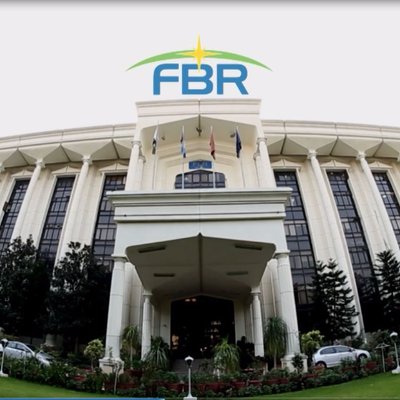
ISLAMABAD: Pakistan’s Federal Board of Revenue collected Rs816 billion in July, beating its monthly target by Rs36 billion in a start to the fiscal year that officials say was buoyed by stronger sales tax intake and the release of vehicles held up at ports.
The net collection compares with a target of Rs780 billion for the period and Rs756 billion a year earlier, an increase of 8%, according to provisional figures from the tax authority. Gross collection totalled Rs914.7 billion before refund payments of Rs98.6 billion were deducted.
One senior FBR official said Friday night that net collection for the month could still rise to about Rs820 billion once final tallies are complete.
The result offers an early signal of momentum for a tax authority under heightened scrutiny from the International Monetary Fund, which has made approval of the program’s sixth loan tranche contingent on Pakistan hitting its first-half revenue target. Provincial governments have separately pledged more than Rs1 trillion in grants to the federal government for defence and water projects, a commitment tied to the FBR reaching its full-year goal.
The FBR is aiming to collect Rs15.264 trillion for the fiscal year, a target approved by parliament that would require growth of about 17% over the Rs13.01 trillion collected in the prior year, after revision. The government has told the IMF it expects more than two dozen tax measures to generate an additional Rs1.02 trillion in revenue. Officials project nominal economic growth of 12.2%, combining real GDP expansion of 4% and inflation of 8.2%, would on its own lift tax revenue to Rs14.567 trillion — leaving a gap of roughly Rs700 billion that new measures and enforcement will need to close.
Sales tax collection was the standout performer, totalling Rs360 billion against a target of Rs305 billion, a gain of 18% from a year earlier that broke a pattern of shortfalls in that category. Officials attributed part of the strength to rising energy prices, which pushed up inflation and lifted the value of goods subject to the general sales tax. Imports accounted for Rs275 billion, or about 78%, of total sales tax collected, underscoring the extent to which the government continues to rely on border-stage levies that are harder to evade than domestic collection.
A budget-law change requiring sales tax to be assessed at market price rather than at the factory gate for a range of items also contributed to the higher take, though the shift has disrupted the value-added tax chain that previously applied at each stage of production.
Income tax was the weak spot, with collection of Rs308 billion falling short of a Rs323 billion target and running roughly flat against the same month last year. FBR officials attributed part of the shortfall to advance payments collected in June, when the government revised its target downward for a third time, pulling forward revenue that would otherwise have been booked in July. Reduced withholding tax rates on property transactions and salaried income, introduced in the budget, also weighed on collection.
Federal excise duty brought in Rs48 billion, modestly ahead of a Rs47 billion target and close to last year’s level. Customs duty totaled Rs105 billion, matching its target exactly and edging above the year-earlier figure. The clearance of roughly 12,000 vehicles that had been stuck at ports also supported the month’s overall collection.
Taken together, import-stage collection made up more than half of total taxes gathered in July, a concentration officials have flagged as reflecting where enforcement is easiest rather than a broadening of the domestic tax base.
The FBR also logged about 227,000 income tax returns in July after new return forms were uploaded to its website earlier in the week.
To meet its first-quarter target of Rs3.053 trillion by Sept. 30, the FBR has set collection goals of Rs930 billion for August and Rs1.343 trillion for September — a steep ramp-up from July’s total that will test whether the month’s momentum can be sustained.
Copyright © 2021 Independent Pakistan | All rights reserved