By Staff Reporter
LAHORE: Lahore is preparing to welcome back its famous Basant festival for a second consecutive year, with Punjab Chief Minister Maryam Nawaz Sharif confirming the kite-flying celebration will take place from 12 to 14 March 2027.
The announcement, made in a post on X on Tuesday, follows what the chief minister described as a triumphant revival of the festival last year, when it returned after an 18-year absence from the city’s cultural calendar.
“Lahore will once again come alive with colour, culture, festivity, music, energy and legendary hospitality,” Sharif wrote, framing the event as a celebration for young people across the province and the country.
She extended a particular welcome to those living abroad. “To our overseas Pakistanis and international guests, mark your calendars and come home to the warmth, colours and festivities of Lahore,” she said, urging residents and visitors alike to “come together, create memories, and make Lahore shine with your energy and spirit.”
The revival marks a significant cultural shift for Punjab, which imposed a ban on Basant in 2007 after the festival became associated with a rising toll of deaths and serious injuries. Sharp kite strings, often coated with glass or metal to give competitive advantage in kite duels, proved lethal for motorcyclists and their passengers travelling beneath rooftops where the festival was celebrated. Celebratory gunfire, another feature of the festivities, compounded the danger.
The ban stood for nearly two decades until the Punjab government moved in December 2025 to lift it, doing so under the framework of the Punjab Kite Flying Ordinance, 2025, which introduced strict new regulations governing how the festival could be celebrated.
The ordinance handed police significant powers to enforce the rules, granting officers of sub-inspector rank and above the authority to make arrests and conduct searches without a warrant, provided they act on credible information.
Further regulations followed in May this year, when the Punjab government set out detailed rules for how kite-flying would be permitted during the 2027 festival. At that time, Punjab Information Minister Azma Bokhari had indicated the celebrations would take place in February, a timeline that has since shifted to March.
The rules introduced represent one of the most tightly controlled versions of the festival in its history. Rooftop celebrations, long a centrepiece of Basant, now come with explicit restrictions: running, jumping and hanging over the edges of rooftops are completely prohibited. Overcrowding has also been outlawed, with the regulations stipulating that the number of people on any rooftop must not exceed its safe load-bearing capacity at any given time.
Event organisers now carry direct responsibility for managing crowd sizes at their premises, while separate provisions target noise pollution, banning loud music, DJ systems and other high-decibel sound equipment that could disturb public order.
The regulations also address public conduct more broadly, prohibiting behaviour that causes nuisance, harassment, obscenity or indecency, or which disturbs neighbours and the wider public. Such conduct, under the new rules, would be treated as an offence under Sections 290, 292-A and 509 of the Pakistan Penal Code.
Safety provisions extend to medical preparedness, with the rules mandating that first aid kits be available and accessible at every premises where kite-flying takes place. Responsibility for accidents or breaches of the regulations falls jointly and individually on building owners and event organisers, according to the framework.
Basant Panchami, the festival’s formal name, marks the fifth day of the lunar month of Magh and has traditionally celebrated the arrival of spring, anticipated prosperity in crops, and good fortune. Its roots in Lahore trace back to the 19th century, when Maharaja Ranjit Singh established an annual Basant fair and incorporated kite flying as a central feature of the celebrations.
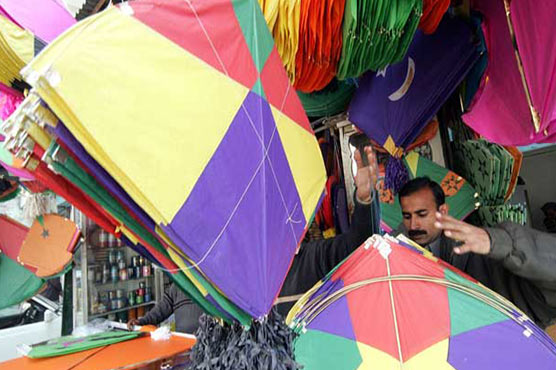
Kite flying and Basant became inseparably linked in the years that followed, with Lahore emerging as the festival’s regional heartland, a status the city retains today even as the celebration is marked across Punjab, including on the Indian side of the border, and, in time, more broadly across the country. During the festival itself, kites of every colour, shape and size fill the skies above the city, launched from rooftops throughout Lahore.
Copyright © 2021 Independent Pakistan | All rights reserved