By Staff Reporter
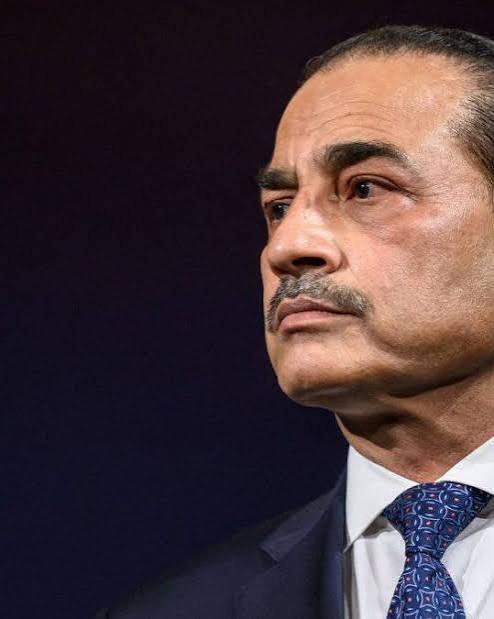
ISLAMABAD: Pakistan’s army chief, Field Marshal Asim Munir, will travel to Tehran on Monday for talks with senior Iranian officials, according to a statement from Iran’s foreign ministry, in the latest sign that Islamabad is trying to keep alive a fragile diplomatic channel between Washington and Tehran even as the two governments show little appetite for direct talks.
The visit was confirmed Sunday by Iranian foreign ministry spokesperson Esmaeil Baghaei, who told reporters in Tehran that the trip was “in line with Pakistan’s ongoing good offices to contribute to the reinforcement of peace and stability in the region.” Iran’s state-run IRNA news agency carried Baghaei’s remarks. He said Munir would meet with senior Iranian officials during the visit but did not name them in advance.
The announcement followed a telephone call early Sunday between Munir and Iranian Foreign Minister Abbas Araghchi. The Iranian government, in a post on its official social media account, said the two discussed “regional developments and effective ways to strengthen peace, stability and security in West Asia.”
Two Pakistani government officials, speaking on condition of anonymity because they were not authorized to discuss the matter publicly, said Islamabad and Tehran have been in direct contact and that Monday’s talks would likely touch on the latest U.S. sanctions threat, a recent security agreement among Pakistan, Turkey, and Saudi Arabia, and tensions involving Houthi forces in Yemen.
Pakistan has positioned itself as a mediator between the United States and Iran since the countries’ conflict escalated earlier this year, and it helped broker an interim agreement in June — known as the Islamabad Memorandum of Understanding — that set a 60-day window, extendable by mutual consent, for the two sides to negotiate a permanent settlement covering Iran’s nuclear program and the lifting of U.S. sanctions. That window has come and gone without a final deal, and the war has settled into an uneasy standoff: airstrikes have stopped, but so, largely, has diplomacy.
A threatened sanctions escalation
Munir’s trip follows US Treasury Secretary Scott Bessent announcement that Washington intends to impose what he has called the toughest sanctions in the country’s history against Iran, and has pressed China — which purchases more than four-fifths of Iran’s oil exports, according to 2025 figures from the analytics firm Kpler — to join the pressure campaign. Beijing has so far resisted, calling instead for a diplomatic resolution.
Baghaei, in remarks Saturday, described the anticipated sanctions as an “assertion of extraterritorial sovereignty over every independent member state of the United Nations” and said such measures “find no foundation in international law.”
President Trump has separately described his broader economic campaign against Iran as “the most crushing economic operation ever taken against any country.” Iranian President Masoud Pezeshkian, addressing the toll of that pressure in a speech broadcast on state television Sunday, said Trump had pushed Iran into “a full-scale economic, military and security war,” and acknowledged that ordinary Iranians are contending with serious hardship.
“I understand we have many problems in society right now. We are trying to prevent these as much as we can,” Pezeshkian said, adding that the government was “striving with all our hearts to overcome inflation, livelihood problems, unemployment, and to secure the future of the people, so that they can live with dignity and pride.”
Economic distress has proven politically combustible in Iran before. A cost-of-living protest movement at the end of last year grew into a broader wave of demonstrations against the government; Iranian authorities have said more than 3,000 people died in the unrest that followed and have accused the United States and Israel of fomenting the violence, while human rights groups outside Iran have said the death toll reflects a violent government crackdown on demonstrators.
A hardline warning to Iran’s neighbors
Adding to the tension, Mohsen Rezaei — the newly installed secretary of Iran’s Supreme National Security Council and a former longtime commander of the Islamic Revolutionary Guard Corps — used a state television interview broadcast Saturday to warn Iran’s neighbors against cooperating with the American sanctions push. Any country that joined what he called Washington’s “economic war,” Rezaei said, would be “considered an enemy,” and Iran would “target their interests.” He said Iran would also strike alternative oil-shipping routes out of the Gulf if neighboring states aligned with the U.S. campaign, and warned that “not a single drop” of Gulf oil would move if the pressure continued.
Rezaei, who was elevated to his current post this month as part of a broader hardening of Iran’s political and military leadership, said Iran had so far confined its retaliation to military targets but suggested that could change. “So far, we have only targeted military bases, but if they want to impose economic sanctions on us, the United States has oil and economic companies around Iran and elsewhere, and we will strike them,” he said.
He also said discussions were underway with Oman, which sits across the strait from Iran, over shared management of the waterway, and indicated that transit fees would be introduced.
Shipping still crippled
The practical toll of the standoff is visible in the Strait of Hormuz, a waterway that before the conflict carried roughly a fifth of the world’s oil supply. Traffic there remains a fraction of prewar levels: U.S. Energy Secretary Chris Wright said the U.S. military has been helping move a seven-day average of about 8 million barrels of oil a day through the strait, down from more than 20 million barrels daily before the war.
Iran did make one notable exception in recent days, granting passage to a number of Iraqi oil tankers after repeated requests from Baghdad. Iran’s parliamentary speaker, Mohammad Baqer Qalibaf, had raised the issue during a visit to Iraq, and IRNA reported that securing that permission was among Baghdad’s central requests. Qalibaf separately said Iran had received “numerous messages” from neighboring governments about establishing new regional security and economic arrangements, though he declined to specify which countries, and accused Washington of jeopardizing regional security to protect Israel’s interests.
Diplomacy on multiple tracks
Even as the rhetoric hardens, diplomatic activity has continued on several fronts. Egypt’s foreign minister, Badr Abdelatty, spoke by phone with Araghchi on Saturday about efforts to bring Washington and Tehran back to the table, according to Egypt’s foreign ministry. And in Paris, French President Emmanuel Macron and Saudi Crown Prince Mohammed bin Salman were expected to discuss, during the crown prince’s two-day visit beginning Sunday, plans to build alternative trade routes that would reduce dependence on the strait — including expanded shipping through Omani ports, new or expanded pipelines in Saudi Arabia, and new rail links. French and Saudi officials have formed a joint taskforce on energy and logistics that is scheduled to meet at the ministerial level Monday.
For his part, Pezeshkian has continued to signal openness to a diplomatic exit, even as he rejects the idea that Iran should make concessions to reach one. Speaking Saturday, he said Iran had no intention of offering concessions but stressed the need to move past what he described as a “no war, no peace” limbo, telling reporters that Iranian officials discuss the question almost daily. He said prolonged uncertainty over whether the fighting might resume was itself damaging Iran’s economy by discouraging investment, and he defended the interim memorandum reached with Washington in June, saying it included no provision amounting to capitulation.
Munir’s visit to Tehran on Monday will be his second round of direct engagement with Iranian officials in recent days, following Saturday’s phone call with Araghchi, and comes as Islamabad continues to argue that dialogue — however stalled — remains the only viable path out of the standoff. Pakistani officials said last week they were making “all-out efforts,” through both direct and indirect channels, to bring Washington and Tehran back into negotiations.
Copyright © 2021 Independent Pakistan | All rights reserved