By Staff Reporter
GILGIT: A punishing snowstorm swept across one of Pakistan’s most formidable peaks on Sunday, driving back a six-member rescue team for the second time in three days and leaving the body of a British-trained Pakistani physician stranded above 20,000 feet, more than 72 hours after she collapsed during her descent from the summit.
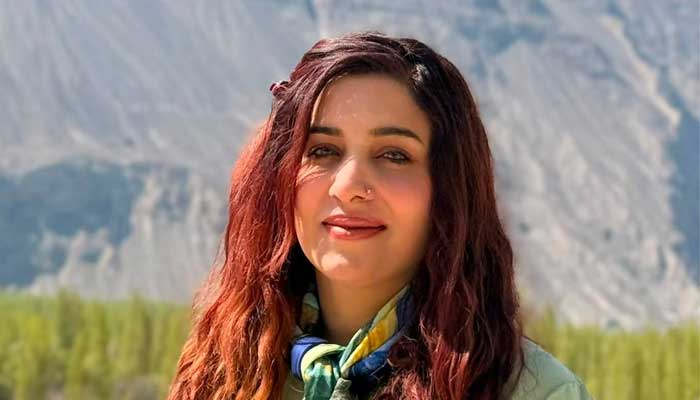
Dr. Asma Mushtaq, 34, died Thursday while making her way down from the top of Spantik, a 7,027-meter spire in the Karakoram range also known as Golden Peak, according to officials and the Alpine Club of Pakistan, the country’s governing body for mountaineering. She had reached the summit in good health, the club said, before a sudden and severe episode of high-altitude sickness overtook her during the descent.
She could not be revived.
Three days later, her body remains on the mountain, its precise location a matter of some confusion even among the officials overseeing the recovery — placed by various accounts at Camp 3, or at roughly 6,400 meters, or at 6,250 meters. What is not in dispute is that getting her down will require porters to do what helicopters cannot: physically carry her body through some of the most unforgiving terrain in the world, one labored step at a time.
“Due to continuous heavy snowfall and extremely strong winds, conditions have become very dangerous and risky,” said Kamal Khan, the Baltistan division commissioner, who has been coordinating the government’s response. “The rescue team could not safely remain at Camp 2. Therefore, the entire rescue team had to turn back.”
That team — six high-altitude porters — had pushed as far as Camp 2 and made a run toward Camp 3 on Saturday, only to be turned back by the same brutal combination of snow and wind that has now stalled the mission twice. By Sunday, the porters had retreated all the way to Base Camp, where they will wait, officials said, for a break in the weather that has not yet come.
“The mission is being undertaken under extremely challenging high-altitude and weather conditions, and the safety of the recovery team remains a priority,” Khan said.
A death after the hardest part was already done
High-altitude sickness is not a single ailment but a family of them — pulmonary and cerebral conditions triggered by hypoxia, the oxygen deprivation that sets in when climbers ascend faster than their bodies can adapt. It is a well-documented hazard of extreme mountaineering, and a particularly cruel one: it often strikes not during the grinding push toward a summit, when adrenaline and focus can mask early symptoms, but afterward, on the way down, when exhaustion sets in and the body’s reserves are already spent.
That appears to be what happened to Mushtaq. The Alpine Club of Pakistan said she reached Spantik’s summit in good health. It was during the descent, at an altitude the club places at approximately 6,400 meters, that her condition deteriorated with alarming speed.
“Sadly, during her descent at approximately 6,400m, she suffered a serious high-altitude medical emergency,” the club said in a statement, adding that her mountain guides “made every possible effort to save her” under conditions the club described as extremely challenging.
Those guides — identified by her expedition company, Karakoram Calling Treks, as Akbar Ali and a second climber — reached her almost immediately and began emergency treatment on the mountainside, according to the company. It was not enough.
The Alpine Club, in a statement laced with the formal condolence language typical of Pakistani mountaineering circles, offered its sympathies to “the bereaved family, friends and loved ones of Mrs. Asma Mushtaq” and prayed that she be granted “eternal peace” and that her family receive “strength and patience to bear this irreparable loss.”
Confusion over who was responsible for what
Beneath the condolences, a more uncomfortable story has been emerging about the days immediately after Mushtaq’s death — one involving disputed pay for the porters tasked with the recovery, and pointed questions about whether her expedition company met its basic obligations under Pakistani mountaineering law.
Khan, the Baltistan commissioner, said the recovery mission’s delayed start owed partly to a breakdown over money.
“Initially, certain confusions arose regarding the remuneration demanded by the high-altitude porters for undertaking the body recovery operation, which resulted in a delay in commencement of the recovery mission,” he said.
Compounding the problem, Khan said, was the absence of paperwork that should have been in place before Mushtaq ever set foot on the mountain. No agreement had been signed between her tour operator and Mushtaq herself, he said, and no insurance had been arranged to cover a helicopter evacuation — a lapse that left the government scrambling to patch together funding and coordination after the fact, rather than executing a plan that should already have existed.
That patchwork ultimately came together through what Khan described as a joint effort by the Baltistan civil administration, the tourism department, the Gilgit-Baltistan government, the Alpine Club, and EV-K2-CNR, an Italian nongovernmental organization that stepped in to cover the ground rescue team’s expenses.
“Through their coordinated efforts, the matter was amicably resolved, and the required arrangements were finalised,” Khan said.
But he did not let the tour operator off the hook entirely. In earlier remarks, Khan said the operator had violated Pakistan’s mountaineering rules by failing to arrange, in advance, for a recovery team and for helicopter insurance — obligations he said fall squarely on tour operators under the regulations.
“Under the rules, if a ground rescue team or helicopter is needed, the tour operator is responsible to arrange a rescue team and pay insurance for helicopter,” Khan said. He added that the operator had also skipped mandatory briefing and debriefing sessions required under Pakistan’s Mountaineering Rules of 1999.
Even so, Khan pushed back on the notion that the operator’s failures were the reason recovery efforts stalled in the critical hours after Mushtaq’s death, noting that district officials moved quickly to organize a ground team once word of her death reached them.
“If the weather allows, the rescue team will bring the body down to base camp, and army helicopters will airlift it from the base camp to Skardu,” Khan said, describing the plan that remains, for now, on hold.
A national federation, not a rescue agency
The Alpine Club of Pakistan, for its part, has moved to draw a firm line around its own role in the operation — and around what it says are the country’s larger, structural shortcomings in mountain rescue.
The club described itself as Pakistan’s national federation for mountaineering and sport climbing, tasked with promoting and coordinating the sport and advising the government on policy, training and rescue matters. It is not, the club emphasized, a rescue organization with personnel or equipment of its own.
“It is not itself a rescue organisation with dedicated resources,” the club said. “Search, rescue and other relevant activities depend upon govt resources.” The club went further, acknowledging what it called a systemic gap: Pakistan, despite hosting some of the world’s most dangerous and sought-after peaks, has no dedicated, properly established high-altitude rescue system.
Under what it described as new leadership, the club said it is now working with authorities to help build one, and to support broader improvements to the country’s mountaineering infrastructure.
The club also appealed directly to the public, asking that people hold off on drawing conclusions about the recovery operation while it remains underway.
“Please refrain from spreading misinformation or making unverified claims about the recovery operation,” the club said, adding that the safe and dignified recovery of Mushtaq’s body remained the priority. Ayaz Shigri, the club’s general secretary, told Dawn that misinformation had indeed been circulating about the reasons for the delay, and reiterated a basic fact about the mission’s constraints: helicopters cannot retrieve bodies from altitudes above 6,000 meters. Above that line, he said, only ground teams can do the work.
“Only the ground rescue team can bring down the body from the peak to base camp,” Shigri said.
The club said it would investigate the full circumstances of Mushtaq’s death, along with the conduct of her expedition company, once the recovery teams are safely off the mountain and her body has been brought down. “Any necessary action will follow the findings of that investigation,” the club said.
A helicopter, if the weather allows
The Pakistan Army has agreed to fly a helicopter to carry Mushtaq’s body from Base Camp to Skardu once ground teams manage to bring it that far — a “mercy mission” approved on humanitarian grounds, according to the Alpine Club, though it remains contingent on the same weather that has already turned the ground team back twice.
Federal Information Minister Attaullah Tarar addressed the operation directly in a post on the social platform X, writing that coordination had been established between the Gilgit-Baltistan government and the Force Command Northern Areas, the Pakistan Army’s regional command.
“Heli has been authorised and coordination has been done between GB government and Force Commander Northern Areas,” Tarar wrote. “Alternate arrangements are also in place. Whatever can be done in these circumstances will be done.”
Tarar said Prime Minister Shehbaz Sharif was being kept informed of the situation.
Mountaineering experts note that recovering a body from above 6,000 meters ranks among the most hazardous undertakings in the sport — more dangerous, in some respects, than the original climb, since rescuers must move slowly and deliberately over ground that offers no margin for error while carrying additional weight. It is common enough, at extreme altitudes, for bodies to remain on the mountain permanently, buried beneath snow rather than brought down at all.
Sajid Sadpara faced that same choice in 2021, after his father, the celebrated Pakistani mountaineer Ali Sadpara, died on K2. Rather than risk further lives attempting a recovery from roughly 8,000 meters, Sajid buried his father on the mountain where he fell.
Officials with the Gilgit-Baltistan tourism department have asked the public to weigh those realities before passing judgment on how Mushtaq’s case has been handled.
A doctor who documented her own adventures
Mushtaq’s life outside the mountains was, by most accounts, defined by two parallel pursuits: medicine and exploration.
Originally from Lahore, she worked as a doctor in the United Kingdom, specializing in obstetrics and gynecology. Alongside that career, she built a public presence as a traveler and vlogger, chronicling her expeditions on social media for an audience that followed her climbs in near-real time.
Her mountaineering résumé included a winter ascent of Musa ka Musallah, a 4,076-meter peak, along with expeditions to the Rupal and Arandu regions of Pakistan’s north. In a 2024 social media post soliciting sponsorship for a planned K2 attempt, she described herself simply: “a doctor and mountaineer.”
Mushtaq’s case is not the only recovery effort stalled by weather in Pakistan’s north this month. On Broad Peak, roughly 24 kilometers from Spantik as the crow flies, poor conditions have also kept helicopters grounded, delaying the return of American climber Sarah Mallory Geis, whose body was recovered from the mountain by local porters on Friday — 22 days after she went missing.
Geis was one of ten climbers killed on July 30, when an avalanche struck an international expedition making its way from Camp 2 to Camp 3 on Broad Peak, the world’s 12th-highest mountain. The expedition was led by Nirmal Purja, the British-Nepali mountaineer whose climbing exploits have made him one of the sport’s most recognizable figures. Purja’s own company later confirmed that none of the ten climbers on the mountain that day survived.
Volunteers have since carried Geis’s body down to Broad Peak’s base camp, where it now awaits the same weather window that Mushtaq’s recovery team is watching for. Shigri said Pakistan Army helicopters would fly her body to Skardu as soon as conditions permit.
Nine of the ten climbers lost on Broad Peak have now been recovered and returned to their families, including Purja and Pakistani climber Sohail Sakhi. The search continues for the tenth, Nawang Thindu Sherpa.
First summited by an Austrian team in 1957, Broad Peak rises to roughly 8,051 meters and is widely regarded as one of the most technically demanding of the world’s fourteen peaks above 8,000 meters — a distinction that, this summer, has proven tragically apt.
Copyright © 2021 Independent Pakistan | All rights reserved