By Staff Reporter
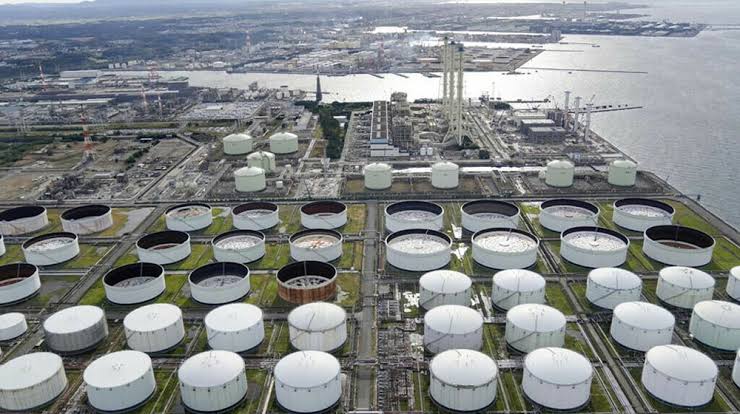
ISLAMABAD: Pakistan began a feasibility study on Tuesday to determine whether the South Asian nation should build strategic petroleum reserves, turning to global energy consultancy Wood Mackenzie as it seeks to shore up defences against the kind of supply shocks that have rattled global oil markets this year.
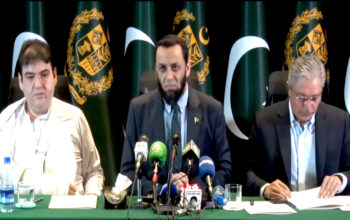
Federal Minister for Petroleum Ali Pervaiz Malik chaired the kick-off meeting in Islamabad, formally launching a study that will examine the technical, financial and regulatory groundwork needed to establish reserve stockpiles in a country that currently has none. Wood Mackenzie secured the mandate through a competitive tender that drew four bids, according to a statement from Pakistan’s information ministry.
The initiative comes three months after Pakistan first signalled plans to bolster crude and refined-product storage, following disruptions tied to the conflict between the U.S. and Iran that has periodically squeezed tanker traffic through the Strait of Hormuz — the chokepoint through which roughly a fifth of global oil supply typically flows.
“The recent crisis in the Strait of Hormuz had further magnified the need to strengthen Pakistan’s buffers and build greater resilience against supply disruptions,” Malik said, according to the ministry statement. “The SPR initiative is therefore an important step towards assessing how the country can strengthen its preparedness for potential supply shocks.”
Pakistan imports the bulk of its oil needs, leaving it acutely exposed when shipping routes through the Middle East come under strain. Unlike the US and other major economies that maintain government-controlled emergency stockpiles, Pakistan has relied on commercial inventories that typically cover only a matter of weeks of consumption — a buffer that energy officials have long viewed as insufficient given the country’s balance-of-payments constraints and history of import-driven fuel crises.
Wood Mackenzie’s team, led by Vice President Christopher Darry and Senior Vice President Aamir Malik, along with Director Chris Brown and Principal Consultant Jordan Macdonald, told the minister that the timing was apt. The consultancy said in the meeting that the current moment represents the “right time” for Pakistan to prioritise energy security, citing the shifting global energy landscape and recurring supply disruptions, per the ministry statement.
Representatives from Attock Refinery Ltd., the Pakistan Institute of Development Economics, Government Holdings (Private) Ltd., the Ministry of Maritime Affairs and Pakistan LNG Ltd. also attended the session, underscoring the cross-agency coordination the government says the project will require.
The study’s scope is extensive. It will assess the technical feasibility, structural integrity, safety protocols and operational readiness of potential storage sites, while benchmarking Pakistan’s plans against international and regional peers, the statement said. Consultants will also map out the policy and regulatory changes needed, along with legal, financial and institutional frameworks — including whether public-private partnerships could help fund construction.
Wood Mackenzie will additionally evaluate whether existing storage infrastructure in Pakistan could be repurposed for strategic reserves, factoring in pipeline connectivity and logistics networks, according to the statement. The final deliverable is expected to include capital-expenditure estimates, financing options, implementation timelines and a breakdown of which government bodies would oversee each phase of development.
Malik said he wants the findings to be actionable rather than aspirational. He directed the consultancy to prioritise a “pragmatic and implementable” approach tailored to Pakistan’s fiscal and logistical realities, rather than a one-size-fits-all model imported from wealthier oil-importing nations. Officials left open the possibility that any reserve buildout would happen in phases, potentially easing the upfront capital burden on a government already managing tight fiscal space under its International Monetary Fund program.
“The purpose of commissioning the study was to enable the government to make an informed decision based on evidence before embarking on such a major strategic initiative,” Malik said.
The petroleum ministry’s push follows an earlier decision this week to open Pakistan’s storage sector to foreign participation. The government on Monday approved what it called a “world-class bonded scheme,” permitting international fuel suppliers to build bonded storage facilities in the country at their own cost. Those facilities could be used for re-exports as well as sales into Pakistan’s domestic market, a shift that officials hope will attract foreign capital without straining public finances.
The Economic Coordination Committee, a cabinet-level body that approves major economic policy decisions, signed off on that bonded-storage framework, according to the statement.
Tuesday’s meeting builds on directives issued by Prime Minister Shehbaz Sharif in July, when a cabinet committee approved amendments to the country’s oil refining policy alongside instructions to expand strategic reserve capacity. The moves reflect growing urgency within Sharif’s government to insulate Pakistan’s energy supply chain from geopolitical shocks after months of volatility in Middle East shipping lanes.
Malik said a steering committee will be established to monitor the study’s progress, with stakeholders directed to provide Wood Mackenzie full cooperation and timely data access so the assessment can be completed on schedule. The findings, he said, are intended to “provide a sound basis for future policy decisions” as Pakistan weighs how — and how quickly — to build out reserve capacity it has long lacked.
Copyright © 2021 Independent Pakistan | All rights reserved