By Staff Reporter
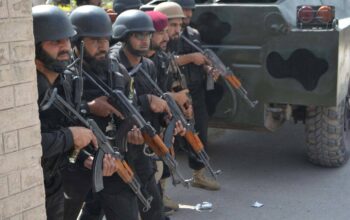
MUZAFFARABAD: A paramilitary soldier was shot dead and a second wounded on Wednesday when gunmen opened fire on security forces conducting a road-clearing operation in the Sarsawa-Thorar-Thal area, officials said, the latest episode of violence in a region that has been convulsed by months of unrest.
The soldier, identified by a Pakistan Rangers spokesperson as Shahnawaz, was struck by a bullet to the chest and died of his wounds. A second Rangers member, Lance Naik Bilal, was shot in the shoulder and survived. A police statement separately identified an injured member of the force as Ishaq Iqbal, who officials said had been shot in the head.
Shahnawaz, according to the Rangers spokesperson, was from Khairpur, a district in Sindh province.
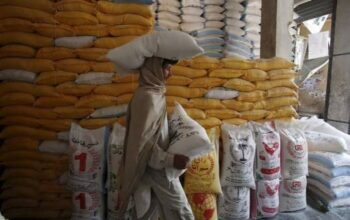
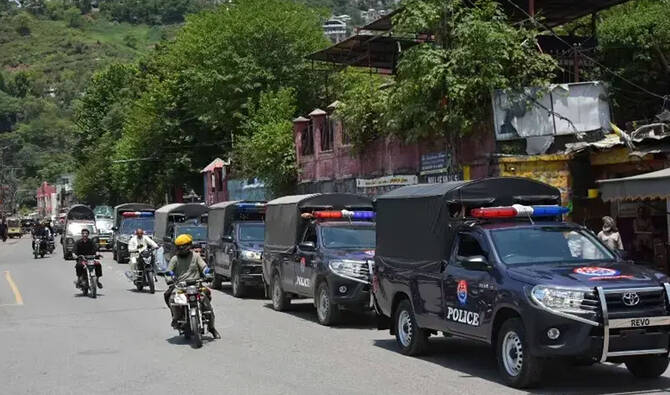
The shooting occurred as security forces worked to clear blockades along the route between Sarsawa and Tararkhel, part of a broader effort to reopen roads that have been obstructed for weeks, disrupting transportation and raising fears of food shortages in the affected communities. Authorities said the operation had been launched at the request of local residents seeking passage through the blocked routes.
“During the clearance operation in the Sarsawa–Thorar–Thal Circle, armed elements of the proscribed Awami Action Committee made indiscriminate use of automatic weapons,” authorities said in a statement, adding that the gunmen “opened fire on personnel of the law-enforcement agencies.”
Police blamed the attack on members of the Jammu Kashmir Joint Awami Action Committee, a right movement that the regional government outlawed in June under anti-terrorism statutes. There was no immediate response from the organisation to the allegations, and the circumstances of the shooting could not be independently verified.
Despite the attack, authorities said the road-clearing operation would continue until all blockades were removed and normal transportation restored.
A Movement Under Siege
Wednesday’s violence represents the latest chapter in an escalating conflict between Azad Kashmir’s government and JAAC, a movement that began as a campaign against high electricity prices and the cost of subsidised flour before evolving into a broader push for governance reforms and political representation.
At the centre of the dispute is an arrangement that reserves 12 of the 53 seats in Azad Kashmir’s Legislative Assembly for refugees from Indian-administered Kashmir who resettled elsewhere in Pakistan after the 1947 partition. JAAC has argued the setup hands outsized political influence to people who do not live in the territory, and the group had been planning a protest calling for the seats’ abolition when the government moved to ban the organisation on June 5, days before the demonstration was to take place.
Authorities designated JAAC a proscribed organisation under Azad Kashmir’s Anti-Terrorism Act, accusing it of engaging in terrorism and activities that threatened public peace. The group and human rights advocates have disputed that characterisation, and rights organisations have separately raised alarms over the deployment of anti-terrorism laws against protesters, along with allegations of arbitrary arrests, excessive force, and communications blackouts imposed during the unrest. Officials have denied those allegations.
The confrontation reached a new intensity during regional legislative elections that began in July and were staggered across multiple phases because of security concerns. JAAC has said more than 30 people were killed in clashes around Rawalakot during the first round of voting, though the toll could not be independently confirmed amid disruptions to roads, banking, and internet service that officials said had cut off the flow of information from the area. Authorities have acknowledged at least three protester deaths in Mirpur and said one member of the security forces was killed and five others injured in the same unrest.
Each side has traded accusations over responsibility for the bloodshed, with authorities attributing attacks on law enforcement to armed elements tied to JAAC, while protesters and activists have accused security forces of employing excessive force against demonstrators.
The tension has also touched the machinery of the election itself. Earlier this month, Azad Kashmir police accused JAAC of abducting eight highway police officers who had been assigned to election-related duty.
A similar attack on security forces occurred last month, when a Rangers soldier was killed and another wounded after armed individuals identified as JAAC members opened fire on personnel responding to reports of gunfire near the Matial Maira bus terminal in Rawalakot, according to security officials.
Faisal Mumtaz Rathore, who was recently installed as Azad Kashmir’s prime minister, said last week that dialogue remained the only viable path out of the crisis, cautioning that the situation could otherwise grow “alarming.” The regional government has said its principal objective is restoring public order.
A Territory Long in Dispute
Azad Kashmir occupies a sliver of the broader Kashmir region, which has been contested by Pakistan and India since both nations achieved independence from British colonial rule in 1947. Each country claims the entirety of Kashmir but governs only a portion of it. Pakistan’s share — formally known as Azad Jammu and Kashmir — maintains its own elected legislature and government, while India controls the larger share of the Himalayan territory.
The dispute over Kashmir has fueled decades of hostility between the two nuclear-armed nations, which have gone to war at least three times over the territory’s status.
Copyright © 2021 Independent Pakistan | All rights reserved