By Staff Reporter
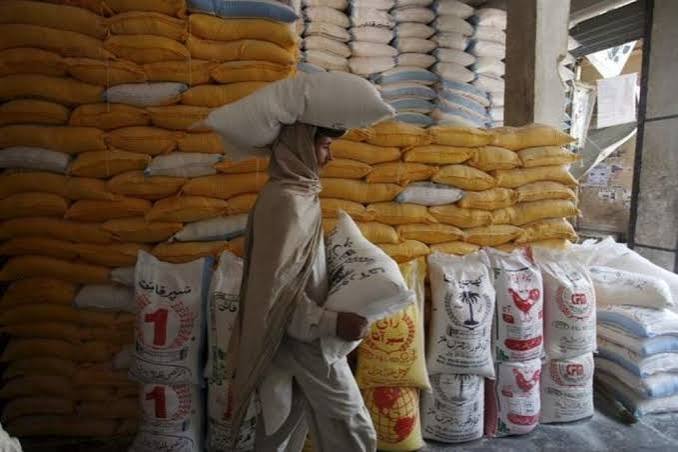
ISLAMABAD: The government threatened strict action against hoarding and overpricing of essential commodities on Friday, a week after wheat flour led short-term inflation to almost 12%.
Deputy Prime Minister and Foreign Minister Ishaq Dar chaired a cabinet committee meeting to review the stock position, supply arrangements and prices of essential goods, the Ministry of Foreign Affairs said in a post on X.
Dar was told that adequate stocks were available to meet domestic demand, with no shortages anticipated and prices stabilising, according to the ministry. He directed the departments concerned to monitor supply chains and prices, in line with Prime Minister Shehbaz Sharif’s instructions, and stressed that “strict action would be taken against hoarding, artificial shortages and overpricing,” the ministry said.
The meeting was attended by Food Security Minister Rana Tanveer Hussain, Climate Change Minister Musadik Malik, Special Assistant to the Prime Minister Tariq Bajwa, Commerce Secretary Jawad Paul and officials from federal and provincial ministries and departments.
The official assurances sit against data showing sustained pressure on household budgets. The Sensitive Price Indicator, the government’s weekly inflation gauge, rose 11.97% from a year earlier in the week ended Oct. 8, with the index at 372.58, the Pakistan Bureau of Statistics reported. That compared with 11.53% a week earlier.
A 20-kilogram bag of wheat flour rose 5.69% in the week to 2,851 rupees, from 2,150 rupees a year earlier, the bureau said. Onion prices were up about 100% on the year, petrol 47.52% and electricity for the first quarter 58.59%. Petrol averaged 398.87 rupees a liter, up from 389.51 rupees the previous week. Dawn newspaper reported that the government has kept raising fuel prices daily and has been unwilling to ease the petroleum levy.
Consumer price inflation slowed to 10.3% in September from 11.1% in August, though rising electricity and fuel costs continued to weigh on households. Inflation averaged 10.2% in the first quarter of the fiscal year, and prices rose 1.3% in September from the previous month.
Flour millers raised prices by an average of 14 rupees a kilogram earlier this month. A cut of 3 rupees a kilogram in the last week of September gave consumers no relief because retailers left prices unchanged.
The Sindh government has sought to ease the squeeze. Chief Minister Syed Murad Ali Shah on Oct. 7 approved the release of government wheat at 12,500 rupees per 100-kilogram bag from Oct. 15. Flour millers refused on Thursday to lift the grain, saying it was substandard and unfit for human consumption.
The shortages persist despite a substantial harvest. Punjab sought 1 million tonnes of wheat from federal reserves in July after buying only 480,000 tonnes from farmers against a target of 3 million. Officials said the province could not trace about 4 million tonnes of wheat believed to have been hoarded.
In August, Dar chaired a steering committee on wheat imports, and the Trading Corporation of Pakistan was tasked with preparing to import 1 million tonnes.
Khyber Pakhtunkhwa has been hit hardest by restrictions on wheat and flour shipments from Punjab. The province needs about 5.2 million tonnes of wheat a year but produces 1.2 million tonnes, leaving it dependent on other provinces. Millers said the curbs disrupted deliveries, forced mills to shut and pushed prices higher, with a 20-kilogram bag of flour reaching 2,700 rupees in January.
The restrictions were still in place in September despite repeated requests from the provincial government, adding as much as 100 rupees to a 20-kilogram bag of fine, special fine and mixed flour. The provincial assembly passed a resolution on the issue, and Chief Minister Sohail Afridi asked the prime minister to intervene.
In Peshawar, a 20-kilogram bag of coarse flour reached 3,300 rupees in early October, while fine flour of the same weight sold for 3,120 rupees. An 80-kilogram bag of coarse flour was priced at 13,200 rupees. Government-subsidized flour became largely unavailable in the open market, prompting concerns about supply and allegations of price manipulation.
Tandoors raised the price of a 50-gram roti by 10 rupees to 30 rupees, and some markets stopped selling single rotis and offered larger ones instead. The provincial Food Department said it distributed more than 417,000 bags of flour at official rates in the past week and is releasing 3,000 metric tons of government wheat from strategic reserves to mills daily.
The International Monetary Fund has raised its inflation forecast for Pakistan to 9.9% for the current fiscal year from 8.4%, while keeping its growth projection at 3.5%.
Copyright © 2021 Independent Pakistan | All rights reserved