By Staff Reporter
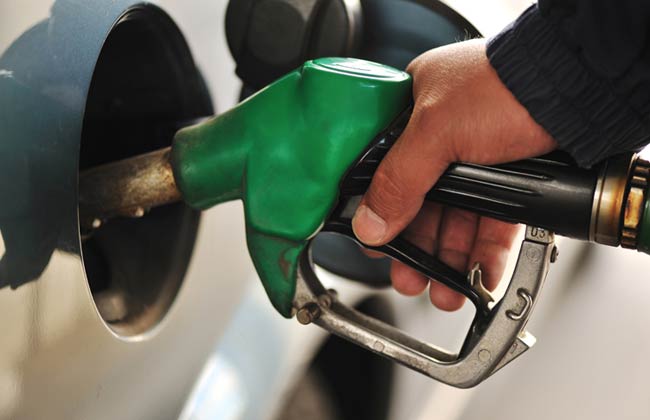
ISLAMABAD: The government lowered pump prices for gasoline and diesel on Thursday, the latest in a string of near-daily adjustments that have replaced the country’s longstanding practice of setting fuel costs every two weeks.
Petrol will sell for 342.60 rupees a liter starting Friday, a cut of 50 paisa from Thursday’s price of 343.10 rupees, according to a notification from the Petroleum Division. High-speed diesel, the fuel that powers most of the country’s freight trucks, buses and industrial generators, will fall 19 paisa to 371.61 rupees a liter from 371.80 rupees.
The reductions follow a sharper move in the opposite direction just two sessions earlier. On Tuesday, the government raised petrol prices by 1.12 rupees a liter and diesel by 1.11 rupees, underscoring how frequently the numbers are now moving under the revised pricing system overseen by the Oil and Gas Regulatory Authority, known as Ogra.
Both fuels carry some of the heaviest tax burdens in South Asia relative to their base cost. The government continues to collect 114 rupees a liter in taxes and duties on petrol and 100 rupees a liter on diesel, levies that have remained fixed even as the underlying, import-linked cost of the fuels has swung sharply over the past six months.
A Shift Forced by War
Pakistan switched from biweekly to near-daily fuel pricing after the United States and Israel launched a series of military strikes against Iran on Feb. 28, an operation that killed Iran’s longtime supreme leader, Ayatollah Ali Khamenei, and set off months of retaliatory missile and drone exchanges across the Middle East. The fighting disrupted shipping through the Strait of Hormuz and the Red Sea and sent global crude benchmarks sharply higher, forcing import-dependent economies like Pakistan’s to recalibrate how quickly they pass through cost changes at the pump.
The government handed Ogra responsibility for setting prices on a daily basis, tracking international benchmarks in near real time rather than waiting out a fixed review cycle. Under the revised mechanism, Ogra calculates ex-depot prices using a rolling seven-day average of international oil costs, exchange-rate movements and other components before submitting recommendations to the government.
The change followed weeks of weekly revisions that began in early March, as Islamabad also rolled out fuel-conservation measures to guard against potential supply disruptions tied to the conflict. In April, the federal government layered on targeted relief measures aimed at subsidising fuel for lower-income consumers as prices climbed toward their peak.
From Crisis Highs to a Steadier Range
The scale of that climb was steep. Diesel prices began rising from 281 rupees a liter in the days after the February strikes and peaked at 520.35 rupees on April 3 — an increase of more than 85% in roughly five weeks. Petrol followed a similar arc, climbing from 266 rupees in the first week of March to a high of 458.41 rupees on April 3.
Prices have since retreated well off those levels, though not in a straight line. Petrol fell as low as roughly 327 to 329 rupees a liter in early August before rebounding through the month, touching 343.10 rupees by Aug. 26 ahead of Thursday’s cut. The back-and-forth illustrates the kind of volatility the daily pricing system was designed to pass through more smoothly, even if it has also meant more frequent — and sometimes larger — swings for consumers to absorb.
Why the Numbers Matter for Ordinary Pakistanis
The two fuels play different but overlapping roles in the economy, and price moves in either direction ripple through household budgets in distinct ways.
Petrol is used mainly in private cars, motorcycles and three-wheeled rickshaws, making it a closely watched cost for the middle and lower-middle classes who rely on smaller vehicles for daily commuting. Diesel, by contrast, underpins the heavy-transport sector, agriculture and power generation, meaning changes in its price flow more broadly into freight costs, food prices and electricity generated by diesel-fired plants and backup generators.
Together, petrol and diesel are the government’s two largest sources of fuel-related revenue, with combined monthly sales running between 700,000 and 800,000 tonnes. That dwarfs demand for kerosene, which totals roughly 10,000 tonnes a month, underscoring why even small per-liter adjustments to petrol and diesel pricing carry outsized fiscal weight for Islamabad.
The revised prices announced Thursday take effect at midnight and will remain in place until the next daily review.
Copyright © 2021 Independent Pakistan | All rights reserved