By Staff Reporter
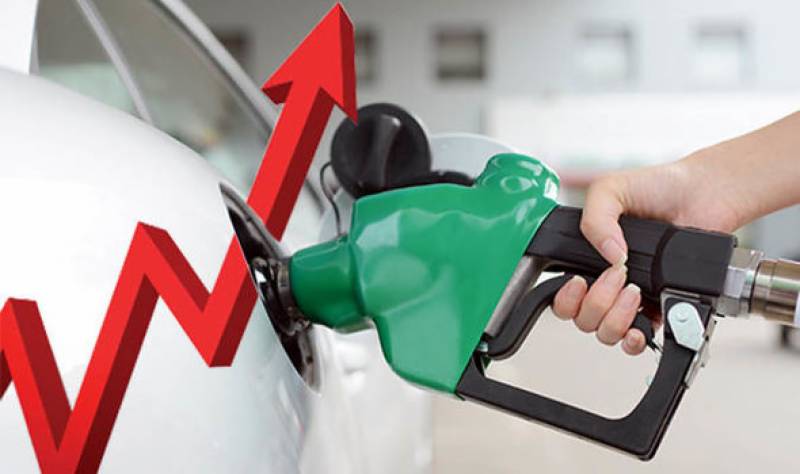
ISLAMABAD: The government raised the retail price of petrol by 77 paisa a litre while cutting high-speed diesel by Rs1.03, the Petroleum Division said on Monday, the latest in a run of daily adjustments that have become the norm since the outbreak of the Iran war roiled global crude markets in late February.
The changes take petrol to Rs342.79 a litre and diesel to Rs370.41, effective Tuesday, according to a notification from the Oil and Gas Regulatory Authority. The government continues to collect Rs114 a litre in taxes and duties on petrol and Rs100 a litre on diesel, keeping the state’s cut of pump prices among the largest components of the retail rate.
The move extends a pricing pattern that has diverged the two fuels through the second half of the year: diesel, after peaking at Rs520.35 a litre on April 3, has fallen by roughly a third since, while petrol — which peaked the same day at Rs458.41 — has come down by more than a quarter but at a slower pace, reflecting differing patterns of global refined-product demand as the conflict has ebbed and flared.
Both fuels began climbing in early March, days after the United States and Israel launched coordinated strikes on Iran on February 28 that killed the country’s supreme leader and targeted its nuclear and military infrastructure. Diesel rose from Rs281 a litre and petrol from Rs266, tracking a spike in international crude prices as Iran responded with attacks on shipping and infrastructure in and around the Strait of Hormuz, the chokepoint that normally carries about a fifth of the world’s seaborne oil trade.
The government shifted to daily price-setting because of the volatility in international markets triggered by the conflict, with the cabinet and Prime Minister Shehbaz Sharif handing Ogra responsibility for calibrating rates against global benchmarks on a rolling basis. That represented a break from the weekly revisions Islamabad had used since early March, when it also introduced fuel-conservation measures to guard against supply disruptions from the war. In April, the government layered on targeted subsidies aimed at cushioning the impact on lower-income consumers.
The war has proved far from settled. A ceasefire that took hold in April held for months, but the US and Iran exchanged fire again this week for the first time in more than a month, sending Brent crude above $90 a barrel Monday after American forces struck Iranian rocket launchers near the Strait of Hormuz and Iran fired missiles at US-linked targets in Jordan and the United Arab Emirates. The renewed hostilities have kept traders on edge over the risk of a broader shutdown of a route that Iran has also sought to control through fees and preapproved-passage rules for tankers.
For Pakistan, the pump-price arithmetic carries outsized political weight. Petrol is consumed mainly in the small vehicles, rickshaws and two-wheelers that dominate transport for the middle and lower-middle classes, making even modest increases politically sensitive. Diesel’s reach is broader still, powering the heavy trucking fleet, power plants and large generators that underpin much of the country’s freight and electricity supply — meaning shifts in its price ripple into transport and utility costs across the economy.
Petrol and diesel remain Pakistan’s dominant refined-product revenue sources, with combined monthly sales running between 700,000 and 800,000 tonnes, dwarfing the roughly 10,000 tonnes of kerosene sold each month. That scale keeps the twice-daily calculus of global crude prices, exchange rates and tax policy central to both consumer budgets and the government’s revenue collection, particularly as the Iran war’s trajectory continues to dictate the swings.
Copyright © 2021 Independent Pakistan | All rights reserved