By Staff Reporter
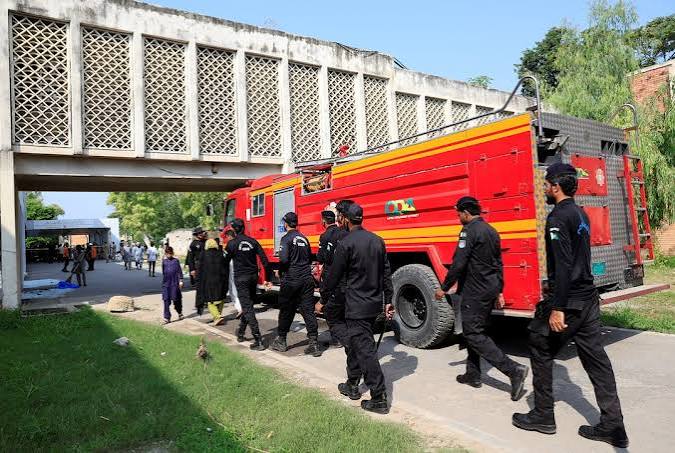
ISLAMABAD: Lawmakers in both houses of the parliament pressed officials on Monday over gaps in the investigation into a nursery fire that killed 14 infants at a major Islamabad hospital, with committee members in the National Assembly and Senate raising pointed questions about incomplete surveillance footage, uncertain casualty figures, and the qualifications of hospital leadership.
The scrutiny came three days after an inquiry panel delivered an interim report to Prime Minister Shehbaz Sharif, prompting him to order eight officials suspended and referred for criminal prosecution. The health ministry separately accepted the resignation of Dr. Riaz Shahbaz Janjua, chairman of the Islamabad Healthcare Regulatory Authority, who said in his resignation letter that recent developments had compromised the authority’s independence and left him unable to carry out his duties effectively. Janjua, appointed to the IHRA board in October 2024 and later elected its chairman, said he had continued working despite chronic staffing shortages.
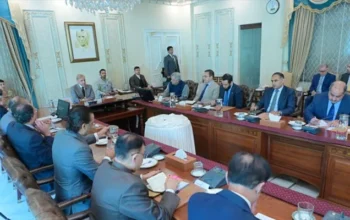
The National Assembly Standing Committee on Health, chaired by Mahesh Kumar Malani, opened its session by declaring the government’s interim findings insufficient.
“We have called this meeting regarding the Pims tragedy because we are not satisfied with the report of the committee constituted by the prime minister,” Malani told the panel, which he barred from being filmed.
Health Minister Mustafa Kamal defended the inquiry’s conduct and invited members to air specific objections. Committee member Shazia Soomro said lawmakers who visited the site afterward had not received an adequate briefing. “We visited the site but proper briefing was not given, due to which we don’t have a clear picture,” she said.
Malani focused much of the session on the surveillance record, saying available footage showed a nurse entering the nursery but nothing of what followed inside. He called for the full recording to be turned over, calling the missing segment critical to establishing what happened. He also said the ousted executive director had failed to give satisfactory answers to the committee’s questions, and pressed for a technical report from the hospital’s biomedical engineering department, including the date of the nursery’s last safety inspection. Committee members separately raised the possibility that oxygen equipment played a role in the fire and sought further technical evidence.
Nurses on duty told the panel they had been attending to the infants and had not detected the source of the spark, according to testimony relayed to the committee.
Malani also said the inquiry panel had not pinned down how many infants were in the nursery when the fire broke out, noting that some media accounts put the number at 15. Kamal said Sharif had assembled the four-member inquiry committee around 4 p.m. on the day of the fire and that the health ministry had not launched a separate investigation once that panel’s report was submitted.
The appointment of a new executive director for the hospital drew its own round of objections. Malani questioned whether a pathologist was suited to run the country’s largest public hospital and argued the law governing the institution requires the position be filled from within its own ranks. Kamal said the Prime Minister’s Office had made the appointment under a legal relaxation, but added, “the new ED will not be able to work” — consistent with his stated view that career civil servants are ill-equipped to run hospital departments. Committee member Aalia Kamran said no one had yet accepted political responsibility for the deaths.
Senate committee cites missing alarms, blocked exits
The Senate Standing Committee on Health, led by Senator Amir Waliuddin Chishti, conducted a broader review covering emergency and pediatric care standards, fire safety, administrative accountability, and steps to prevent a repeat incident. Senators Syed Masroor Ahsan, Rubina Khalid, Nadeem Ahmed Bhutto and Nasir Mehmood attended in person, Senator Shahzaib Durrani joined remotely, and National Assembly member Sabeen Ghauri sat in as a special invitee.
During a site visit to the nursery, committee members said they found no fire alarms and reports that emergency exits had been closed off. They also objected to construction materials stored outside the labor room, warning the clutter posed a hazard to patients and staff; Chishti ordered hospital administrators to clear obstructions from wards and access routes immediately.
Hospital administrators told the committee the fire had been brought under control within minutes, but members questioned whether enough doctors and staff were on duty at the time, suggesting a fuller complement might have allowed more infants to be evacuated. Kamal told the committee the preliminary inquiry found the fire spread in roughly 120 seconds. He also disclosed a previous fire at the hospital’s nursing hostel in July 2026, saying he had only learned of it after last week’s blaze.
The committee voted to conduct its own review of the inquiry findings and called for a fuller, independent, technically grounded investigation. Members said standard fire protocols appeared not to have been followed, that no fire drills had been held, and that required inspections had not taken place. They also raised concern over hospital officials holding multiple administrative posts simultaneously and doctors being pulled into administrative roles, arguing hospital management should rest with trained administrators rather than clinical staff.
The panel asked whether a formal log of safety inspections existed and pressed the IHRA on reports that it had not inspected the hospital in two years, raising broader questions about the composition of the authority’s board. Chishti directed Kamal to review and overhaul the board’s structure. The committee voiced dissatisfaction with the coordination among the Capital Development Authority, rescue services, civil defense, hospital administration and the IHRA, and said it would pursue legislation aimed at preventing similar incidents.
High Court questions culpability of hospital’s ousted director
Separately, the Islamabad High Court ordered the government to produce the report given to the prime minister along with a full accounting of actions taken, and pressed on whether the hospital’s former executive director bears responsibility for the deaths.
Chief Justice Sardar Muhammad Sarfaraz Dogar heard two petitions tied to the fire. In the first, filed by lawyer Qasim Iqbal Jalali seeking a judicial inquiry, Additional Attorney General Rashid Hafeez appeared for the government along with Deputy Attorney General Faisal Irfan and Assistant Attorney General Azmat Bashir Tarar. Dogar called the fire a “terrible incident” and said the loss of 14 children was extremely serious.
Jalali’s counsel argued that a government-appointed panel of bureaucrats could not credibly investigate its own colleagues, asking, “How can bureaucrats inquire into their own department?” Dogar questioned the legal footing for ordering a judicial inquiry, asking what statute would empower the court to do so. When counsel cited the commission formed after the Punjab Institute of Cardiology incident, Dogar noted that body had not been established by a court and said such decisions rest with the government, adding that he would assign a sitting judge to look into any matter properly before the court. Counsel maintained that “no one can be the judge of his own actions” and said the inquiry so far had not assigned responsibility to anyone.
Hafeez told the court the health secretary had been suspended the day of the fire and hospital officials suspended afterward based on the interim report. Dogar again called the incident tragic and asked whether further action was underway and whether anything barred the court from issuing an order. He directed the federal government to file a detailed response along with the report submitted to the prime minister.
A second petition sought the removal of the hospital’s suspended executive director and asked the court to examine how the facility’s budget — which the petitioner’s counsel put at roughly 20 to 22 billion rupees annually — was being spent, noting that multiple children had been sharing single beds. “How can the court give a direction to remove him from the post?” Dogar asked, though he noted he understood the director had effectively already been removed, referencing the prime minister’s order suspending Prof. Dr. Imran Sikandar and seven others. Dr. Mohammad Salman, chief executive of the National Institutes of Health, has since taken over as acting executive director. Counsel for the petitioner countered that removal alone did not amount to accountability, since the interim report had not formally assigned responsibility to Sikandar. Hafeez told the court the interim report was preliminary and that a complete inquiry report would follow within five days. Dogar asked directly whether responsibility had yet been fixed on the former director and adjourned the hearing pending a further report.
Court also presses capital authority on fire-safety compliance
In a related matter, Dogar heard a petition from Islamabad resident Malik Naveed Ashiq Awan, represented by advocate Afrasiab Ahmed Rana, alleging that fire safety law goes largely unenforced across the capital. The petition claimed Pims itself lacked a required fire department no-objection certificate, and that commercial, educational and medical buildings citywide were operating without one, often lacking fire-fighting equipment, marked emergency exits or alarms. It asked the court to order enforcement of the city’s 2010 fire prevention regulations, an immediate safety audit of buildings across Islamabad, sealing of any operating without a valid certificate, and a standing inspection system to flag illegal or unsafe structures.
The court issued notices to the home secretary, the Metropolitan Corporation Islamabad, and the offices of the CDA chairman and Islamabad chief commissioner — both currently held by retired Lt. Gen. Sohail Ashraf — directing them to respond. The petition argued the Pims fire had exposed systemic enforcement failures requiring immediate institutional correction.
Since the fire, the CDA has stepped up enforcement citywide, sealing several high-rise buildings and partially sealing two hotels in the Blue Area commercial district. It also fined Pims, Polyclinic Hospital and its own Capital Hospital 500,000 rupees each for failing to meet fire and life-safety requirements.
Parliamentary Affairs Minister Tariq Fazal Chaudhry told reporters in Islamabad Monday that the inquiry remains open and extends beyond the gynecology department to the hospital as a whole. “More names can come up in the final report. Anyone found guilty of negligence will be punished,” he said, adding that while the lives lost “cannot be brought back,” holding those responsible accountable was necessary to prevent a recurrence. Speaking for Sharif, Chaudhry pledged zero tolerance for anyone found negligent and said the health ministry continues to monitor safety conditions at the hospital closely.
Copyright © 2021 Independent Pakistan | All rights reserved