By Staff Reporter
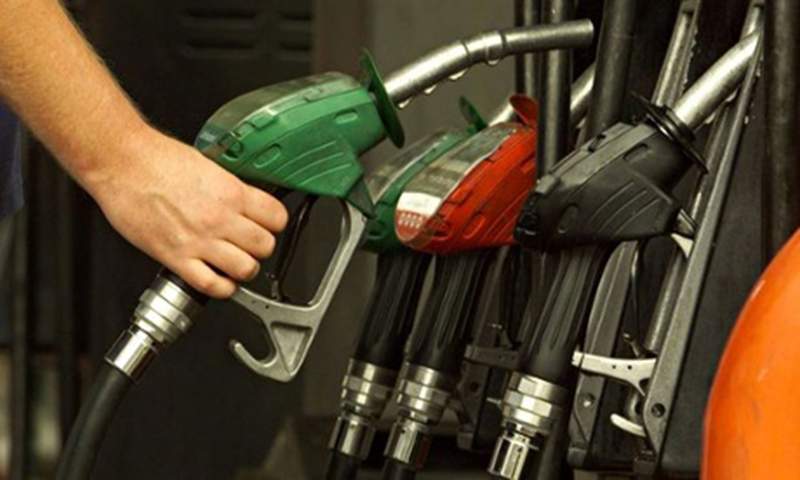
ISLAMABAD: Pakistan raised petrol and diesel prices for a second straight day on Wednesday, as a sharp escalation between the US and Iran near the Strait of Hormuz pushed global crude to its highest level in nearly six weeks and fed directly into pump prices under the country’s daily pricing system.
The Petroleum Division said petrol will rise 2.29 rupees to 346.16 rupees a liter, while high-speed diesel climbs 1.11 rupees to 372.03 rupees a liter, effective Thursday. Pakistan’s Oil and Gas Regulatory Authority sets prices daily using a seven-day rolling average of international Platts benchmarks, a mechanism designed specifically to let swings like this week’s flow through to consumers within days rather than weeks.
The increase follows a smaller move a day earlier, when petrol rose 1.08 rupees and diesel gained 51 paisa a liter — a jump in pace that tracks a rapid deterioration in the security situation around one of the world’s most important oil chokepoints.
Oil Jumps as Hormuz Strikes Escalate
The US military struck Iranian targets around the Strait of Hormuz on Tuesday, following attacks on two oil tankers in the waterway, sending Brent crude up roughly 5% to near $95 a barrel, its highest level since late July. President Donald Trump said the strikes were retaliation for Tehran’s attempt to lay mines in the strait and for an earlier attack on a U.S. military base, and warned of a “significantly larger response” should Iran retaliate. A senior Iranian military source said Tehran’s response would be “many times greater.”
Iran has already acted. State media and U.S. outlets reported Iranian strikes on U.S. bases in the region and missiles fired toward Jordan, with Kuwait and Bahrain both reporting they had come under attack as well, though without casualties. Brent traded around $95 to $96.59 a barrel on Wednesday, up more than 30% since the war began in late February, according to crude benchmarks tracked by CNBC and NPR.
The renewed violence follows a pattern that has defined global oil markets since Israeli and U.S. strikes on Iran began February 28: waves of escalation that send Brent surging past $100, interspersed with ceasefire talks and brief market relief. Prices touched an all-time post-war peak above $126 a barrel in April before falling back below $71 by early July on hopes of a durable truce — hopes this week’s strikes have undercut.
Pakistan’s Pricing System Was Built for This
Pakistan’s shift to daily fuel pricing, announced July 17, was designed explicitly to keep domestic prices in step with exactly this kind of volatility. The government handed Ogra responsibility for daily price-setting based on international market trends, replacing a weekly system in place since early March that officials said oil marketing companies had begun to game — anticipating the direction of each week’s three-day price average and throttling petrol supplies ahead of revisions.
The daily mechanism draws on a longer, seven-day Platts average intended to smooth short-term noise while still passing through sustained moves like this week’s. Pakistan had already shifted once this year, from a longstanding fortnightly review cycle to weekly adjustments in March, as the initial phase of the Iran-U.S. conflict began disrupting shipping through Hormuz and driving up the country’s import costs.
The system has drawn criticism domestically even as it has functioned as designed. Senator Saifullah Abro told a Senate committee in late July that daily revisions amounted to “slow poison” for consumers, who he said could not plan household budgets without knowing “what today’s price is or what tomorrow’s will be.”
Well Below April’s Peak, For Now
Despite Wednesday’s increase, both fuels remain well below the record highs they set on April 3, when petrol reached 458.41 rupees a liter and diesel touched 520.35 rupees. The federal government continues to levy 114 rupees a liter in taxes and duties on petrol and 100 rupees a liter on diesel. In April, as prices neared their peak, authorities introduced a subsidy cutting effective petrol costs by 100 rupees a liter for motorcycle owners in Punjab and Sindh, capped at 20 liters per fill and verified through biometric registration — a measure that could face renewed pressure if Tuesday’s strikes mark the start of a sustained new leg higher rather than a contained flare-up.
Petrol is used predominantly in private cars, motorcycles and rickshaws, concentrating its impact on middle- and lower-income households, while diesel powers heavy trucks, buses and power generation, giving its price swings wider reach across freight costs and electricity output.
Copyright © 2021 Independent Pakistan | All rights reserved