By Staff Reporter
KARACHI: Pakistan is poised to receive its first Qatari liquefied natural gas cargo to clear the Strait of Hormuz, offering relief to a power grid that has been rationing electricity for months amid the regional conflict gripping the Persian Gulf.
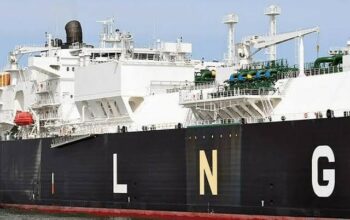
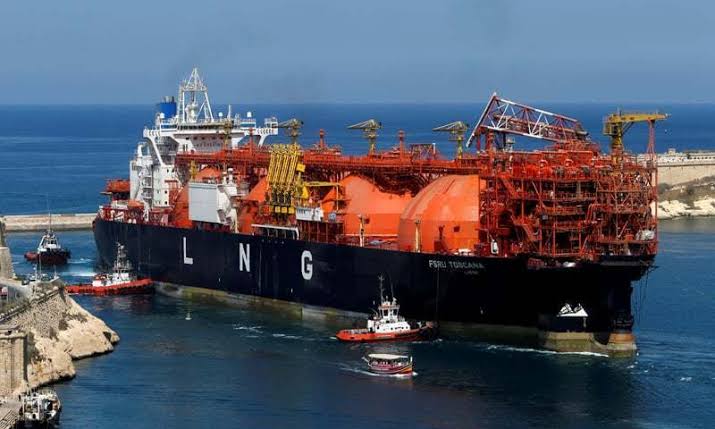
The tanker Al Marrouna, carrying roughly 81,936 metric tons of LNG loaded at Qatar’s Ras Laffan terminal, transited the strait on September 7 with its transponder switched on — a deliberate departure from the so-called dark-vessel tactics many carriers have adopted since fighting escalated earlier this year. Ship-tracking data compiled by Bloomberg showed the 288-meter carrier moving through the Gulf of Oman this week at roughly 13.8 knots, on course to reach Port Qasim in Karachi by Thursday morning.
A second vessel loaded with Qatari LNG is expected to make the same crossing in the coming days, according to traders with knowledge of the matter, who asked not to be identified discussing private shipping information. Both cargoes are moving under a government-to-government supply arrangement between Islamabad and Doha, according to a senior official at Pakistan’s Petroleum Division.
The shipments would mark the first visible break in a nearly six-week disruption to Qatari gas flows through the world’s most important energy chokepoint. About one-fifth of global LNG trade and a quarter of seaborne oil normally moves through Hormuz, according to the US Energy Information Administration, and the waterway has been a central battleground since the war between the US, Israel and Iran began in late February.
Fresh Escalation
The tanker’s passage comes as the broader conflict intensified again this week after a relative lull in August. Iran’s Revolutionary Guards said on Tuesday they struck two US vessels and eight oil tankers near Hormuz in retaliation for a US strike that destroyed five Iranian tankers, according to Iranian state media. Iran also fired on a US base in Jordan, while Jordanian officials said air defenses intercepted the bulk of the incoming missiles.
Separately, Iran-aligned Houthi forces in Yemen attacked energy sites and military installations in four southern Saudi cities on Tuesday — Khamis Mushait, Abha, Najran and Jazan — wounding more than 70 people, Saudi authorities said. The strikes marked a significant expansion of a war that has now run for more than six months.
Brent crude approached $100 a barrel in early trading Wednesday as the twin escalations rattled energy markets, though the Al Marrouna’s successful transit provided some countervailing relief. The tanker’s passage eased concern over a prolonged halt to Qatari LNG exports and weighed on the Asian benchmark Platts JKM and Northwest European gas prices, traders said.
Wartime Test Run
Industry watchers cast the Al Marrouna’s open transit as a deliberate signal rather than a routine shipment. Unlike much of the commercial traffic that has continued moving through Hormuz under AIS blackout in recent weeks, QatarEnergy kept the vessel’s transponder active throughout the crossing — a visible marker that the passage had gone unchallenged. Pakistan has positioned itself as an intermediary between Washington and Tehran during the conflict, raising the possibility that the state-linked shipment functions as an early test of safe-passage arrangements for selected commercial vessels.
The cargo was secured at a price equivalent to 13.37% of Brent, an official said, adding to the roughly eight shipments Pakistan has received from Qatar since April. The last delivery arrived in August.
Tight Domestic Market
The relief could not come at a more consequential moment for Pakistan’s energy system. The national grid has imposed load-shedding of between six and 12 hours a day in parts of the country as fuel shortages have deepened. Gas-fired generation accounts for about 17% of Pakistan’s electricity, with imported LNG contributing roughly 6 percentage points of that total. The country typically needs four to five cargoes a month between April and August to keep its roughly 5,000 megawatts of LNG-fired capacity running.
The supply crunch traces back to July, when renewed hostilities around the strait forced the cancellation of a scheduled Qatari cargo and prompted Doha to declare force majeure on the agreement — a disruption that pushed Islamabad toward costlier emergency purchases and alternative fuel sources. State-run Pakistan LNG Ltd. failed on Tuesday to secure a tender for a September cargo after receiving no offers from suppliers, underscoring how tight the spot market remains. The company separately canceled a spot tender floated September 5 that had been due to open September 8, and has since reissued a tender for the September 12-16 delivery window.
Al Marrouna is due to berth at Terminal 2, discharging at the Engro LNG terminal, according to Port Qasim Authority spokesperson Asad Warsi.
Even with two cargoes now in transit, Pakistan’s underlying vulnerability has not eased. Any renewed flare-up around the strait could again choke off supply, driving up procurement costs and further straining a power sector already reliant on rationing. Qatar, for its part, has sought to limit its exposure to the chokepoint by keeping diplomatic channels with Tehran open while maintaining its position as both a top LNG exporter and a regional mediator in the conflict.
Copyright © 2021 Independent Pakistan | All rights reserved