By Staff Reporter
ISLAMABAD: Pakistan has delivered a pointed warning to Iran to restrain its Houthi allies in Yemen, after a surge of missile and drone attacks on Saudi Arabia left dozens wounded and threatened to pull the newly formed Makkah Defence Alliance into its first real test.
The warning, described by Saudi, Pakistani, and Iranian officials, came as Houthi forces struck an air base and oil infrastructure in the kingdom’s southwest for a second consecutive day this week, wounding 73 people and igniting fires at several energy facilities. It represents one of the most serious escalations in the Saudi-Houthi conflict since a 2022 United Nations-brokered truce collapsed, and it lands the three-month-old defence pact between Pakistan, Saudi Arabia, and Turkey squarely in the middle of a widening regional crisis.
Pakistani Defence Minister Khawaja Asif said on Wednesday that continued Houthi attacks spilling into Saudi territory could trigger the mutual-defence clause at the heart of the agreement, under which an assault on any of the three signatories is to be treated as an assault on all of them.
“An aggression on one country will be considered an aggression on all three countries,” Asif said in a television interview. “There is no ambiguity or doubt. Unprovoked aggression or spillover into Saudi Arabia will definitely make this agreement operational.”
Even so, officials in Islamabad were careful to draw a boundary around what that would mean in practice. Any Pakistani military role, they stressed, would be confined to defending Saudi soil itself — not extending into Yemen. Pakistan’s defence ministry, foreign ministry, and military did not respond to requests for comment.
A message relayed, and rebuffed
According to a senior regional diplomat, Pakistan conveyed its warning to Tehran over roughly the past day, urging Iranian officials to use their leverage over the Houthis to halt the attacks. A senior Iranian official confirmed that the message was delivered on Tuesday — and that Tehran’s answer was blunt: Iran, the official said, does not control the Houthis.
That response sits uneasily against accounts from two Iranian sources, who said Tehran had in fact instructed the Houthis last week to strike Saudi Arabia, promising additional funding and weapons. Those sources said several commanders from Iran’s Islamic Revolutionary Guard Corps had travelled to Yemen to help coordinate the campaign.
The diplomat characterised Islamabad’s approach as an attempt to head off the crisis before it reaches a point where Riyadh presses Pakistan to take a more active role in defending the kingdom.
“Pakistan has an agreement with Saudi Arabia, but I am hopeful the situation will not reach the point where Pakistan has to practically step in,” the diplomat said. “It will pursue a diplomatic solution for now.”
For now, the response is being coordinated rather than unilateral. Saudi officials have met with senior Pakistani and Turkish military representatives in Riyadh, and the three countries have agreed that their forces will not enter Yemen — any military response will be launched from inside Saudi territory. A second Pakistani official said no decision has been made to join retaliatory strikes, and reiterated that Pakistan’s pact with Riyadh remains defensive and limited to protecting Saudi soil. Pakistani forces, the official said, could offer technical, ground, or air support within the kingdom, but would not take part in combat operations abroad.
Analysts see a strategic risk for Tehran in the approach it has taken. By pressuring Gulf security to force Washington’s hand over its blockade of Iranian ports, Iran may be pushing Saudi Arabia, Pakistan, Turkey, and other American-aligned states toward tighter security cooperation rather than driving them apart.
Two days of strikes on the kingdom’s south
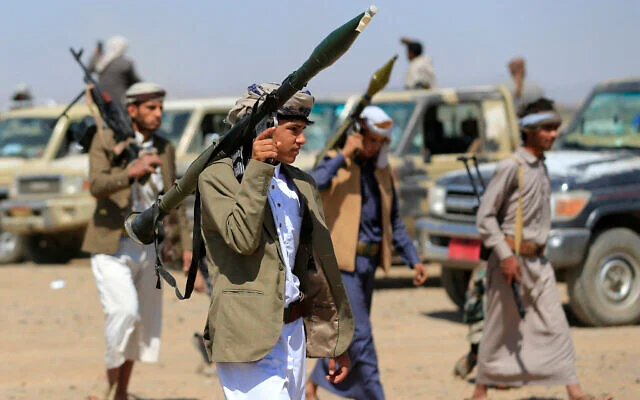
The immediate trigger was a wave of Houthi attacks that began on Tuesday, when the group said it struck a Saudi air base in Khamis Mushait along with oil infrastructure in nearby cities — among the most significant assaults on Saudi Arabia since the U.S.-Israeli war on Iran began in February. Saudi authorities said the strikes wounded 73 people, including women and children, and set fires at multiple energy facilities and utility sites across the kingdom’s southern region.
The attacks continued into Wednesday, when Houthi forces targeted the cities of Abha, Khamis Mushait, and Jazan with ballistic missiles and drones, according to Turki al-Malki, spokesman for the Saudi-led coalition fighting in Yemen. Al-Malki said the coalition would respond “responsibly” to protect Saudi sovereignty, national assets, and civilians. Saudi Arabia’s Civil Defence authority lifted alert levels in Khamis Mushait and Abha on Wednesday.
Houthi military spokesman Yahya Saree said on Wednesday that Saudi warplanes had carried out 54 airstrikes across several Yemeni provinces over the preceding 12 hours, and vowed they would “not go unanswered and unpunished.” Houthi-run Al Masirah television, citing the group’s health ministry, reported that at least 32 people had been killed in Saudi strikes on Yemen’s Al Jawf province over two days; Saudi Arabia has neither confirmed nor announced carrying out strikes there.
The renewed fighting follows months of escalation between Saudi Arabia and the Houthis that has revived fears of a full return to the war that a 2022 UN-brokered truce had largely suppressed. Saudi Arabia leads an Arab coalition backing a government based in southern Yemen, which the Houthis forced out of the capital, Sanaa, twelve years ago. The Houthis, aligned with Iran, declared a naval blockade against Saudi Arabia in the Red Sea in July, prompting coalition strikes on what it described as Houthi military installations. In recent days, Saudi-backed Yemeni government forces have launched a broad offensive on Houthi-held territory after the group attempted to advance on government positions; the government has said its goal is to retake all Houthi-held ground.
Saudi Arabia has called the Houthi attacks a dangerous escalation and said the coalition will act to deter further strikes. The Houthis maintain their attacks are a response to Saudi escalation inside Yemen.
A wider standoff over Iran
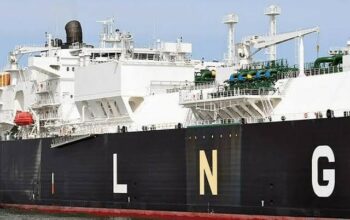
The confrontation is unfolding as Iran and the United States wage what officials describe as their most intense exchange of attacks on Gulf shipping since their war began, opening what amounts to a second front threatening global energy supplies.
Regional officials see no indication that Washington intends to ease its position. President Trump appears committed to maintaining the U.S. blockade on Iran until Tehran reaches an agreement with Washington, according to the regional diplomat, even as Qatar quietly explores new proposals aimed at restarting negotiations between the two sides.
A separate regional source said Saudi Arabia’s military response is expected to stay focused on the Houthis rather than Iran directly, and that Saudi officials do not believe the Houthi attacks will succeed in achieving Tehran’s broader aim of ending the U.S. blockade. Riyadh is not expected to press Washington to lift it, the source said, adding that Trump regards sustained economic pressure as the more effective route to a negotiated settlement.
“The question is how much pain Iran can absorb, and for how long,” the source said. “Trump does not want a military solution. He wants to squeeze them through the blockade.”
Pact born of a summer of realignment
The Makkah Defence Alliance was signed August 7 in the Saudi holy city for which it is named, formalising a mutual-defence pledge among Pakistan, Saudi Arabia, and Turkey. Under its terms, an attack on any one signatory is to be treated as an attack on all three — a framework Turkish officials have likened to Article 5 of the NATO treaty, while emphasising it is not directed at Iran or any other specific country.
The pact’s inaugural meeting followed on August 31 in Istanbul, where the three countries agreed to establish a permanent secretariat in Saudi Arabia to oversee the alliance’s work. That secretariat will be led initially by a secretary general from Pakistan, serving a three-year term.
Pakistan’s Foreign Office, addressing the alliance on Thursday at its weekly press briefing, described it as fundamentally defensive — intended, spokesperson Sajjad Haider Khan said, “to ensure regional security primarily through deterrence.” Khan said the pact remains in an early stage of institutional development, with much of its internal structure, procedures, and mechanisms still to be finalised, and that any move to expand membership beyond the three founding countries is “not on the cards” for now.
“At this stage, there are no discussions regarding the expansion of the Makkah agreement,” Khan said, adding that the three countries must first deepen their own cooperation before the pact could open to additional members who “share similar stances and perspectives.”
Copyright © 2021 Independent Pakistan | All rights reserved