By Bloomberg News
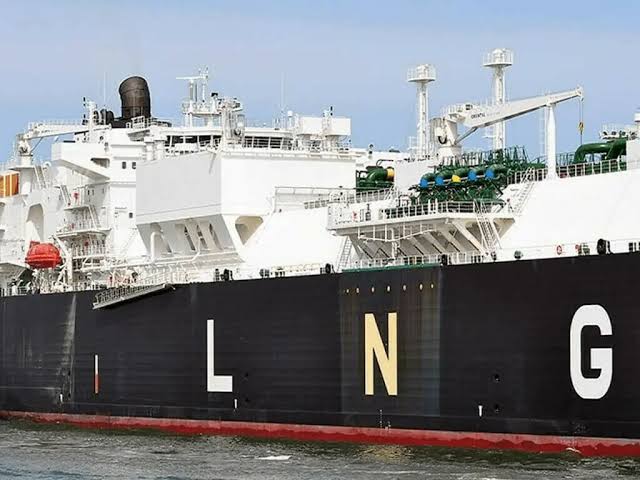
KARACHI: A Qatari liquefied natural gas tanker docked in Karachi on Thursday after openly crossing the Strait of Hormuz for the first time in nearly six weeks, a rare success for Gulf energy shipments even as the US and Iran traded their heaviest wave of tanker attacks since their war began.
The carrier Al Marrouna berthed at the Engro Elengy terminal in Port Qasim at 11:38 a.m. local time, according to port authority officials, after loading 142,217 cubic meters of gas — about 81,936 metric tons — at Qatar’s Ras Laffan export complex in early August. The vessel transited with its transponder switched on rather than going dark, the practice adopted by much of the commercial fleet still moving through the waterway.
The delivery, arranged under a government-to-government agreement between Islamabad and Doha, is the first Qatari LNG cargo confirmed to have exited the Persian Gulf since tensions around Hormuz flared in July. It offers a rare bright spot for a market that has spent the year absorbing shocks from a conflict that has now stretched past six months, drawn in Saudi Arabia and Yemen’s Houthi movement, and pushed oil to its highest level since May.
A Narrow Opening
Qatar accounted for roughly a fifth of the world’s LNG exports before the war but had all but halted shipments after one of its tankers was struck in late July. That attack followed a far larger blow in March, when Iranian missiles hit two production trains and a gas-to-liquids unit at Ras Laffan — the complex QatarEnergy calls the world’s largest LNG facility — knocking out roughly 17% of the country’s export capacity and prompting the state producer to declare force majeure on long-term contracts to buyers in South Korea, China, Italy and Belgium. Repairs to the damaged trains are expected to take three to five years.
Doha had begun cautiously restoring output following an April ceasefire, only to pull back again in July after the tanker Al Rekayyat was struck and disabled in the strait, its crew forced to abandon ship. QatarEnergy Chief Executive Officer Saad Al-Kaabi ordered operations at Ras Laffan held to minimum levels and cut the number of vessels scheduled to dock there. A second Qatari-loaded carrier, the GasLog Shanghai, was hit by a projectile in early August as it left the strait, extending the force-majeure list further and pushing insurance premiums for the route higher still.
Against that backdrop, Al Marrouna’s decision to transit in the open — rather than dark, as much commercial traffic has done in recent weeks — was read by shipping analysts as more than a routine delivery. Pakistan has served as a co-mediator, alongside Qatar, in on-and-off talks between Washington and Tehran since the war began, and has continued pressing both sides toward de-escalation even as fighting resumed. The visible, state-linked transit raised the possibility that it doubled as an early test of arrangements meant to give selected commercial vessels safer passage through the waterway — though neither government has confirmed such a mechanism exists.
A second Qatari LNG shipment is expected to reach Pakistan in the coming days, according to traders with knowledge of the matter.
Relief for a Strained Grid
For Pakistan, the cargo lands at a critical moment. Large parts of the country have been enduring six to 12 hours of daily load-shedding as the government scrambles to secure gas for power generation, and state-run Pakistan LNG Ltd. had twice rejected spot offers from BP Singapore in recent weeks — $26.90 and then $26.71 per million British thermal units for September delivery windows — before reissuing its tender on Sunday seeking a cargo for September 12-16. The Qatari term cargo, by contrast, was secured at a price equivalent to 13.37% of Brent, underscoring the value of long-term supply relationships at a time when spot LNG carries a steep premium. Pakistan LNG Ltd. subsequently cancelled a separate spot tender that had been floated on September 5 and was due to close September 8, a sign officials judged the Qatari delivery sufficient to ease the immediate squeeze.
The successful passage also registered with LNG traders elsewhere, easing — if only marginally — concerns that a prolonged Hormuz disruption would keep squeezing Asian and European gas benchmarks. Platts assessed the Japan-Korea Marker, the benchmark for spot LNG delivered to Northeast Asia, above $22 per million Btu in recent weeks, more than double year-ago levels, while European gas prices climbed past €50 per megawatt-hour for the first time since the two countries’ short-lived interim agreement last summer.
Pakistan’s ability to absorb the disruption has drawn notice from ratings agencies. Moody’s Ratings, which upgraded the country’s sovereign credit rating to B3 with a stable outlook this month, said Pakistan handled the Hormuz shock more effectively than the 2022 oil-price crisis that hammered its balance of payments. “Pakistan has been more resilient, more able to absorb this shock from the Middle East conflict this time around, compared to say in 2022, where there was an oil price shock,” Grace Lim, an assistant vice president at Moody’s, said. She attributed the buffer to lower inflation, a more stable exchange rate and higher foreign-currency reserves built up over the prior two years, while cautioning that Pakistan’s external position remains structurally fragile, with a narrow export base and limited foreign direct investment.
A War Without an Exit
The tanker’s arrival came as the conflict that has menaced the strait since March showed fresh signs of widening rather than winding down. Iran said Wednesday it had struck 10 vessels near Hormuz — two US ships and eight oil tankers — hours after US forces reported sinking five Iranian oil tankers, the largest publicly declared exchange of tanker attacks since fighting began. Brent crude breached $100 a barrel for the first time since July on the news, and stood at $101.25 on Thursday — up nearly 14% over the past month and more than 52% higher than a year earlier. The US retail price of diesel touched a fresh record above $5.94 a gallon.
Iran’s Islamic Revolutionary Guard Corps said it had also fired ballistic missiles at a base used by American forces near Al Azraq in eastern Jordan; Jordanian officials said air defenses intercepted 18 of 20 incoming missiles, with the remainder landing in unpopulated areas and no casualties reported. The Guards warned they would escalate sharply against further strikes — hitting 20 targets for every two or three the US or its allies struck — and said they would soon publish a much-expanded no-go zone at sea, stretching as far as Chabahar near Pakistan’s western coast. Britain’s UK Maritime Trade Operations reported several merchant vessels disabled by fire in the northern Gulf and Gulf of Oman on both sides of the strait, including one reported taking on water off Port Rashid in the United Arab Emirates; a maritime security source separately reported an LNG tanker damaged at the Emirati port of Khor Fakkan. Iraqi port officials said a tanker carrying two million barrels of fuel oil, the New Andros, caught fire after a drone strike in Iraqi waters, with no casualties reported among its 22 crew.
“Iran continues to try to hit U.S. naval ships, and for every time they do that or try to do that, they’re going to lose tankers,” US Secretary of State Marco Rubio told reporters during a visit to Colombia.
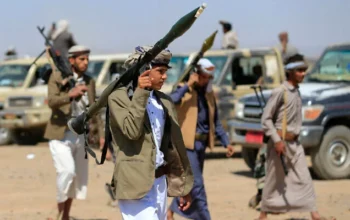
The fighting has drawn in a second front. Houthi forces in Yemen struck four Saudi cities on Tuesday, sparking fires at oil installations visible from space and wounding 73 people, according to Saudi authorities; a Saudi-backed government in southern Yemen has since launched retaliatory strikes. The attacks broke a truce that had largely spared the kingdom from direct Houthi fire for roughly four years. Because Pakistan signed a mutual defense pact with Riyadh last September — under which an attack on either country is treated as an attack on both — the escalation carries direct stakes for Islamabad. Pakistani officials have said the country remains committed to that framework and has warned Iran to restrain its Houthi allies, even as Islamabad continues working alongside Qatar to keep US-Iran diplomatic channels open.
Qatar’s Balancing Act
For Doha, Thursday’s transit reflects a broader strategy of trying to insulate itself from a chokepoint it cannot avoid. Qatar has no alternative export route for its LNG — every cargo leaving Ras Laffan must pass through Hormuz — leaving the country’s energy revenue, and by extension its economic diversification plans, hostage to a conflict it did not start. Qatari and Iranian officials met again in Doha in late August to discuss easing tensions around the strait, continuing a mediating role that, together with Pakistan, produced an April ceasefire and a subsequent memorandum of understanding between Washington and Tehran — agreements that have since broken down amid repeated violations by both sides.
Ship-tracking data show Hormuz traffic has fallen well below its 10-day average in recent days as the latest round of attacks unfolded, and the IRGC’s promised expansion of its exclusion zone, if implemented, could complicate the safe-passage calculus for the vessel expected to follow Al Marrouna in the coming days. For Pakistan, the immediate relief is real: a shipment secured at a fraction of prevailing spot prices, arriving as the power sector struggles through extended outages.
Copyright © 2021 Independent Pakistan | All rights reserved