By Staff Reporter
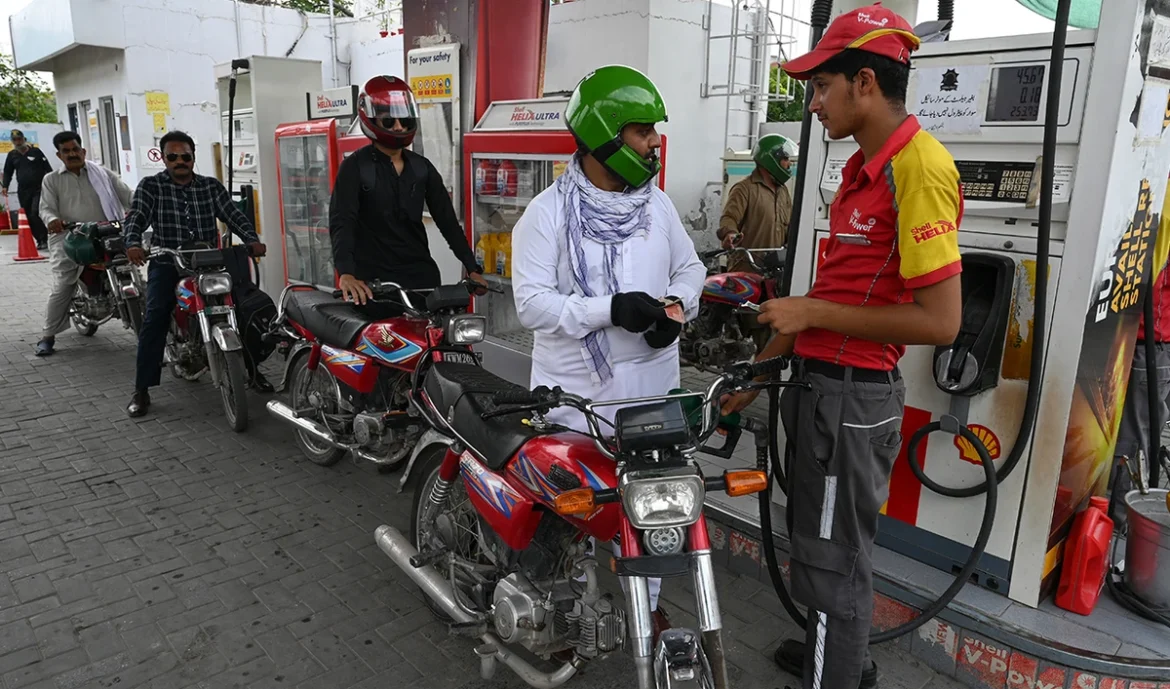
ISLAMABAD: The petroleum dealers are refusing to implement a government fuel subsidy program set to expand nationwide this week, escalating a standoff over who will cover the cost of discounted pump prices for millions of motorcycle and small-car owners.
The Pakistan Petroleum Dealers Association, which represents roughly 14,000 fuel retailers, said it won’t participate in Prime Minister Shehbaz Sharif’s relief scheme until the government specifies which agency will reimburse dealers for subsidised sales — and how quickly. Association officials warned the impasse could force filling stations to close if the program is imposed without resolution.
The dispute centres on a subsidy Sharif announced September 13 of 100 rupees per liter for owners of motorcycles, rickshaws and other two- and three-wheelers, plus cars with engines up to 800cc registered after January 2011. Motorcycle and rickshaw owners qualify for the discount on a monthly quota of 20 litres, while small-car owners get the subsidy on up to 30 litres. The measure was designed to cushion low- and middle-income households from a surge in fuel costs tied to the conflict in the Gulf, which has disrupted established shipping routes for crude imports.
Malik Khuda Bakhsh, the association’s chairman, said dealers support the intent of the program but can’t absorb the financial risk of its current design. “We welcome the government’s move for the benefit of the public, but our businesses should not suffer,” he said at a press conference.
Bakhsh said no filling station can sustain a loss of 100 rupees per liter while awaiting reimbursement on an undefined timeline, and that the association has gotten conflicting answers from the officials it has approached. Staff at the Oil and Gas Regulatory Authority and at oil marketing companies pointed to the Petroleum Division as the likely payer, he said, while Petroleum Division officials said the Finance Ministry would handle it. A Finance Ministry official, in turn, told the association the State Bank of Pakistan would release funds within a day or two — an assurance Bakhsh said hasn’t materialised into a firm commitment from any single institution.
Tariq Hassan, the association’s vice chairman, said dealers have spent three days trying to reach government officials for clarity and gotten no response, adding that the government could route the subsidy through company-owned stations instead if it wants to proceed without dealer buy-in. A second vice chairman, Anwar Kamal, said dealers won’t sell fuel under the relief package “from tonight” absent an agreed mechanism, and that any funds tied up in dealer accounts should not sit unreimbursed for an extended period.
“If the scheme is imposed on us, we will shut down fuel stations,” Kamal said.
The association is also pressing for changes beyond the payment mechanism. It wants the subsidy paid directly to consumers rather than routed through dealers, a return to what it described as the government’s previous subsidy disbursement method, and monthly rather than more frequent adjustments to petroleum product prices. Bakhsh separately called for dealer margins to rise to 8% and said the government should consult the association before finalising implementation details — consultation he said hasn’t happened despite repeated outreach, including to Petroleum Minister Ali Pervaiz Malik.
The association also cited pressure on dealer capital from inflation and outstanding payments already owed to dealers by oil marketing companies, warning that tying up additional funds under the new scheme risks pushing dealers into financial distress. Bakhsh rejected the idea of a “smart lockdown” as a response to the broader fuel-price crisis, saying such restrictions were understandable during the Covid-19 pandemic but aren’t a solution to current pricing pressures, which he said dealers cannot afford to absorb through reduced business activity.
Bakhsh also flagged rising shipping costs and delays for crude imports via the Red Sea, saying transit now exceeds 23 days for Saudi oil shipped that way, compared with roughly a week when Gulf supplies moved through the Strait of Hormuz.
The Ministry of Petroleum has since moved to address the standoff, scheduling a virtual meeting for Thursday with dealer representatives to lay out the reimbursement mechanism. Bakhsh confirmed the ministry’s secretary initiated contact and that some association representatives will attend in person in Islamabad while others join remotely from Karachi.
Sharif, meanwhile, chaired a review meeting on Wednesday on the program’s rollout, directing officials to establish facilitation desks at petrol stations staffed by administration officials, volunteers and station personnel to help eligible citizens register. He instructed that desk staff guide applicants through registration and other requirements, and called for expanded public-awareness efforts.
Officials briefed the prime minister that the program, after an initial pilot in Islamabad, has expanded nationwide, including to Azad Jammu and Kashmir and Gilgit-Baltistan. Registration requires four pieces of information — the applicant’s national identity card number, vehicle number plate, province of registration and vehicle registration date — with full details available on an Urdu-language website, pmfuelrelief.pk. Officials said successful registrations are climbing and that provincial governments are cooperating on implementation.
Separately, Information Technology Minister Shaza Fatima said Wednesday night that a technical issue preventing subsidy-related SMS messages from reaching users with preloaded packages or low balances had been resolved, with Sharif making the messages free of charge. She said telecom operator Jazz had completed the necessary system changes and that other carriers were expected to follow by Thursday.
Copyright © 2021 Independent Pakistan | All rights reserved