By Staff Reporter
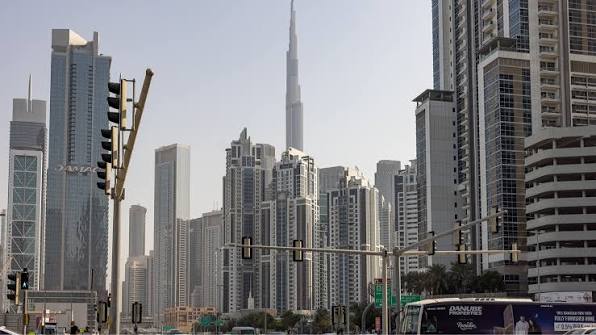
KARACHI: Some of Pakistan’s wealthiest investors are selling Dubai property and steering part of the proceeds into luxury real estate in Karachi, builders and dealers say, an unexpected windfall for the local market from a war that has undermined the emirate’s standing as a haven for South Asian money.
The shift, which industry figures describe as partial rather than a stampede, comes as the conflict between the U.S., Israel and Iran erodes what had been one of Dubai’s biggest selling points: the perception that it sat safely outside regional turmoil. Buyers are gravitating toward the Defence Housing Authority, an upmarket, military-run district of Karachi where builders say prices have jumped sharply since the fighting began.
“Money is not going to Dubai anymore,” said Mohammed Hassan Bakshi, chairman of the Association of Builders and Developers of Pakistan. “People are worried due to war and instability in the region. The money which was available in liquid form is being sent back to Pakistan.”
The evidence is largely anecdotal. Pakistani officials haven’t published data showing how much capital has left Dubai for Karachi, and no independent transaction records are available to confirm the scale of the price gains cited by developers.
A Crowded Trade
Pakistanis have long been among the biggest foreign buyers of Dubai property. An investigation published in 2024, based on leaked property records, found that Pakistanis held thousands of properties in the emirate worth billions of dollars, and it was widely assumed in Karachi’s property circles that some of that money was undeclared. Bakshi, who also heads a separate builders’ body, the All Pakistan Builders Association, said about $60 million in illegal money is generated in Pakistan each month and had been flowing into Dubai. That flow has now stopped, he said. IP couldn’t independently verify that estimate, which reflects one industry figure’s view rather than official data.
The war began on Feb. 28 when the U.S. and Israel struck Iran. Tehran retaliated with missiles and drones against Israel and Gulf states hosting American forces, including the United Arab Emirates. A ceasefire took hold in April, but the conflict has flared repeatedly since, most recently in early September, and the disruption to trade and energy flows has weighed on confidence across the Gulf.
Dubai’s property market has cooled as a result. Transaction volumes in the UAE fell 37% year-over-year in the first 12 days of March and were down 49% from February, according to Goldman Sachs estimates. Real estate consultancy ValuStrat’s Dubai price index fell 5.9% in March, 1.9% in April and 1.2% in May, though values were still about 2.5% higher than a year earlier in May. Sales fell about 19% in May from April, when they had declined 4%, according to ValuStrat. Some properties were subsequently offered at discounts of 12% to 15%.
Analysts say the war unsettled buyers drawn by Dubai’s tax-free status, political stability and reputation as a refuge in earlier regional crises.
Portfolio Rebalancing
A Dubai-based Pakistani investor who advises wealthy clients said she had seen people trim their holdings and redirect money to Karachi. She asked not to be named because of the sensitivity of her clients’ finances.
“In Dubai, people have been selling,” she said. “That is to move funds to what they now consider a bit safer haven, which happens to be DHA in Karachi.”
She cautioned against reading too much into it. “It’s not like something crazy, but people who owned 10 villas back then would potentially be sitting at six right now or seven right now and would have sold the remaining three or four just to do some portfolio shuffle,” she said.
Some sellers face a harder task. Bakshi said Pakistani investors are struggling to recover money tied up in Dubai, and that prices there have fallen to low levels. Currency dealers in Karachi described a similar problem for those whose funds are stuck, and said hundreds of millions of dollars could return to Pakistan from the Gulf once the situation normalises. Bakshi said some owners are waiting to liquidate, particularly those who consider themselves vulnerable given conditions in Dubai.
The picture in Dubai is more mixed than the dealers’ account suggests. ValuStrat’s data show prices in the emirate remain above year-ago levels, and analysts have described the decline as a correction concentrated in certain segments rather than a collapse. Ready-home transactions fell 55% in May from a year earlier, though the pace of price declines has slowed.
Karachi Prices Climb
Prices in Karachi’s DHA have risen steeply, builders say, though their estimates vary. Bakshi said a plot that sold for 400 million rupees ($1.44 million) before February now fetches 600 million rupees. Karim Dad, a Karachi property dealer, said prices in other parts of the city have risen 20% to 25%, and that both buying and selling have picked up as liquidity improved. Ahmed Owais Thanvi, southern region chairman of the Association of Builders and Developers, said a 100-square-yard plot once priced at 80 million rupees is now selling for about 160 million rupees. Mohammed Sohail, chief executive of Topline Securities, said prices in DHA Phase 8 rose 30% to 40% over two months.
Bakshi attributed part of the appeal to title security, saying Defence property carries a lower risk of double registration or fake dealing than other areas of the city.
Domestic policy has also helped. Prime Minister Shehbaz Sharif’s government cut property transaction taxes in the budget for the fiscal year that began July 1, abolishing a levy on holding high-value property and lowering withholding taxes on purchases and sales for registered taxpayers, according to tax guidance published after the budget. The State Bank of Pakistan raised its benchmark rate by 100 basis points to 11.5% in April, its first increase in almost three years, as oil prices climbed. The bank held the rate on Sept. 14. Inflation reached about 11% in August.
Not everyone expects the boom to last. Ahmed Owais Thanvi said there is little interest outside the Defence area, suggesting the market there is being pushed up by a narrow pool of buyers. One industry figure, who wasn’t authorised to speak publicly, said some investors are looking to Cyprus rather than Pakistan as a place to park money while the UAE market is unsettled.
What the Data Show
Official figures point to stronger inflows, though they don’t say whether property sales are behind them. Workers’ remittances from the UAE rose about 13% from a year earlier to $5.55 billion between February and August, State Bank data show. UAE inflows climbed 36% to $1.01 billion in May alone. Total remittances reached $3.66 billion in August, up 16.5% from a year earlier, and rose 14.7% to $7.3 billion over July and August, the first two months of the fiscal year.
Inflows through Roshan Digital Accounts, which let overseas Pakistanis hold funds and invest inside the country, rose 52.2% to $1.74 billion between March and August, according to Arab News calculations from central bank data. The number of accounts rose by 56,737 since February to 966,144.
Bakshi said some proceeds from foreign asset sales could be entering through remittance channels or the accounts, but the data don’t identify the original source. Zafar Sultan Paracha, secretary-general of the Exchange Companies Association of Pakistan, said the war may have supported inflows but warned against treating higher remittances as proof of large-scale repatriation of investments.
“We cannot say how much is the amount that the overseas Pakistanis regularly send for their homes and how much is the investment value,” he said. “Overall, we can say that these circumstances have supported our remittances. And the people who used to consider their money to be safe outside of Pakistan, now consider it to be safer in Pakistan.”
Muhammad Waqas Ghani, head of research at JS Global Capital, said remittance growth is broad-based and partly reflects greater use of formal channels. “There may have been some precautionary transfers because of the situation in the Gulf region, but largely, our remittance numbers are solid,” he said.
Pakistan’s remittances hit a record $41.6 billion in the year through June, with the UAE supplying about $8.8 billion, second to Saudi Arabia.
Copyright © 2021 Independent Pakistan | All rights reserved