By Staff Reporter
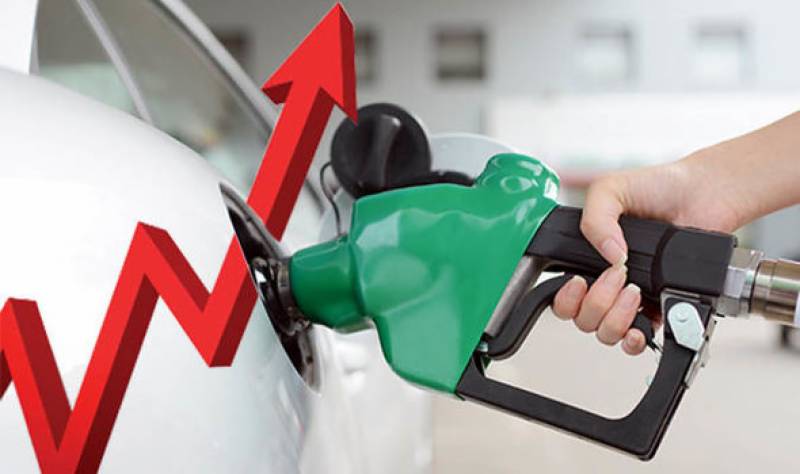
ISLAMABAD: Pakistan raised the retail price of petrol and cut the price of diesel for Tuesday, even as global crude dropped to its lowest in almost two weeks on hopes for diplomacy in the U.S.-Iran war.
The government increased petrol by 4.61 rupees a liter to 393.75 rupees, and lowered high-speed diesel by 1.96 rupees to 422.08 rupees, according to a Petroleum Division notification issued on Monday. The prices apply to Sept. 22.
The revision follows a three-day fixed price that ran from Sept. 19 to 21, when petrol was set at 389.14 rupees and diesel at 424.04 rupees after cuts of 1.65 rupees and 88 paise. The government continues to levy 114 rupees a liter in taxes and duties on petrol and 100 rupees on diesel.
Daily Pricing
Pakistan has set fuel prices daily since July 17, when Petroleum Minister Ali Pervaiz Malik announced the change from a weekly system as renewed hostilities between the U.S. and Iran unsettled oil markets. The Oil and Gas Regulatory Authority calculates the prices, which Malik has said are based on a seven-day average of international benchmarks. The government had announced weekly revisions since early March.
Pump prices have climbed steeply this month. Petrol was around 343 rupees to 346 rupees a liter at the start of September, according to local reports, and reached 391.22 rupees on Sept. 17. Diesel has moved above 420 rupees again after easing from a record 520.35 rupees on April 3. That was up from 281 rupees before the war began on Feb. 28. Petrol peaked at 458.41 rupees the same day, having started its climb from 266 rupees in the first week of March.
Global Backdrop
Brent crude fell as much as 4.2% on Monday to $99.51 a barrel, its lowest since Sept. 9, as investors bet on diplomatic progress at this week’s United Nations General Assembly and a partial recovery in Saudi shipments. Iran and the U.S. traded fresh threats on Sunday, though President Donald Trump said he would be open to meeting Iranian President Masoud Pezeshkian, who is expected in New York for the gathering.
“Investors are pinning their hopes on a breakthrough in peace talks this week,” said Tamas Varga, an analyst at PVM Oil Associates.
Saudi Arabia has shifted more crude through the Strait of Hormuz after Houthi attacks disrupted its East-West pipeline, JPMorgan analysts said in a Sept. 18 note. Satellite data showed Saudi flows through the strait averaged 2.9 million barrels a day over the past six days, compared with about 700,000 barrels a day in August.
Pakistan imports most of its petroleum, so movements in international prices pass quickly into domestic rates. Prices are also shaped by OPEC+ decisions, Middle East conflicts, sanctions on producers, and disruptions to shipping routes including the Strait of Hormuz and the Red Sea.
Relief and Austerity
Prime Minister Shehbaz Sharif announced a relief plan on Sept. 13 offering 100 rupees a liter off petrol for motorcycles, three-wheeler rickshaws and cars with engines up to 800cc. Two- and three-wheeler owners receive the discount on 20 liters a month, and small-car owners on 30 liters. That caps the monthly benefit at 2,000 rupees and 3,000 rupees, respectively. Officials estimate about 11.8 million beneficiaries, comprising roughly 10 million two-wheeler users, 800,000 three-wheeler users and 1 million small-car owners.
Sharif’s office said on Sept. 18 that motorcycles, rickshaws and Qingqi rickshaws registered after Jan. 1, 2006 would also qualify. The rollout has faced problems: local media reported that many pumps declined to honor the digital token on its first day, saying they lacked the required system.
The government also reintroduced austerity measures on Sept. 17, effective immediately. Shops, markets, malls, bazaars and general stores must close by 9 p.m. Marriage halls and other event venues must shut by 10 p.m., and restaurants and cafes by 11 p.m. Takeaway and home delivery are exempt, as are pharmacies, hospitals and petrol pumps. Fuel allocations for official vehicles are cut 50% for three months.
Petrol is used mainly in private transport, rickshaws and two-wheelers, so its price affects middle- and lower-middle-income households. Diesel, used in heavy transport, power plants and large generators, affects the wider economy. Petrol and diesel are the main revenue earners, with monthly sales of about 700,000 to 800,000 tons combined, compared with about 10,000 tons of kerosene.
Copyright © 2021 Independent Pakistan | All rights reserved