By Staff Reporter
ISLAMABAD: The federal government has announced it will mount a legal challenge in the Supreme Court against a new law passed by the Khyber Pakhtunkhwa cabinet that would hand the provincial government sweeping new powers over the police force, in an escalating confrontation between Islamabad and the Pakistan Tehreek-e-Insaf administration in Peshawar.
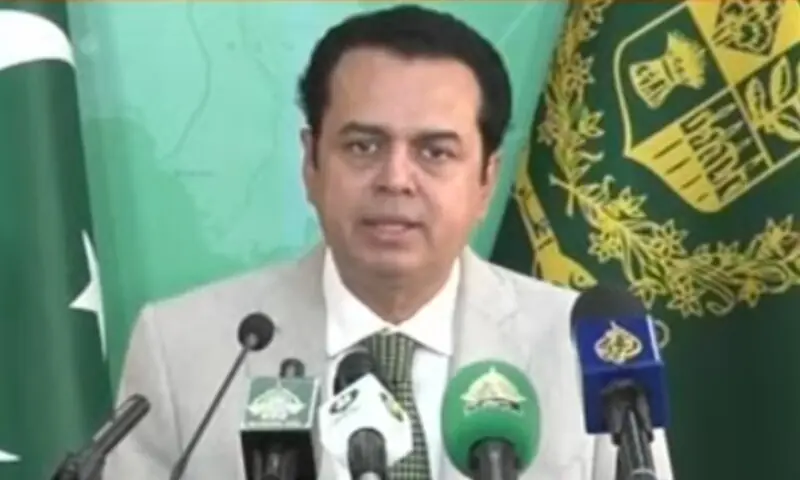
Talal Chaudhry, the Minister of State for Interior, told reporters in Islamabad on Thursday that the federal government had “several options” open to it over the Khyber Pakhtunkhwa Police Act 2026, and confirmed that a formal challenge would be lodged before the country’s highest court. His comments came a day after the provincial cabinet, chaired by Chief Minister Sohail Afridi, signed off on the revised legislation, having incorporated amendments meant to address objections raised by some of its own members.
The bill, which still needs approval from the provincial assembly before it becomes law, would repeal the Khyber Pakhtunkhwa Police Act 2017 and hand the chief minister authority over senior police postings, transfers and policymaking that currently sit with the inspector general of police. It follows a Peshawar High Court ruling in February that struck down similar amendments the provincial government had attempted to introduce in 2024.
Under the proposed law, the federal government would put forward a panel of three officers for the post of inspector general, with the provincial government empowered to select one from the list — or reject the panel altogether. It would also create new oversight boards, establish a formal separation between police policy and day-to-day operational matters, and overhaul the force’s investigation and dispute-resolution systems.
Speaking at length to journalists, Chaudhry argued that the changes went far beyond a simple rebalancing of powers and amounted to an unpicking of the entire chain of command. “This is not only about the IG. You have taken back the entire command structure,” he said, noting that the bill would strip regional police officers of the authority to appoint grade-17 officers, including deputy superintendents of police, while additional inspectors general would lose the power to make appointments to grade-17, 18 and 19 posts outside field postings.
He drew a comparison with the limits already placed on provincial legislatures, arguing that just as a province could not raise its own army, navy or railway, it had no constitutional authority to override the rules governing the Police Service of Pakistan. “If Balochistan wants to make its own army, can it make an army through legislation?” he asked, adding that PSP rules had already withstood challenges in the high courts and the Supreme Court and represented settled law that could not be undone by a provincial assembly.
Chaudhry said all four provinces already gave their chief ministers some consultative role over police postings, but insisted that power had deliberately been kept limited to protect professional independence. Widening it to cover appointments and transfers from the rank of deputy superintendent upward, he warned, risked reshaping the incentives facing serving officers. “An officer will start looking towards the politician instead of his senior,” he said, asking what would happen to discipline and morale once personnel began weighing the preferences of political leaders above those of their own chain of command.
The minister linked his objections directly to the province’s continuing struggle against militancy, arguing that the timing of the reforms — with Khyber Pakhtunkhwa’s police facing sustained terrorist violence — made them especially damaging. He recalled that Pakistan Tehreek-e-Insaf founder Imran Khan had once championed the case for insulating police from political interference, a push that led to the formation of a commission and the 2017 police law that PTI’s own provincial government was now seeking to unwind. “Nine years later, you have brought a law that is 180 degrees against that,” he said. “Police is not agriculture or fisheries.”
He also questioned how the province intended to produce senior officers in future if the influence of Police Service of Pakistan cadres was diminished. “If there are no PSP officers, where will your grade 19, 20, 21 and 22 officers come from?” he asked, suggesting the province appeared to be preparing to recruit and promote its own DSPs independently of the federal service.
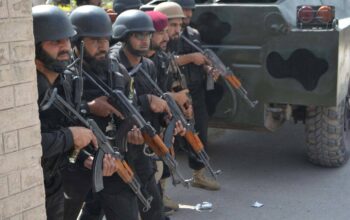
Much of Chaudhry’s briefing focused on what he described as chronic under-resourcing of the Khyber Pakhtunkhwa police, which he said had been left to fight terrorism without adequate pay, equipment or infrastructure despite provincial control of its budget. He said officers in the province earned less than counterparts elsewhere in Pakistan, and that compensation for the families of officers killed in action lagged behind other provinces. He cited shortages of bulletproof jackets and vehicles, forensic laboratories, Safe City surveillance systems and secure accommodation, and noted that the province’s Counter Terrorism Department had operated for years out of rented buildings, several of which had previously been attacked, with fatal consequences for police and civilians.
By contrast, he said, security checkpoints along Punjab’s borders were protected by concrete fortifications, round-the-clock surveillance and armoured vehicles, and no police officer had been killed at such a post since the measures were introduced. “The KP police are very brave, but bravery alone cannot fight a terrorist equipped with advanced weapons,” he said, alleging that militants often carried equipment worth $10,000 to $15,000, including night-vision gear and drones left behind in Afghanistan after the withdrawal of Nato and American forces, while ordinary officers on the front line frequently lacked even basic protective equipment.
Chaudhry further alleged that funds allocated to the province for counterterrorism under the National Finance Commission award — which he put at roughly 800 billion rupees under KP’s one per cent share — had gone largely unaccounted for. “Show me even 200 billion rupees,” he said. He also raised the long-delayed Safe City project in Peshawar, saying it was only nearing completion because of efforts by the police leadership, and questioned what would happen to its funding and oversight once the new law took effect.
The minister was critical of a proposed liaison committee structure under the bill, which he said would consist of six members drawn solely from the provincial assembly, with no seats reserved for opposition politicians. He argued that judges, civil society figures, journalists and retired police officers could offer valuable independent guidance, and asked why no such mechanism had been considered necessary under the existing 2017 law. “There are judges, civil society and other people who can give good advice and guidance,” he said, adding that fundamental standards — pay scales, training, appointment procedures and command arrangements — needed to remain broadly consistent across provinces, even if differences such as uniform colour or the structure of traffic police could reasonably vary. “One province cannot have completely different salaries, training, command structures, investment and appointment and posting procedures for its police,” he said. “But basic things should remain the same.”
He went further, suggesting that greater political control over transfers and promotions could ultimately affect how officers approached politically sensitive policing decisions, including responses to banned groups. Officers, he warned, could begin to weigh “whether a politician is pro-Taliban or anti-Taliban, whether he likes the TLP or not, and whether action should be taken” — a dynamic he said would be especially dangerous while the province remained on the front line against militancy.
Chaudhry also accused the provincial government of failing to adequately support the families of slain officers, alleging that provincial ministers had not attended funerals for personnel killed in a recent attack in Kohat. “You do not even attend the funerals of the martyrs,” he said, calling the timing of the reforms, set against what he characterised as a lack of political and financial support, a further blow to police morale.
The minister confirmed that disputes over the powers of police chiefs and postings authorities had already reached the Sindh and Peshawar high courts, with several related cases heard by the Supreme Court, and said he expected the new legislation to meet the same fate. He said the federal government would examine the law against the Constitution before deciding on further steps, including the possibility of new legislation in parliament, noting that some federal rules remained in force even after the sweeping devolution of powers to the provinces under the 18th Amendment.
Copyright © 2021 Independent Pakistan | All rights reserved