By Staff Reporter
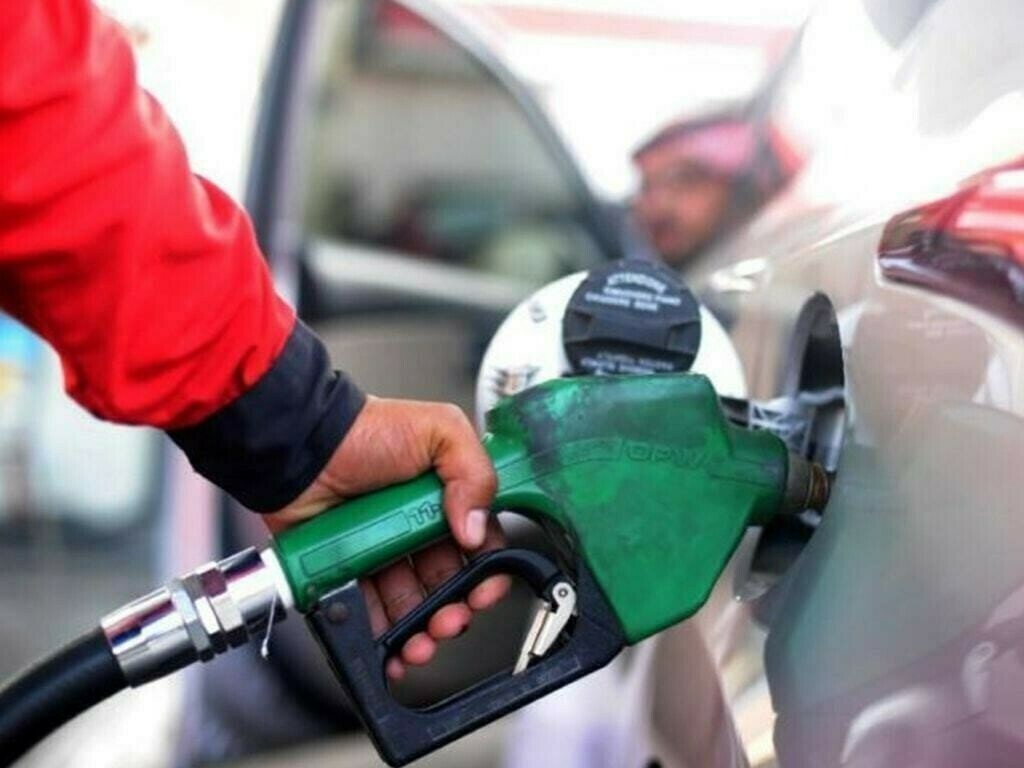
ISLAMABAD: Pakistan lowered pump prices on Thursday for a third consecutive day on petrol and a fourth on diesel — cutting the two fuels by 84 paisas and Rs2.63 a liter, respectively, as global crude continued to retreat from its September highs even though Iran-U.S. talks at the United Nations General Assembly broke up without a joint statement.
The Petroleum Division said petrol will sell for Rs389.28 a liter and high-speed diesel for Rs412.12 a liter effective Friday, Sept. 25. The reduction follows a steeper cut announced Wednesday, when petrol fell Rs1.93 and diesel dropped Rs4.21 for Thursday’s pricing. The government continues to collect Rs114 a liter in taxes and duties on petrol and Rs100 a liter on diesel.
In the five days to Sept. 25, petrol rose once and fell three times: up Rs4.61 on Sept. 22 to Rs393.75, then down Rs1.70, Rs1.93 and Rs0.84 on the three days that followed, approaching the week at Rs389.28. Diesel fell on four consecutive days, from Rs424.04 on Sept. 21 to Rs412.12 on Sept. 25 — a cumulative drop of Rs11.92 a liter.
Well Below April’s Wartime Peak
Current prices remain far below the records set April 3, when diesel touched Rs520.35 a liter and petrol reached Rs458.41. Both fuels began climbing after the United States and Israel launched joint strikes on Iran on Feb. 28, which triggered Iranian retaliation across the region and cut off tanker traffic through the Strait of Hormuz; petrol stood at Rs266 and diesel at Rs281 in the first days of March, before the war-driven run-up began in earnest.
A ceasefire and a memorandum — later known as the Islamabad Memorandum — signed by the U.S. and Iranian presidents on June 17 briefly lifted the dual blockade before fighting resumed.
The volatility pushed Islamabad to abandon its traditional twice-monthly price-setting schedule. Petroleum Minister Ali Pervaiz Malik announced on July 17 that the cabinet had authorized the Oil and Gas Regulatory Authority to reset prices daily, saying international benchmarks were moving too fast for a biweekly cycle to track.
Relief Scheme Widens Again
Prime Minister Shehbaz Sharif’s fuel-subsidy program, unveiled Sept. 13 and rolled out nationally at midnight on Sept. 16, offers Rs100 a liter in relief to motorcycles, rickshaws, Qingqis and cars up to 800cc. Roughly 11.8 million people are covered — 10 million two-wheeler users and 800,000 three-wheeler users eligible for up to 20 liters monthly (a Rs2,000 cap), and one million small-car owners eligible for up to 30 liters (a Rs3,000 cap).
On Sept. 18, the Prime Minister’s Office expanded eligibility to motorcycles, rickshaws and Qingqis registered after Jan. 1, 2006, and added a separate Rs500-per-week token for two- and three-wheeler users buying less than five liters at a time, with four tokens issued monthly. Owners of 800cc cars continue to receive relief on 10 liters every 10 days, unchanged.
The same Sept. 17 Cabinet Division notification that retained 9 p.m. closing times for shops and malls, 10 p.m. for wedding venues and 11 p.m. for restaurants — with takeaway and delivery exempt — also cut fuel allocations for official vehicles by 50% for three months, banned government vehicle purchases outright, restricted non-essential foreign travel by officials, and ordered a 5% cut to the non-employee-related budget for the current fiscal year (FY2026-27). It is the second time this year Islamabad has resorted to such measures: a similar round introduced in March was lifted in June once the Islamabad Memorandum eased prices, before being reinstated as the conflict resumed.
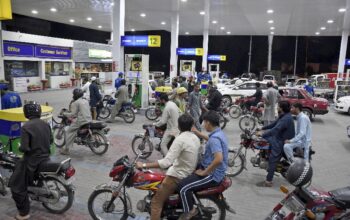
Petrol and diesel remain Pakistan’s dominant fuel products, with combined monthly sales of 700,000 to 800,000 tonnes against roughly 10,000 tonnes for kerosene. Petrol use is concentrated among motorcycles and rickshaws and weighs heaviest on middle- and lower-income households; diesel prices matter more to freight, power generation and industry.
Global Oil: Supply Fixes Are Beating Diplomacy
Saudi Arabia’s East-West Pipeline, which can carry up to five million barrels a day to the Red Sea export hub at Yanbu, was shut by a drone attack on Sept. 13. Before dawn on Sept. 19, Houthi forces struck Riyadh and the Yanbu Aramco facility directly — the first air-raid alert in the Saudi capital since the war escalated. Brent crude still fell in the first trading session afterward, to $101.71 a barrel on Sept. 21, its lowest level since Sept. 10, as traders noted Saudi exports above four million barrels a day kept moving regardless.
The pipeline itself came back online Sept. 22. By Sept. 23, Brent had dropped further, to $96.84 a barrel, down $4.77 on the day, even as cargo-tracker Kpler reported Asian crude imports hit a war-era high of 23.96 million barrels a day for September — evidence that refiners have adapted to the disrupted supply chain faster than diplomats have resolved it.
That diplomacy showed little sign of progress this week. Iranian and U.S. officials met on the sidelines of the UN General Assembly, but the talks ended without a joint statement, and Iranian President Masoud Pezeshkian told the assembly that Tehran would not bow to threats and would keep restricting navigation through the Strait of Hormuz as long as U.S. sanctions and its naval blockade remain in place. Trump, separately, described a “very productive” meeting with Iranian envoys and said further talks were planned.
Pakistan, which imports the bulk of its petroleum needs, remains exposed to further swings tied to OPEC+ decisions, the Hormuz standoff and the broader path of a war now in its seventh month.
Copyright © 2021 Independent Pakistan | All rights reserved