By Staff Reporter
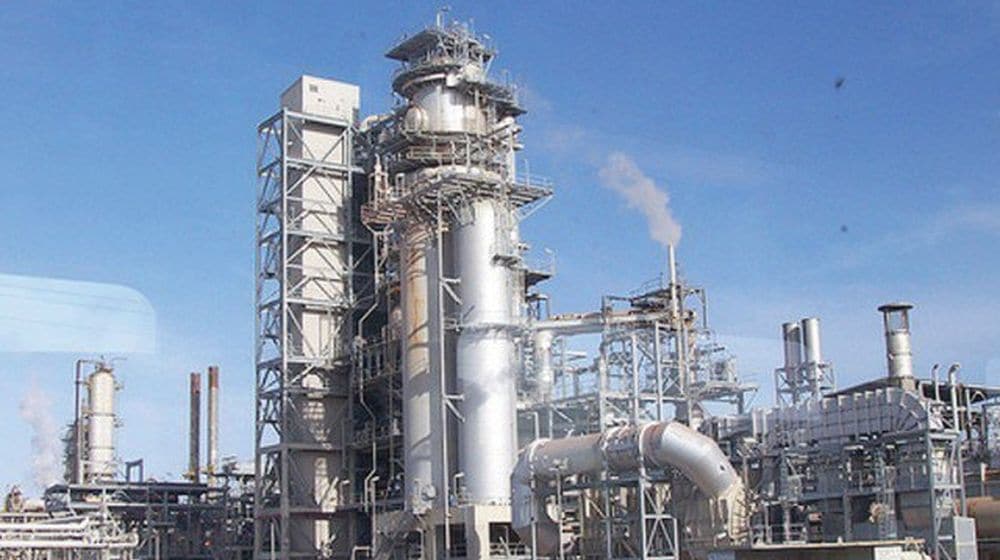
ISLAMABAD: Four of Pakistan’s five oil refiners signed binding agreements with the government on Thursday to spend roughly $5 billion over five years upgrading their plants, ending a stalemate that stretched nearly seven years and blocked one of the country’s largest planned industrial investments.
Attock Refinery Ltd., National Refinery Ltd., Pakistan Refinery Ltd. and Cnergyico Pk Ltd. signed the agreements in Islamabad with Inter State Gas Systems, the state-owned company the government designated to implement and monitor the upgrade program. Pak-Arab Refinery Ltd., a joint venture between Pakistan and Abu Dhabi known as Parco, did not sign, with people familiar with the matter saying the company considers its existing technology sufficiently modern. Should Parco eventually join, total investment across the sector is projected to reach $6 billion.
The signings mark the formal start of work under the Brownfield Petroleum Refining Policy 2026, approved by the Cabinet Committee on Energy under Prime Minister Shehbaz Sharif on July 28, after amendments to the original 2023 framework repeatedly stalled implementation.
Adil Khattak, chief executive officer of Attock Refinery and chairman of the Energy Committee at the Overseas Investors Chamber of Commerce and Industry, called the agreements a milestone for an initiative he described as among the largest coordinated industrial investment programs Pakistan has undertaken.
“These projects will fundamentally modernize Pakistan’s refining infrastructure, enable production of cleaner Euro-V fuels, substantially reduce furnace oil production, replace significant quantities of imported petroleum products and strengthen the country’s energy security,” Khattak said.
Khattak traced the policy’s origins to a first draft circulated in December 2019, followed by approval in August 2023 and subsequent rounds of amendment before Thursday’s signings. He put the cost of the delay at roughly $1.5 billion a year in foregone foreign-exchange savings, and said the refiners now face a harder task translating commitments into financing, engineering and construction within the five-year window.
“Today’s signing, however, is not the end of the journey,” Khattak said. “It is the beginning of an even more challenging phase as the five refineries translate their commitments into financing, engineering, procurement, construction and commissioning of these complex projects within the stipulated five-year period.”
The push to modernize domestic refining has taken on added urgency this year as conflict between the US and Iran disrupted shipping and energy supplies across the Middle East, pushing up fuel costs for import-reliant Pakistan. Petroleum Minister Ali Pervaiz Malik has said the regional conflict underscored the need to reduce dependence on external supply chains. Pakistan spent about $16.9 billion on petroleum imports in the last fiscal year.
Output Targets Shift Toward Diesel, Away From Furnace Oil
Under the policy, which supersedes all earlier refining frameworks, the five refiners are required to lift both the quality and volume of their output while sharply cutting production of furnace oil, a lower-value byproduct.
Combined petrol output is targeted to rise 72% to 18,400 tons a day from 10,700 tons currently, while high-speed diesel production is set to climb 39% to 29,520 tons a day from 21,240 tons. Furnace oil production is meant to fall 63%, to 5,714 tons a day from 15,417 tons.
The refiners are committed to producing fuel meeting Euro-V specifications, which cap sulfur content at 10 parts per million, compared with 50 ppm under Euro-IV and 150 ppm for gasoline and 350 ppm for diesel under Euro-III. Pakistan State Oil became the country’s first oil-marketing company to sell Euro-V fuel in 2020; the petroleum ministry has said the standard sharply cuts sulfur and benzene emissions from vehicles.
The petroleum division is required to notify Euro-V specifications for compliance within one month of the agreements being signed.
Incentive Structure Built Around Tariff Protection
The policy pairs the production targets with a fiscal package designed to make the investments commercially viable. It sets a minimum customs or regulatory duty of 10% on imported motor gasoline and diesel for seven years, with any duty collected above that threshold channeled into the Inland Freight Equalisation Margin pool, which also reimburses refiners for customs duty paid on crude.
Refiners will receive 10% tariff protection on the ex-refinery price of gasoline and diesel for seven years from the date their agreements were signed, contingent on opening a joint escrow account with the Oil and Gas Regulatory Authority within 90 days of the amended policy’s notification. Of that incentive, refiners must deposit 2.5% of the deemed duty on diesel and the full 10% incremental incentive on gasoline into the escrow account, held jointly with Ogra at the National Bank of Pakistan, to fund the upgrade work itself. Until that account is opened, the incremental incentive will flow into the IFEM pool instead.
A separate 7.5% deemed duty on diesel, intended to support the refiners’ longer-term sustainability, will continue for 20 years after the initial seven-year incentive period ends, or until the sector is deregulated, whichever comes first. Equipment and materials used in the upgrade projects are exempt from sales tax, and disallowed sales tax tied to refinery operations will continue to be reimbursed through IFEM through the current fiscal year and for the duration of the upgrade agreements.
The policy also raises refiners’ minimum crude-stock requirements once upgrades are complete, mandating at least 14 days of coverage at all times, with refiners that import crude required to hold a further five days of cover at sea. It permits refiners to sell output to any Ogra-licensed oil-marketing company and to export surplus product beyond domestic demand, subject to regulatory approval, while requiring binding supply agreements between refiners and marketing companies for gasoline and diesel.
The five refiners have combined crude-processing capacity of about 350,000 barrels a stream day. Industry executives have previously said the upgrades are likely to require foreign financing, pointing to Saudi Arabia, Azerbaijan and Turkey as potential sources of capital.
Copyright © 2021 Independent Pakistan | All rights reserved