By Staff Reporter
ISLAMABAD: The World Bank urged Pakistan on Friday to speed up tax and regulatory changes under their $20 billion reform partnership, pressing for harmonized sales taxes and overhauls of provincial agriculture and property levies.
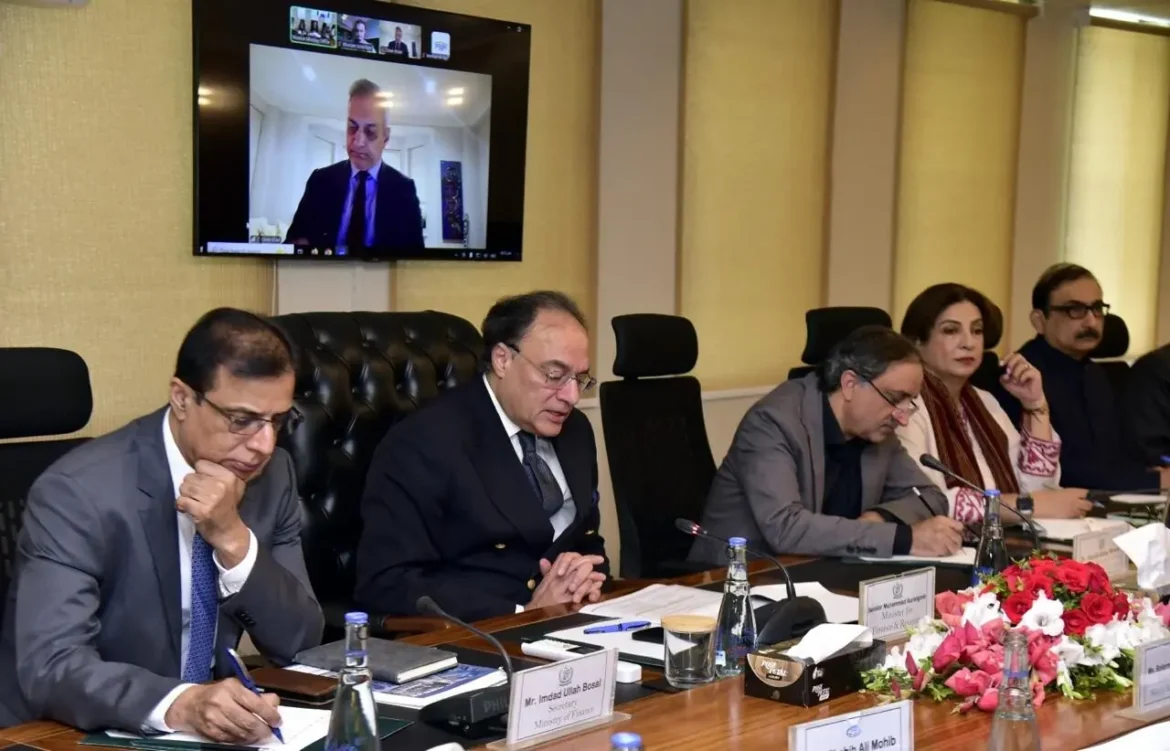
The bank wants the changes to lift growth, raise revenue and make trade and investment easier, according to a Finance Ministry statement on a meeting between Finance Minister Muhammad Aurangzeb and a delegation led by Country Director Bolormaa Amgaabazar.
The two sides agreed to shift from designing reforms to carrying them out, with a focus on measures that deliver gains in economic activity, investment, jobs and the business climate, the ministry said. That requires closer coordination among federal ministries, provincial governments and implementing agencies.
The bank launched its 10-year country partnership framework for 2025-35 in January 2025. It envisages about $20 billion in blended financing, combining concessional and commercial lending.
The talks covered a proposed World Bank growth and jobs operation aimed at the investment climate, access to finance, productivity and the labor market. According to the ministry, the bank outlined proposals on:
- the investment framework and the removal of regulatory and business constraints;
- small-business financing, including a unified insolvency framework and factoring legislation under the Prime Minister’s Access to Finance initiative;
- export-finance products for the EXIM Bank of Pakistan;
- pharmaceuticals and medical products, and agriculture, including seed registration, deregulation of selected commodities and international accreditation;
- skills, including the national vocational qualifications framework and formal overseas migration pathways supported by digital platforms.
The two sides also reviewed the National Tariff Policy and continuing analytical work on tariff changes, including in the automotive sector.
Tax changes
On revenue, the discussion centered on World Bank technical help for the medium-term revenue strategy and revenue-policy modeling. For sales tax harmonization, the ministry said the talks covered closer alignment of rules, definitions and classifications for services, better federal-provincial coordination and stronger data sharing. The meeting also reviewed provincial agricultural income tax laws and digital systems for registration, filing and payment. On provincial property taxes, it looked at harmonizing valuation methods and moving gradually toward market-based valuations.
Aligning provincial tax regimes has been a long-running goal of Pakistan’s reform agenda, and it depends on cooperation from governments that control their own revenue bases.
The ministry said the World Bank is also helping develop a capital-market reform roadmap through the Capital Markets Development Council. Aurangzeb stressed stronger debt management and domestic bond markets, and the sides discussed tools for managing market risk and investor relations. They also discussed the bank’s analysis of Pakistan’s sovereign credit profile. The minister said the government would work on the fiscal, external, growth and institutional factors that drive ratings.
Aurangzeb said on Thursday he expects Pakistan to reach a B+ sovereign rating by the first quarter of fiscal 2027-28. S&P Global has already raised the country to B from B-, with a stable outlook.
The World Bank meeting comes during a busy stretch of official lending talks. An IMF mission led by Iva Petrova is in Islamabad for the fourth review of the $7 billion Extended Fund Facility and the third review of the $1.4 billion Resilience and Sustainability Facility. The authorities remain in breach of an end-March structural benchmark on amending the Sovereign Wealth Fund law, which would add governance safeguards for seven state-owned enterprises holding about $8 billion in assets.
The talks also take place against a harder external backdrop. Higher oil prices and renewed inflation are testing the recovery, though reserves, remittances and manufacturing have given Pakistan firmer footing. Aurangzeb has cited the prolonged Iran conflict as a challenge to the outlook.
The bank has described the growth problem as largely one of structure. It projects growth of 3% in the fiscal year that ended in June and 3.4% in the current one, and it has called for broader tax coverage, tighter tax administration and a smaller state role in the economy. It has also noted that exports have slipped to about 10% of GDP from 16% in the 1990s, leaving growth reliant on debt and remittance-driven consumption.
The delegation also briefed Aurangzeb on analytical work on governance and institutional effectiveness. The ministry said it centered on measures to improve regulatory quality, transparency and accountability. It said both sides reaffirmed their commitment to the partnership, with an emphasis on implementation, private-sector-led growth and better management of public resources.
Copyright © 2021 Independent Pakistan | All rights reserved