By Staff Reporter
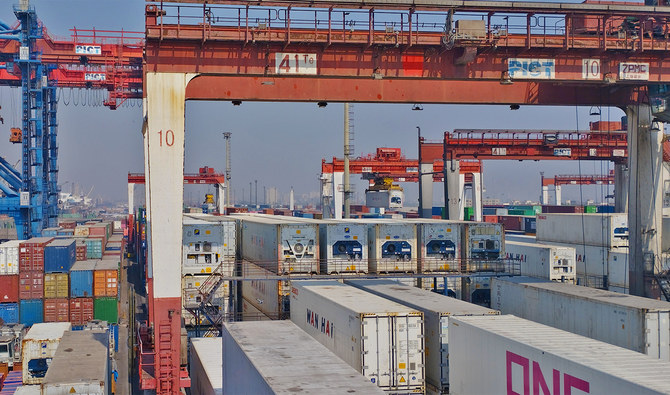
ISLAMABAD: Pakistan’s merchandise trade deficit widened in September as a rebound in exports failed to keep pace with a larger rise in imports, leaving the shortfall for the first three months of the fiscal year more than $1.4 billion wider than a year earlier.
Exports rose 17.6% from a year earlier to $2.94 billion, according to provisional figures from the Pakistan Bureau of Statistics. The data were released on Friday. Imports climbed 11% to $6.49 billion. The resulting deficit of $3.56 billion was 6.2% wider than the $3.35 billion recorded in September 2025, and about 8% larger than the revised $3.29 billion in August.
The month-on-month moves were sharper. Exports gained 16.1% from $2.53 billion in August, while imports rose 11.5% from $5.82 billion. In rupee terms, exports were Rs815.1 billion, imports Rs1.80 trillion and the deficit Rs988.4 billion, up from Rs916.1 billion in August and Rs945.1 billion a year earlier.
Exports covered about 45% of the import bill in September, against roughly 43.5% in August and 42.7% in September last year, based on the bureau’s dollar figures. The ratio improved, but the absolute gap still grew. Imports rose by about $646 million from a year earlier, compared with a $440 million increase in exports.
For the July-September quarter, the deficit reached $10.79 billion, up 15.1% from $9.37 billion in the same period of the previous fiscal year. Exports increased 10.8% to $8.42 billion, while imports advanced 13.2% to $19.22 billion. In rupee terms, the quarterly deficit stood at Rs3.0 trillion, compared with Rs2.65 trillion a year earlier, on exports of Rs2.34 trillion and imports of Rs5.34 trillion.
The rupee figures grew more slowly than the dollar ones. Exports rose 8.8% in rupee terms for the quarter, against 10.8% in dollars, and imports rose 11.2% against 13.2%. That implies a firmer local currency than a year ago, at roughly 277.7 rupees per dollar for the quarter against about 282.9, based on the bureau’s own totals.
The September breakdown by commodity wasn’t included in the summary tables. Data from earlier in the fiscal year point to where the pressure has been. Textile and clothing exports rose 5.55% to $3.379 billion in July-August, while the oil import bill grew 8.35% to $2.75 billion over the same two months. Pakistan’s deficit with China, its largest import source, widened 41% to $3.77 billion in July-August, with imports from China at $4.24 billion against exports of $480 million.
The latest figures follow a weak year for shipments. Total exports fell 5.9% to $30.14 billion in the fiscal year ended June, according to the Pakistan Textile Council, even as textile and apparel exports edged up 0.3% to $18 billion.
The wider gap comes as the State Bank of Pakistan holds borrowing costs steady. The central bank left its benchmark rate at 11.5% on Sept. 14, the third straight meeting without a change. It had raised the rate by 100 basis points to that level in late April. Total liquid foreign-exchange reserves were $26.77 billion as of Sept. 25, of which the central bank held $21.44 billion. Trading Economics has flagged the country’s vulnerability to energy shocks stemming from the conflict in the Middle East, which threatens to raise import costs.
Copyright © 2021 Independent Pakistan | All rights reserved