By Staff Reporter
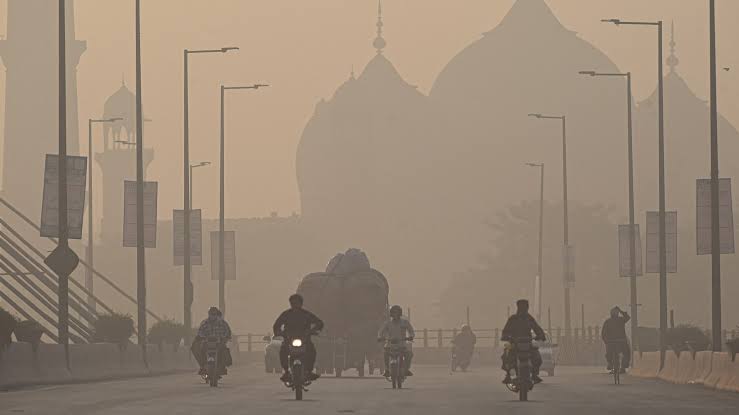
LAHORE: Lahore was ranked the most polluted major city in the world on Friday morning, as its air quality fell into the “unhealthy” category and Punjab’s government ordered emergency anti-smog operations across the city’s worst-hit districts.
The city recorded an air quality index (AQI) of 167 on IQAir’s live global ranking, ahead of Dhaka in Bangladesh at 164 and Cairo in Egypt at 158. Provincial authorities later put Lahore’s reading at 236, blaming weak winds and lower temperatures for the build-up of pollutants.
By 2pm, Lahore had dropped to tenth place on the IQAir list with an AQI of 149. The rankings are updated hourly, so a city’s position can change sharply over a single day.
Readings from the Punjab Environment Protection Agency’s real-time dashboard varied widely across the city. Multan Road recorded an AQI of 500 at 6am, but the figure had fallen to 91 by 8am. Punjab University went from 345 to 385 over the same period, the highest of any monitored area. Shahdara recorded 292 and Gulberg III 227 at 6am.
Officials said winds were blowing from the southeast at five to six kilometres per hour until noon. They were expected to pick up to eight to 10 kilometres per hour in the early afternoon, which could help disperse pollutants.
Lahore was the only Pakistani city in the top 30 on Friday morning. Karachi was the only other Pakistani city on the 125-city list, at 34th with an AQI of 69. By 2pm it had risen to 23rd with a reading of 75.
IQAir said PM2.5 concentrations in Lahore were 15.2 times the World Health Organisation’s annual guideline value. PM2.5 refers to fine particles of 2.5 micrometres or smaller. IQAir says they pose the greatest health threat of any pollutant because they can enter the circulatory system and even the brain. It advised residents to avoid outdoor exercise, keep windows shut, wear a mask outdoors and use an indoor air purifier.
Emergency response
The provincial government said it acted on the directives of Chief Minister Maryam Nawaz Sharif. Smog guns remained in operation in pollution hotspots, while water bowsers and sprayers were sent to suppress road dust. Sprinkling operations were under way along the Ring Road service line in Hando, on GT Road near UET and in Shalimar Town, Burki, DHA and Multan Road.
Drone squads, night squads and “Hawk Eye” field teams were monitoring pollution sources round the clock, authorities said, with enforcement teams told to act immediately against violations.
According to official figures for the previous 24 hours:
- Environmental teams inspected 319 industrial units, sealed 15 and registered one first information report (FIR). Fines totalled Rs1.65 million.
- Authorities inspected 421 brick kilns, demolishing five and sealing eight. Five FIRs were registered and penalties of Rs1.5 million imposed.
- A crackdown on substandard plastic covered 267 locations, with 1,248kg confiscated, six sites sealed and Rs117,000 in fines.
- Officials inspected 249 barbecue and commercial cooking sites, sealing 28. Suction hoods had been installed at 88 locations.
The government reported a similar round of enforcement earlier this week, when Lahore’s AQI reached 158.
Crop burning
With the harvest under way, the government said it was stepping up efforts to stop farmers burning crop residue, a practice linked to the seasonal worsening of air quality across the region.
Paddy had been mechanically harvested on 724,900 acres of the 6.33 million acres planted in Punjab, about 11.5 per cent. Officials said 437,445 notices had been issued to farmers. According to official data, 1,259 Kubota machines had harvested 310,196 acres and 187 balers had covered 94,124 acres. Around 10,000 Super Seeders, which allow farmers to plant without burning residue, were in use.
Senior Provincial Minister Marriyum Aurangzeb said enforcement, monitoring and preventive operations were running simultaneously because weak winds had made it harder for pollutants to disperse. “Farmers must not set crop residue on fire, and citizens should refrain from every activity that causes smog; otherwise the law will come into action,” she said, according to an official statement. She added that no one would be allowed to pollute the environment.
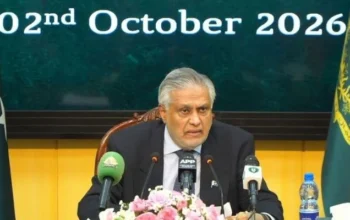
In a televised address to senior officers in Lahore on Friday, Nawaz said the government was working to address environmental problems. For eight years, she said, Lahore and parts of Punjab had faced a “smog shutdown” in September and October.
“For three years now — I won’t say there is zero smog, but — there is less smog,” she said.
Smog has become one of Pakistan’s most serious public health and environmental problems, hitting Lahore hardest in the winter months, when still air traps emissions near the ground. Industrial and vehicle emissions, crop burning and weak air movement are the factors most often blamed.
Lahore was ranked the most polluted city in the world by IQAir in January this year, with an AQI of 452. Earlier this week, analysis by the EU’s Copernicus Atmosphere Monitoring Service (CAMS) placed it among cities with “extremely poor” ozone levels. The worst readings in recent years have been far higher: in November 2024 the city’s AQI exceeded 1,000 on some measures.
Copyright © 2021 Independent Pakistan | All rights reserved