By Staff Reporter
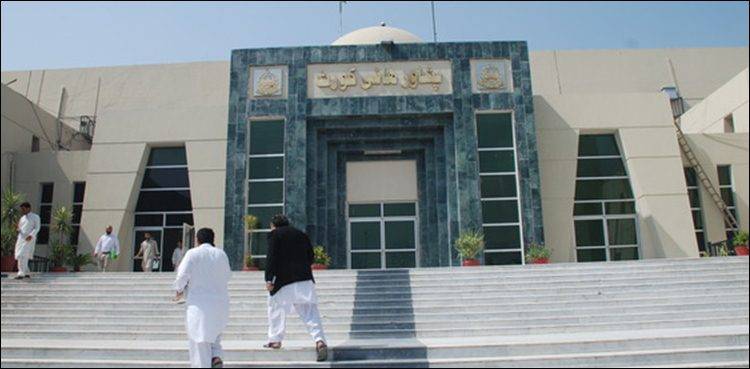
ISLAMABAD: The Peshawar High Court has fixed 20 October for the first hearing of petitions challenging the federal government’s imposition of emergency and governor’s rule in Khyber Pakhtunkhwa, days after a joint sitting of Parliament endorsed the move over fierce opposition protests.
The lead petition was filed on 14 October by Barrister Gohar Ali Khan, chairman of Imran Khan’s Pakistan Tehreek-e-Insaf (PTI), who asks the court to declare the proclamation unconstitutional and set it aside. The court said the members of the bench would be announced later.
Gohar will be represented by a team that includes Barrister Sameer Khosa, Salman Akram Raja, Ali Zaman, Sardar Haseeb Ahmad and Zainab Shahid.
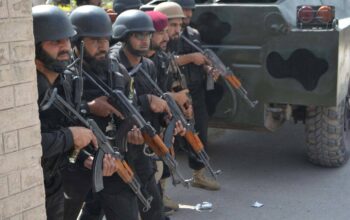
The federal government declared the emergency on 11 October, placing the province under governor’s rule and citing the provincial government’s “deliberate disengagement from the fight against terrorism”. President Asif Ali Zardari signed the summary on the advice of Prime Minister Shehbaz Sharif under Articles 232 and 234 of the constitution.
Governor Faisal Karim Kundi now runs the province on the federation’s behalf, assisted by an 11-member technocratic advisory council. Parliament exercises the powers of the provincial assembly. Sohail Afridi, the PTI chief minister, no longer functions in the role.
On Thursday, Parliament approved both proclamations in a joint sitting. 214 lawmakers backed the emergency resolution and 56 opposed it. Opposition members attended carrying placards reading “emergency na manzoor”, or “emergency is unacceptable”.
Law Minister Azam Nazeer Tarar told the house that the governor had sent the president a detailed letter, including national security reports, and that the cabinet had recommended the measures. Senator Kamran Murtaza of the Jamiat Ulema-i-Islam-Fazl (JUI-F) countered that no governor’s report justifying governor’s rule had been put before Parliament. Under Article 234, governor’s rule lapses after two months unless Parliament extends it.
The PTI petition
Filed under Article 199, the petition names the federation, the province, Governor Kundi, the KP Assembly speaker and the secretary of the provincial home department as respondents. Mr Afridi is a pro forma respondent.
Gohar describes the proclamation as “unconstitutional, ultra vires, coram non judice, tainted with malice in law and fact, devoid of objective material, and of no legal effect”.
He also challenges the deployment of army troops under Article 245 and the “arbitrary” detention and removal of Afridi and his cabinet. The petition argues that the deployment cannot “supplant or bypass the civilian executive and constitutional administration” and cannot be invoked without a lawful request from the provincial government.
The petition further targets bodies created under the proclamation: the advisory council, the Area Development Secretariat covering 12 districts, and the removal of the provincial advocate general. The districts are Dera Ismail Khan, Tank, Lakki Marwat, Bannu, Bajaur, Mohmand, Khyber, Kurram, Orakzai, North Waziristan and the Upper and Lower parts of South Waziristan.
Gohar asks the court to declare that Paragraph 2, which moved the assembly’s legislative powers to Parliament, is “void ab initio and an unconstitutional usurpation of provincial autonomy”. His reasoning is that Article 232(1) requires a prior assembly resolution, which was absent. He also wants Parliament restrained from taking up provincial legislative business for Khyber Pakhtunkhwa.
The petition asks the court to order the government to produce the “entire record and so-called ‘objective material'”, including the governor’s report and the cabinet summary. It also seeks the release of Afridi and other cabinet and assembly members from what it calls unlawful detention, and an order barring their transfer beyond the court’s jurisdiction.
The central argument is that Article 232(1) requires a “grave emergency” arising from war or external aggression, which Gohar says does not exist. The petition says “internal disturbances” must meet an objective standard that is “entirely absent” from the proclamation.
It also points to Balochistan. “Despite an unfortunately high number of incidents of terrorist violence in Balochistan, no state of emergency has been declared or even contemplated,” it states. “This clearly demonstrates that the terrorism and security pretext in Khyber Pakhtunkhwa is nothing but a colourable device, deployed in sheer violation of Article 25.”
The petition alleges the pretext was used because the province is governed by the opposition and the federal government finds its demands over Imran Khan unacceptable. It adds that no emergency was imposed anywhere in Pakistan even at the height of terrorism between 2007 and 2015.
The court has also fixed 20 October for a petition by Mohsin Dawar and Bushra Gohar, the central and provincial presidents of the National Democratic Movement. They call the proclamation “purely and patently against the mandate of people of Khyber Pakhtunkhwa” and seek its suspension until the case is decided.
They allege the governor, acting with “mala fide intent”, sent the president a “tailor-made report”, and that the procedure laid down in Article 232 was not followed.
A third petition was filed by leaders of the Tehreek-i-Tahafuz-Ayin-i-Pakistan (TTAP): its chairman, Mahmood Khan Achakzai, vice chairman Raja Nasir Abbas, Balochistan National Party (Mengal) chief Sardar Akhtar Mengal and Syed Zainul Abideen of the Sindh Taraqi Passand Party.
They argue that the constitution “does not recognise an undefined or unregulated executive power of emergency”. They ask the court to declare the advisory council and the Area Development Secretariat unlawful to the extent they replace constitutionally established provincial institutions.
The TTAP also announced on Thursday that it was ending negotiations with the Centre over what it called “unconstitutional measures”. Sharif renewed his offer of dialogue during the joint sitting and met Achakzai in the National Assembly.
Government hits back
Interior Minister Mohsin Naqvi told journalists in Lahore on Friday that the head of a political party was “extremely upset over being denied a role in the new setup in KP and not getting the governorship”. He did not name the politician. Local media reported that the remark appeared to refer to Maulana Fazlur Rehman, the JUI-F chief, who has criticised the move.
Naqvi alleged the politician had depended on the establishment for decades, “even” to arrange air tickets for his party’s members. He said political differences should be expressed through “arguments and facts” rather than “indecent language and accusations”.
He also questioned why leaders now voicing concern over resources for the former tribal districts had stayed silent when those districts were not receiving their share. “Khyber Pakhtunkhwa needs peace, stability and collective efforts, not political confrontation,” he said.
Rana Sanaullah, the prime minister’s political adviser, said on a local television channel that the emergency could be reconsidered if the PTI “fulfils its constitutional and legal role”. He said the government regretted placing Imran Khan’s sisters under house arrest but that it had become necessary to control the situation. He said they had made statements calling for an attack on the Governor’s House.
Sanaullah also warned that terrorism could become a threat to Pakistan’s existence unless it was eliminated, and alleged that India had established bases in Afghanistan and was financing terrorism.
Copyright © 2021 Independent Pakistan | All rights reserved