By Staff Reporter
ISLAMABAD: Deputy prime minister Ishaq Dar has held talks with Tajikistan’s president and a string of regional leaders in Dushanbe, using a gathering of Shanghai Cooperation Organisation prime ministers to press Islamabad’s case for deeper trade, investment and transport links with Central Asia.
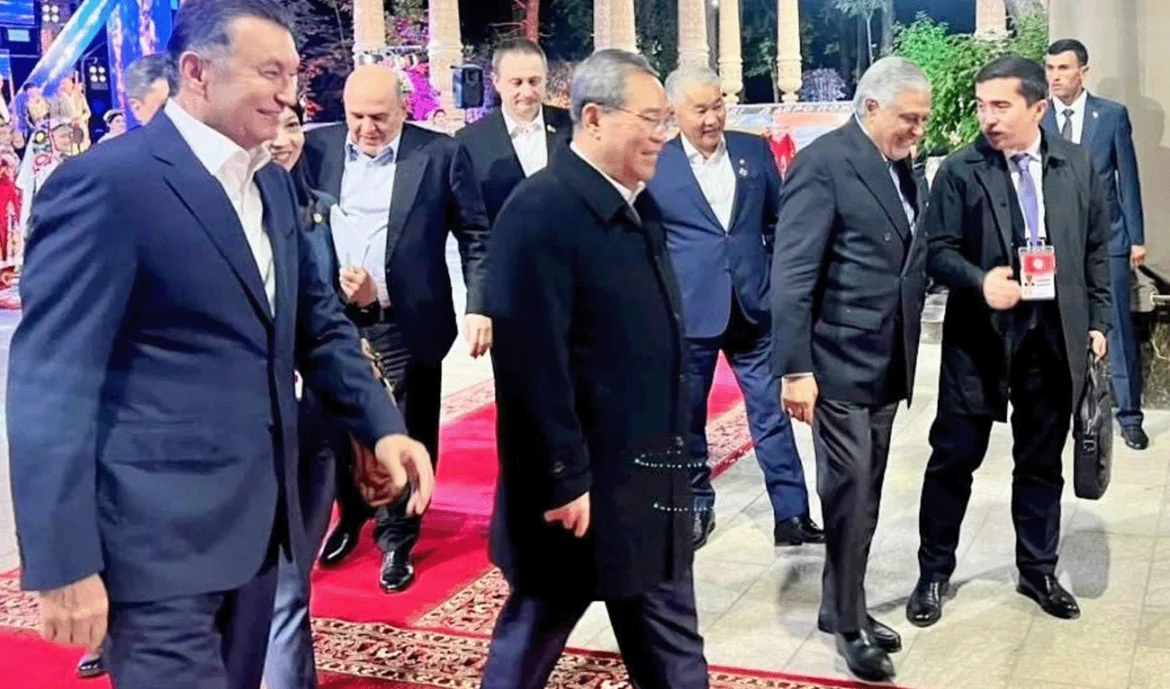
Dar, who is also foreign minister, was welcomed on Tuesday along with other delegates by the Tajik prime minister, Qohir Rasulzoda, for the SCO’s Council of Heads of Government meeting. He had arrived in the Tajik capital the day before for the two-day gathering, which runs from 19 to 20 October.
The Foreign Office said Dar also called on the Tajik president, Emomali Rahmon, together with other heads of delegations.
“President Rahmon welcomed the leaders and emphasised the importance of strengthening regional economic cooperation under the SCO to promote connectivity, stability and shared prosperity,” the Foreign Office said in a statement on X.
The prime ministers of Belarus, China, Kazakhstan, Kyrgyzstan, Russia, Tajikistan and Uzbekistan are attending, as are Iran’s vice president and India’s external affairs minister.
Dar met Rasulzoda after arriving. The Pakistani Foreign Office said the two men “reviewed bilateral relations and reaffirmed their commitment to further strengthening cooperation in trade, investment, energy, connectivity, defense and culture, as well as promoting people-to-people exchanges”. They also stressed the importance of working together on climate change and water security, it said, and Dar reiterated Pakistan’s commitment to regional peace and deeper economic integration.
He separately met the Chinese premier, Li Qiang, on the sidelines. The two men exchanged views on regional developments and on relations between Islamabad and Beijing, according to the Foreign Office. Dar later attended a banquet hosted by Rasulzoda for the heads of delegations.
Li arrived in Dushanbe on Sunday after an official visit to Uzbekistan. He met Rahmon on Monday and said China was ready to expand bilateral trade with Tajikistan and deepen cooperation on infrastructure, connectivity and security. Li is due to travel on to Russia for annual talks between the two countries’ heads of government.
For Pakistan, the meeting is an opportunity to widen its commercial reach northwards. Islamabad has sought to improve transport and transit routes and to offer Central Asian states access to world markets through its seaports. The CASA-1000 project, which would carry surplus power from Central Asia to Pakistan and Afghanistan through a new transmission line, is an example of the regional cooperation it wants.
The Council of Heads of Government is the SCO’s second-highest decision-making body. It sets guidance on economic, financial, trade, connectivity and socio-economic cooperation, and deals with the organisation’s budget.
Pakistan hosted the council in October 2024 and took over the 2026-27 chairmanship at a leaders’ summit in Bishkek last month. It will oversee the bloc’s programme until it hosts the Council of Heads of State summit in Islamabad in 2027. On 30 September, Dar reviewed preparations for that summit when SCO national coordinators, who were in Islamabad for a meeting, called on him.
Pakistan also hosted the 12th meeting of the Heads of Border Services of the Competent Authorities of the SCO in July. Islamabad has chaired the SCO’s Regional Anti-Terrorist Structure since last September.
Mr Dar is expected to hold further bilateral meetings with counterparts from member states during the visit.
The SCO was founded in 2001 by China, Russia, Kazakhstan, Kyrgyzstan, Tajikistan and Uzbekistan. Pakistan and India became full members in 2017, Iran joined in 2023 and Belarus became the tenth member in 2024.
Copyright © 2021 Independent Pakistan | All rights reserved