By Staff Reporter
ISLAMABAD: Pakistan said it adheres to all applicable sanctions regimes but stopped short of saying whether US pressure led it to close two border crossings with Iran, halting imports of cooking gas.
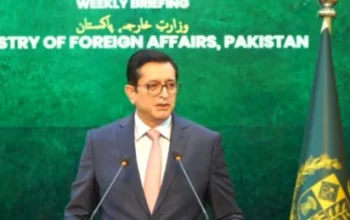
Foreign Office spokesperson Sajjad Haider Khan was asked at a weekly briefing on Friday whether Washington had pushed for the closures and whether Pakistan had changed its position on unilateral sanctions against Iran. He said Pakistan “adheres to and shall continue to adhere to all applicable sanctions regimes” under international and domestic law. Pressed on conditions at the crossings, he said he lacked direct knowledge of the situation on the ground.
Pakistan and Iran have given different reasons for shutting the Gabd-Rimdan and Taftan crossings on Oct. 17. Authorities in Balochistan province, where the crossings are located, cited security concerns and efforts to curb smuggling. A district official in Chagai described the closure as a measure to improve border management in support of counterterrorism efforts. Iran’s foreign ministry cited technical issues.
Pakistan imports about 7,000 metric tons of liquefied petroleum gas a day from Iran, according to the Pakistan LPG Association. More than 4,000 tons a day come through Gabd-Rimdan alone, said Shamsul Haq, a former president of the Gwadar Chamber of Commerce and Industry.
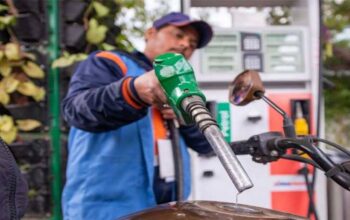
Within days of the closures, the price of a 12-kilogram cylinder rose to about 7,000 rupees from 4,500 rupees, an increase of more than 55%, traders said. Irfan Khokhar, the association’s chairman, said the cylinder sells for about 7,500 rupees in Lahore and 8,200 rupees in Skardu, and that higher gas prices are feeding through to other goods. “Already, LPG is being sold at different prices in Pakistan,” Khokhar said, warning that shortages and price increases could worsen.
The status of the border remains disputed. Army chief Field Marshal Asim Munir met Iranian leaders in Tehran on Tuesday, including President Masoud Pezeshkian, and Iranian readouts quoted him as saying the border issues had been resolved and the crossings reopened. Iran’s semi-official Fars news agency reported that the crossings stayed shut until at least 9 p.m. that day.
Gabd-Rimdan reopened on Wednesday for Pakistani exports of perishable goods, but LPG imports remained suspended, traders said. Iranian officials say trade exchanges remain operational, while Pakistani traders report restrictions on imports. Iran’s foreign ministry has said consultations on resuming trade are under way.
Hundreds of trucks, including LPG tankers, are stranded on both sides of the border, Haq said. The Quetta Chamber of Commerce and Industry earlier put the number of affected trucks at about 2,000. More than 1,000 Pakistani containers carrying potatoes, bananas and rice bound for Iran are also stuck, Haq said, and the chamber has advised members to stop placing new orders with Iran until further notice. One driver, Abdul Ghani Baloch, said he had been waiting at the border for more than a week.
Khan said Pakistan values its strategic partnership with the US and is committed to strengthening diplomatic, economic and security ties with Washington. He said Islamabad remains in contact with both Washington and Tehran as a mediator in the US-Iran conflict. He urged both sides to honour commitments under the Islamabad Memorandum of Understanding, which Pakistan helped broker earlier this year, calling a negotiated settlement the only viable path to regional stability.
The two neighbours share a border of roughly 900 kilometres (560 miles). Their trade totalled about $2.8 billion in the 2023-24 fiscal year, including roughly $684 million of Pakistani exports, according to the Federation of Pakistan Chambers of Commerce and Industry. After a joint trade committee meeting in August, the two sides agreed on measures including round-the-clock customs services at border crossings.
Consumers fear that shortages and rising prices could worsen as winter approaches.
Copyright © 2021 Independent Pakistan | All rights reserved