By Staff Reporter
ISLAMABAD: Pakistan pitched US financial institutions on funding upgrades to its oil refineries and said Washington is interested in long-term energy supply contracts, a bid to shore up fuel and capital before a winter in which its main gas supplier, Qatar, is still invoking force majeure.
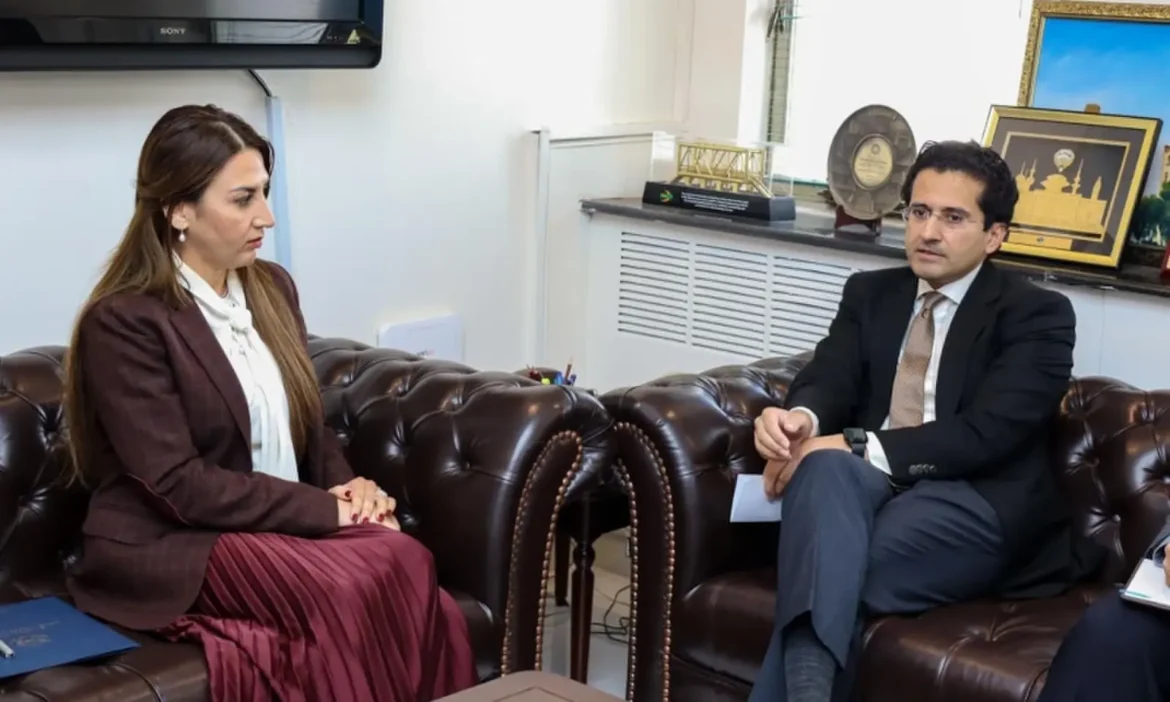
Petroleum Minister Ali Pervaiz Malik told US Chargé d’Affaires Natalie Baker in Islamabad on Monday that the refinery modernisation program could offer investment opportunities for American lenders, according to a ministry statement. Baker expressed optimism about establishing long-term energy supply contracts, the ministry said, adding that she described such arrangements as mutually beneficial and a source of openings for US businesses.
The statement was thin on detail. It didn’t name the American companies involved, specify volumes or prices, or say whether contract negotiations had begun, and no supply agreement was announced. The US embassy hasn’t released its own account of the meeting.
Malik briefed Baker on steps Pakistan is taking to protect energy security, the ministry said, pointing to the strain the Middle East conflict has placed on fuel availability. Baker congratulated Pakistan on avoiding a fuel shortage despite the regional turmoil. The managing directors of state-owned Pakistan State Oil and Pakistan LNG Ltd. told the meeting that US companies had shown interest in supplying liquefied natural gas.
Pakistan depends on imported LNG for power plants, industry and households, and Qatar has been the backbone of that supply. Last winter the country imported 36 cargoes, 35 of them from Qatar. QatarEnergy declared force majeure on March 4, after an Iranian attack on its Ras Laffan complex two days earlier. The company has since extended the declaration twice, most recently to early November, and shipping through the Strait of Hormuz remains disrupted. Pakistan normally receives about nine Qatari cargoes a month under long-term agreements.
The shortfall is already visible. Pakistan received its first October cargo only on October 14, and is expected to get just two for the month, matching September. Its second LNG terminal, operated by Pakistan GasPort Ltd., has been idle since October 9 for lack of gas. The two September cargoes arrived after Islamabad took both Iranian and US authorities into confidence. Officials estimate demand of around nine cargoes in December and about 11 in January.
Official documents outlined a need for 24 cargoes from November through February, including contingency supplies. The plan relies on purchases from Qatar and on the spot market, where shipments are bought at prevailing prices rather than under long-term contracts. Local media have put the winter import bill at about $1.29 billion, and spot cargoes are expected to cost roughly double what Pakistan pays Qatar. Reported cargo counts differ by outlet, from 18 to 24.
Long-term contracts would add certainty, but their terms matter. The Institute for Energy Economics and Financial Analysis has warned that take-or-pay obligations, which require payment for contracted LNG whether or not it is needed, could expose Pakistan to substantial costs if demand weakens again. That risk isn’t abstract. A year ago, Malik said Pakistan was moving away from LNG as a pillar of its energy strategy because of high costs, and had approached Qatari officials about delaying deliveries over five years.
On refineries, Malik presented the upgrade program as a chance for US financial institutions. The government estimates that modernizing its five existing plants could draw around $6 billion over five years. Four of the five refineries signed upgrade agreements with the government last month, with an estimated investment of about $5 billion, on September 24. Pak-Arab Refinery Co. was expected to follow. The projects are meant to bring the plants up to Euro-V fuel standards.
The four refineries that signed had yet to submit detailed project plans to Inter State Gas Systems, the state entity overseeing the program, at the end of September. One industry source said that signed agreements don’t bring in capital until lenders accept the structure and financial close is reached. Finance Minister Muhammad Aurangzeb raised possible US Export-Import Bank support for the upgrades during meetings in New York in September. Honeywell UOP, a supplier of refining technology, also told Malik around that time that the moment was right to tap US financing for the work.
Washington already has a foothold in Pakistan’s oil trade. Malik said in May that Pakistan had imported 6 million barrels of US crude between October 2025 and May 2026, a first at that scale. Malik also invited American companies to the Pakistan Minerals Investment Forum, which runs November 12-13 at the Jinnah Convention Centre in Islamabad. The government is using it to court US investment in Balochistan’s mineral resources. The ministry said teams from both countries remain engaged on energy cooperation.
Copyright © 2021 Independent Pakistan | All rights reserved