By Staff Reporter
ISLAMABAD: Pakistan has condemned Houthi missile attacks on Saudi Arabia’s Mecca and Medina regions as a “grave violation” of the kingdom’s sovereignty and renewed its pledge to defend the Two Holy Mosques under a three-nation military pact.
In a statement on Monday, Pakistan’s Foreign Office said the “reprehensible attacks” showed “a blatant disregard for the sanctity of Islam’s holiest sites and the safety of civilians”.
Islamabad reiterated its “unwavering solidarity” with Riyadh and its commitment to the Makkah alliance, and said it stood firmly behind the kingdom’s security, stability and defence, including the protection of the Two Holy Mosques “against any external aggression or threat”. It also praised the “vigilance and efficiency” of Saudi air defence forces.
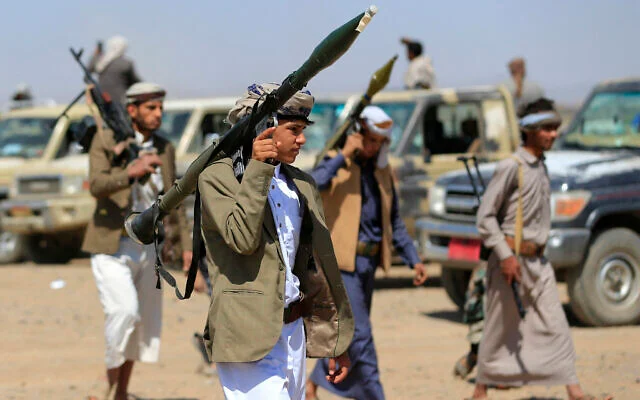
The statement followed an escalation on Saturday, when the Houthis said they had hit Saudi oil facilities and airports. Their military spokesperson, Yahya Saree, named King Khalid International Airport in Riyadh, an Aramco facility in Yanbu, the Rabigh oil refinery, crude oil pumping stations and the East-West Pipeline. He said the group had also targeted King Fahd International Airport in Dammam, an airport in Najran and an airbase at Khamis Mushait.
The Saudi-led coalition said it had destroyed two ballistic missiles fired towards Yanbu and Taif. Riyadh’s civil defence agency had earlier broadcast warnings of “potential danger” across four western regions, including Mecca, Jeddah, Taif and Yanbu.
Saudi Civil Defence said debris from the intercepted missiles fell in Wadi al-Mughammas in Mecca, the Al-Nuzha neighbourhood of Jeddah, Wadi Jalil in Taif and the Masturah area of Rabigh. Wadi al-Mughammas lies about 20km from the Grand Mosque. The Houthis later denied targeting either holy city, saying their operations were aimed at “Saudi oil facilities and military bases”.
On Sunday, Saudi civil defence said two people were injured when debris from intercepted missiles fell in Khamis Mushait and Ahad Rafidah, in the south-west of the kingdom.
Condemnation had already come from Muslim religious leaders. The Muslim World League, based in Mecca, said the attacks showed “disregard for the danger of frightening the feelings of more than two billion Muslims”. Sheikh Abdulrahman al-Sudais, president of religious affairs at the Grand Mosque and the Prophet’s Mosque, called the security of the two sites a “red line that must not be breached”. The secretary general of the Organisation of Islamic Cooperation also condemned the attacks and warned of dangerous consequences if they continued.
The latest fighting has shattered a UN-brokered truce reached in 2022, which had largely halted cross-border attacks between the Saudi-led coalition, which backs Yemen’s internationally recognised government, and the Houthis, who control the capital, Sanaa. A series of escalating attacks since July has pulled Yemen into the wider Middle East war.
Mecca has been a particular focus in recent weeks. Riyadh said in September that the Houthis had targeted Mecca for the first time since 2017, with a drone that was shot down. Speaking at the UN General Assembly on 25 September, Prime Minister Shehbaz Sharif said any further Houthi attack on the city would be a “red line” for Pakistan.
Pakistan, Saudi Arabia and Turkey signed the Makkah Joint Defence Agreement in the holy city on 7 August, committing each to treat an armed attack on one member as an attack on all. Pakistan also signed a bilateral defence agreement with Riyadh in September 2025.
Last week, Pakistan’s military said alliance members would use “all means” if deterrence failed. The three states have also agreed to deploy military forces and capabilities rapidly inside the kingdom, following an emergency meeting in Riyadh. The attacks have also been felt in civilian areas. A Houthi missile and drone assault on Saudi Arabia in September injured at least 73 civilians.
Copyright © 2021 Independent Pakistan | All rights reserved