By Staff Reporter
ISLAMABAD: The federal government cleared three infrastructure projects worth about Rs100 billion in Khyber Pakhtunkhwa on Monday, recommending them to the Executive Committee of the National Economic Council, or Ecnec, for formal approval.
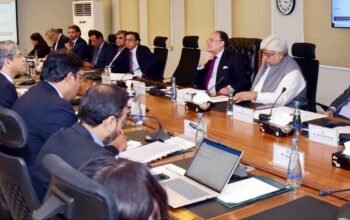
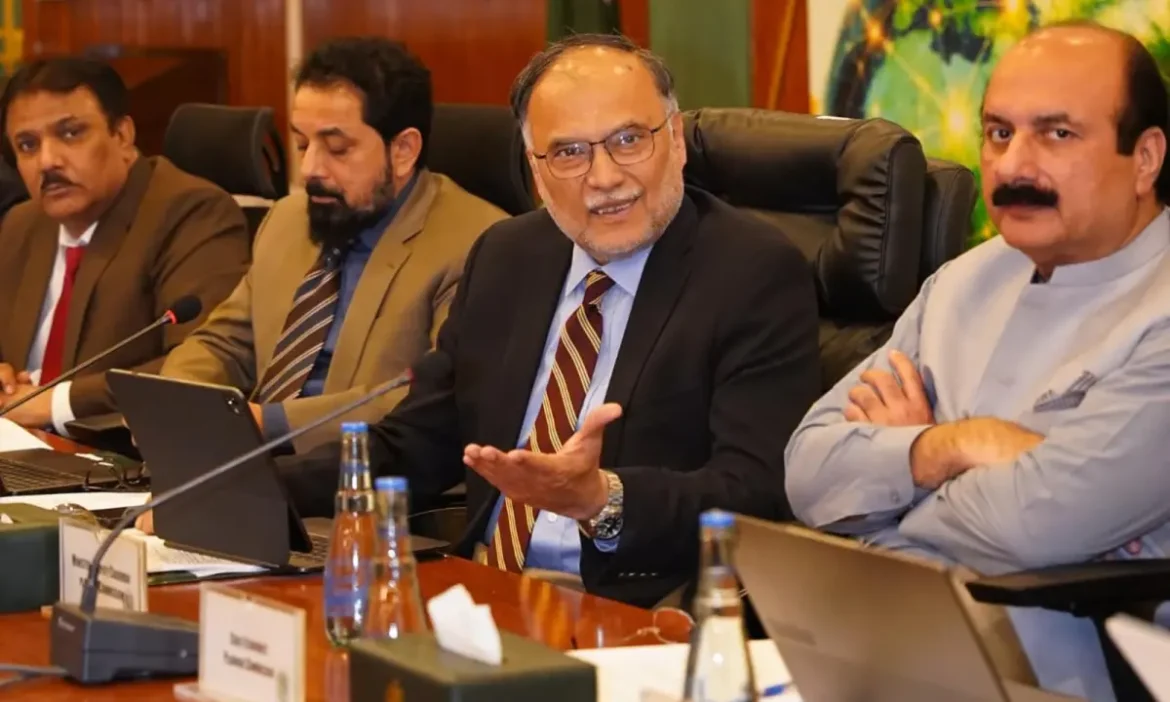
The Central Development Working Party, chaired by Planning Minister Ahsan Iqbal, backed a Rs69.89 billion irrigation program, a Rs17.01 billion road upgrade and a Rs13.32 billion solar scheme for the province’s newly merged districts. Under financial rules, the working party can approve projects costing up to Rs7.5 billion on its own and refers larger ones to Ecnec.
“Federal government reaffirms commitment to KP’s development,” Iqbal said, referring to the irrigation project, which is meant to support agriculture and rural livelihoods. Since emergency and governor’s rule were imposed in the province, the Centre has pledged to work on its development, alongside its top priority of combating terrorism.
The Khyber Pakhtunkhwa schemes were part of a broader package. The working party cleared 14 projects nationwide with an estimated cost of Rs226.48 billion. It approved 10 smaller projects worth Rs40.9 billion itself and sent four larger ones to Ecnec. The other 11 projects, beyond the three in Khyber Pakhtunkhwa, total nearly Rs126.50 billion.
Two of the largest are water projects, in Khyber Pakhtunkhwa and Punjab, worth about $550 million combined. Together they would unlock around $460 million in foreign loans from the Asian Development Bank.
The Khyber Pakhtunkhwa Resilient Irrigated Agriculture Livelihoods Development Project would rehabilitate the Pehur Main Canal, build the Mulkhow Irrigation Distribution System and extend the Pehur High Level Canal. The Manila-based ADB would contribute Rs56.133 billion ($200 million). The provincial government would provide Rs11.69 billion along with land acquisition.
The ADB has said the project would build two new climate-adaptive irrigation systems and modernize an existing one. It expects the work to directly benefit about 31,600 smallholder farmers. The bank also scheduled an invitation-only business briefing for Sept. 22 at its Manila headquarters, aimed at contractors and suppliers. The bank previously financed an earlier extension of the Pehur High Level Canal, signing an $86.41 million loan in 2017.
The second water project, the Integrated Hill Torrent Management scheme for Chachar-Mithawan, covers Dera Ghazi Khan and Rajanpur districts and is valued at Rs85.34 billion. The ADB would provide Rs73.06 billion ($260 million), and the Punjab government Rs12.28 billion. The plan includes modern spate irrigation, flood protection channels, telemetry systems and a centralized Supervisory Control and Data Acquisition, or Scada, monitoring network to improve regional water security.
The 39-kilometer Chakdara-Timergara section of the N-45 highway would be widened and improved at a cost of Rs17.01 billion, financed through foreign funding via Exim Bank. The road links Chakdara, Timergara, Dir and Chitral, and is expected to improve trade, road safety and tourism to the Kalash, Shandur and Kumrat valleys.
The Rs13.32 billion Prime Minister’s Solar Scheme for Newly Merged Districts would provide off-grid solar power to households there. After the imposition of emergency in Khyber Pakhtunkhwa, the merged districts are among 12 districts run by the newly formed Area Representative and Development Council.
The working party itself approved 10 projects:
- An eight-lane overhead bridge at the Imamia Colony railway crossing on the N-5 in Lahore’s Shahdara Town, at Rs7.49 billion. It includes link roads to ease urban congestion.
- Three education projects, approved in principle. These are Rs122.4 million for preparing Daanish Schools across Azad Jammu and Kashmir, Gilgit-Baltistan, Balochistan, Khyber Pakhtunkhwa and Sindh; a Rs7.36 billion school at Kuri in Islamabad; and a Rs4.53 billion school at Kan Mehterzai in Balochistan’s Qila Saifullah district. The Balochistan school is subject to a technical review by a committee led by the member for infrastructure.
- Four youth programs: the Prime Minister’s Youth Development Centres, at Rs4.15 billion, with third-party validation and structured monitoring; the first phase of the Talent Hunt Youth Sports League, at Rs3.99 billion, coordinated by a steering committee under the Pakistan Sports Board; the National Innovation Award, at Rs1.97 billion; and sports academies and Youth Olympics, at Rs2.956 billion.
- A Rs3.96 billion revamp of Pakistan Television Corp., approved in principle, covering digital transformation, commercialization of international assets and long-term financial sustainability.
- A pilot battery energy storage system at the 220 kV Jhimpir-I grid station, at Rs4.40 billion, to support grid stabilization and renewable integration.
Copyright © 2021 Independent Pakistan | All rights reserved