By Staff Reporter
ISLAMABAD: Pakistan’s election commission has proposed barring political parties, candidates and their supporters from using artificial intelligence to deceive voters, targeting deepfakes, bot-generated trends and undisclosed synthetic campaign material.
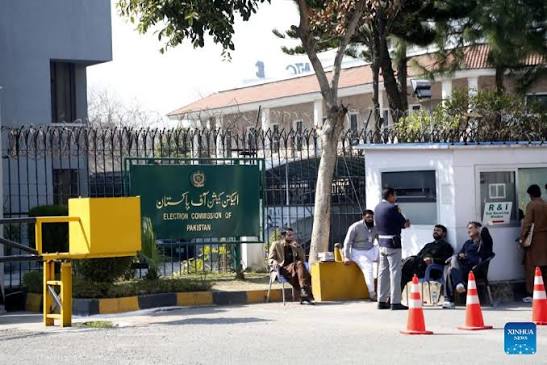
The Election Commission of Pakistan (ECP) issued the draft as a notification on 23 October. It amends the commission’s 2023 codes of conduct for political parties, media organisations and election observers. The proposals have been uploaded to the ECP’s website and sent to stakeholders, who have until 20 November 2026 to submit feedback to the commission’s secretariat in Islamabad.
The amended code for political parties would bar parties, candidates, election agents and their supporters from creating or circulating AI-generated or manipulated material likely to mislead voters about its authenticity, or to misrepresent what a person said, did or looks like. Any campaign material generated or substantially altered by AI, including deepfake images, video, audio clips and synthetic voices, would have to carry a “clear and conspicuous disclosure” identifying it as AI-generated or AI-assisted. It would also have to comply with election law and the code itself.
The draft sets out a strict prohibition on using deepfake technology to produce false, derogatory or defamatory likenesses, voices or statements of candidates, party leaders and their supporters. The same protection would cover election officials, members of the judiciary, the armed forces and other state functionaries.
Parties and candidates would also be banned from using AI-based bots, automated accounts or similar tools to manufacture trends and engagement, including likes, comments, shares and followers, intended to suggest public support that does not exist. Those using robocalls or voice-cloned messages to reach voters would have to say at the start of the call or message that the content was generated by AI.
Parties and candidates would have to keep records of all AI-generated or AI-assisted campaign content used during the election period, and hand complete details to the commission whenever it asks for them.
The draft is not confined to those competing for votes. Print, electronic and digital media, journalists, newspapers, television channels and social media influencers would have to label AI-generated or manipulated election material, including synthetic images, video, audio and voice-cloned content, at the point of broadcast, publication or circulation. The ban on false, derogatory or defamatory deepfakes would apply to them in the same terms.
Media organisations would still be allowed to use AI for election-related content generation, translation, anchoring or analysis, provided they tell audiences they are doing so. They would remain responsible for the accuracy and authenticity of anything AI-assisted that they put out.
Enforcement would fall to three bodies: the Pakistan Electronic Media Regulatory Authority (Pemra), the Social Media Protection Regulatory Authority (SMPRA) and the National Cyber Crime Investigation Agency (NCCIA). They would monitor print, electronic, digital and social media for undisclosed or unlabelled AI-generated election content, act in cases of non-compliance and report to the commission. If the ECP or another regulator directs it, a media organisation or social media platform would have to promptly remove, or correctly relabel, AI-generated or manipulated election content found to be undisclosed or misleading.
Observers would have their own obligations. They would be required to stay alert to deepfakes, synthetic audio and video, and AI-generated disinformation encountered while watching the electoral process, and to report it promptly to the ECP without passing it on. They would be forbidden from using AI tools to fabricate, alter or embellish their observations, findings, photographs, videos or reports, which would have to reflect factual, first-hand assessments.
The commission described AI as an emerging technology with consequences for everyone involved in an election. It pointed to its constitutional duty to ensure elections are conducted honestly, justly and fairly, and to guard against corrupt practices, including manipulation of the process through misleading AI-generated content.
Concerns about synthetic media in Pakistani politics predate the draft. Ahead of the February 2024 general election, an alleged deepfake audio clip of the jailed former prime minister Imran Khan, calling for an election boycott, was logged in an international database of AI incidents. His Pakistan Tehreek-e-Insaf party, meanwhile, had used an AI-generated version of his voice to address supporters at an online rally in December 2023.
Around the same vote, Sadaf Khan, co-founder of the research group Media Matters for Democracy, said she did not believe Pakistan’s legal framework was equipped to deal properly with AI and deepfakes in elections.
The provisions remain a draft, and the commission has not said when a final version would be adopted.
Copyright © 2021 Independent Pakistan | All rights reserved