By Staff Reporter
ISLAMABAD: The government has said governor’s rule in Khyber Pakhtunkhwa will end after six months, but that the emergency imposed alongside it will remain in force until peace is restored.
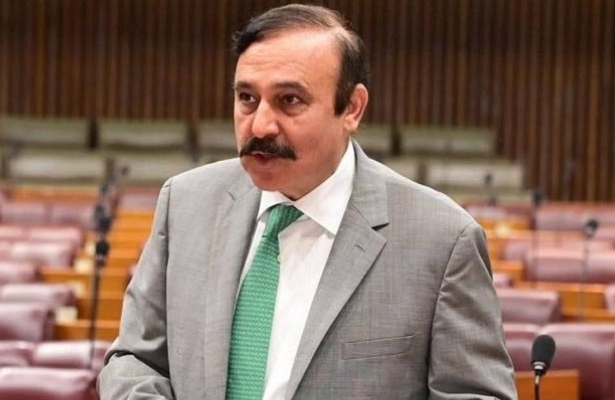
Parliamentary Affairs Minister Dr Tariq Fazal Chaudhry set out the timeline in the National Assembly on Wednesday, replying to Barrister Gohar Ali Khan, chairman of Imran Khan’s Pakistan Tehreek-e-Insaf (PTI), and Maulana Fazlur Rehman, head of the Jamiat Ulema-e-Islam-Fazl (JUI-F).
“Governor’s rule will end after six months,” he said. “As for the emergency, our objective is to restore peace within six months, and we pray to Allah Almighty that we achieve this goal. The emergency will remain in place until peace is restored.”
The minister said governor’s rule had been imposed across the whole province under Article 234 of the Constitution, and the emergency under Article 232, in response to internal and external security threats. He rejected the suggestion that either measure was confined to 12 districts. Those 12, the worst hit by terrorism, had been given special status, he said, allowing police and security agencies to seek help directly from the federal government rather than through the chief minister’s or governor’s secretariat. He insisted the aim was to restore peace and improve administration, not to take political power.
President Asif Ali Zardari signed the proclamation on 11 October on the advice of Prime Minister Shehbaz Sharif, and Governor Faisal Karim Kundi of the Pakistan Peoples Party took over the functions of the provincial government. Both houses of parliament approved the emergency by majority vote on 14 October, over the objections of opposition lawmakers. The Constitution sets no fixed end date for an emergency once parliament has approved it, while governor’s rule can be extended in two-month steps up to a maximum of six months.
A separate legal fight is under way. The Peshawar High Court has issued notices to the federal and provincial governments on petitions challenging the measures, and will hear the matter again on 10 November. The petitioners argue that an emergency under Article 232 needed a resolution of the provincial assembly.
Wednesday brought a further blow to PTI. An anti-terrorism court in Peshawar issued arrest warrants for Afridi, two former provincial ministers, the party’s Peshawar president and an activist over the 2023 attack on the Radio Pakistan building. The building was attacked and set on fire during the protests that followed Mr Khan’s arrest on 9 May 2023. The defence has disputed the identification of some of the video clips used in the case.
Afridi has been out of public view since the proclamation. The federal government says he is in protective custody and has not been arrested, while his brother has asked the high court to trace him and establish under what authority he is held. Gohar told the Assembly his whereabouts remained unknown.
The PTI chairman accused the government of political victimisation under cover of the emergency and warned that it would deepen the crisis. He said PTI workers were being stopped and arrested, and that Khan’s three sisters remained in jail. He said 375 days had passed without a meeting with the jailed party founder, and expressed concern about the health of two detained party figures, Iqbal Afridi and Junaid Akbar, who he said needed medication.
“You are beginning to dismantle democratic values,” Gohar said, adding that the provincial administration had been taken over in practice before governor’s rule was formally imposed. He called for an end to enforced disappearances. “We are democrats. We are not people who storm institutions,” he said.
Chaudhry rejected the allegation that any party was being installed in the province. He said the advisory council and council of elders created after governor’s rule contained no party representatives, and that no party had been given a share of the powers once held by the provincial government. Operations in the province, he said, targeted bombers, infiltrators and those attacking civilians and police, not a political party.
Moving to the breakdown of talks with PTI, he recalled negotiations on 2 October chaired by Speaker Sardar Ayaz Sadiq. Interior Minister Mohsin Naqvi had put seven counter-terrorism points to the PTI delegation, he said. They included condemning terrorism, dismantling militant safe havens, withdrawing proposed amendments to the Police Act and implementing the National Action Plan. He said PTI’s negotiators were willing to cooperate but lacked the authority to finalise a deal. Drafts were sent to the provincial leadership, he said, and Afridi rejected each of them, including a fourth prepared at about 2.30am, after which the talks ended.
Chaudhry said Afridi had declared during the long march that he would not cooperate with the security forces or support federal counter-terrorism measures. Condemning terrorism in words was not enough, he said. PTI, which has run the province for more than 12 years, has rejected the government’s account. The government says it holds dozens of pieces of evidence against the provincial administration, but none has been made public.
The minister said Sharif had approved a Rs160bn package for the province at an Apex Committee meeting in Peshawar attended by Field Marshal Asim Munir, the Chief of Defence Forces and army chief. It would be spent in three phases: weapons, armoured vehicles and training for the police first, then health, education, sanitation and infrastructure, and finally projects left unfinished during PTI’s years in power. The largest share would go to the 12 worst-affected districts, which the government hopes to clear of militants within four to six months before handing law and order back to the police.
The Pakistan Institute for Conflict and Security Studies recorded 1,232 attacks nationwide in the first nine months of this year, most of them in Khyber Pakhtunkhwa and Balochistan.
He rejected comparisons with Balochistan, saying its chief minister cooperated with the federal government and the security agencies, and that its geography and population of about 10 million differed from Khyber Pakhtunkhwa’s 45 million. He said foreign intelligence agencies, with India playing a leading role, were financing militants there.
Chaudhry also denied that the measures were meant to give the centre control of the province’s minerals, after remarks by the US diplomat Natalie Baker on American interest in exploration. He said each province had the first right to its own resources, but asked whether they should stay unused underground.
Chaudhry offered talks to the opposition, saying Sharif and senior ministers were ready to negotiate on security, counter-terrorism and the economy. He described the goal as a “stable Pakistan, a secure Pakistan and a prosperous Pakistan”.
Maulana Fazlur Rehman responded with a call for a new Charter of Democracy. “Come, let us sit at one table and establish a new Charter of Democracy,” he said, urging both sides to take part. He accused the government of misusing the Constitution and of transferring power through force.
He said PTI representatives had asked him to help before the party’s planned march on Islamabad. He said Rana Sanaullah and others visited him, and that Sharif invited him to dinner and asked him to persuade PTI to call the march off. Deputy Prime Minister Ishaq Dar then told him the cabinet would not accept the proposed arrangement, he said.
The JUI-F chief asked why no similar measures had been taken in Balochistan, where he said commissioners had been abducted. He said he had also heard reports that the son of the Khan of Kalat had been taken. “We are prepared to die at your hands, but we are not prepared to die at the hands of history,” he said.
Outside parliament, Gohar said PTI’s joint parliamentary party, which met on Tuesday, had condemned the emergency and governor’s rule and would work to have both rolled back. “The parliamentary party will play an active role in filling this vacuum,” he said. He said the eight-hour meeting was attended by about 70 members of the National Assembly and Senate, who expressed confidence in the party leadership and praised Afridi. Recommendations had been sent to the opposition leaders, Mahmood Khan Achakzai and Allama Raja Nasir Abbas, for approval, he said.
Gohar said a proposed 28th Constitutional Amendment had not come before the meeting. The amendment has been debated in recent months in connection with revisiting powers devolved to the provinces in 2010. He urged the government to avoid “controversial legislation” and said provinces should not be divided without the consent of their people. Creating a province requires two-thirds majorities in both houses of parliament and in the assembly of the affected province.
Fazl, leading a delegation, met Senate opposition leader Abbas, according to a spokesperson for the Tehreek Tahafuz Ayeen-e-Pakistan opposition alliance. PTI was represented by Gohar, Asad Qaiser, Barrister Ali Zafar, Aamir Dogar and Zain Qureshi. JUI-F sent Senator Kamran Murtaza, Mir Younus Zehri and Usman Badini. They condemned the emergency as contrary to the sovereignty of the people, and expressed concern at the arrests of the chief minister, the provincial assembly speaker and members of the National Assembly. They called for the release of political prisoners, discussed an all-parties conference and backed Mr Fazl’s call for a new Charter of Democracy.
Copyright © 2021 Independent Pakistan | All rights reserved