By Staff Reporter
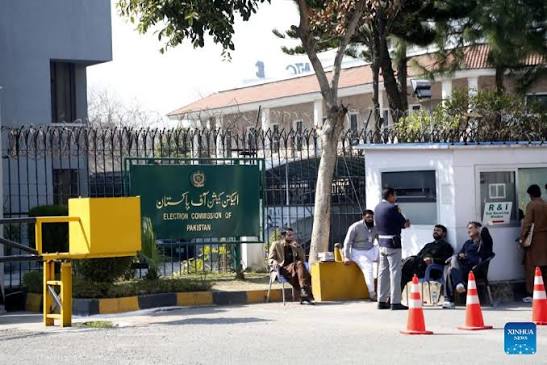
ISLAMABAD: Pakistan’s election commission has ordered local government elections in the parts of Khyber Pakhtunkhwa where constituency boundaries are settled, turning down a request to postpone the vote while the province remains under emergency rule.
The Election Commission of Pakistan (ECP) issued its order on Wednesday, a day after a five-member bench headed by Chief Election Commissioner Sikandar Sultan Raja reserved its verdict. It directed its own office to prepare an election programme and send it to the commission for approval. No polling date has been announced.
Twelve districts that the federal government has placed under special security arrangements are excluded. Polls will not be scheduled in five of them – Bannu, Lakki Marwat, Mohmand, Orakzai and North Waziristan – which are named in the federal order of 11 October. The other seven are Dera Ismail Khan, Tank, Bajaur, Khyber, Kurram, Upper South Waziristan and Lower South Waziristan. They are left out of the delimitation schedules the commission has asked its staff to issue for districts where boundary-drawing is unfinished.
The provincial administration, which has been run by the governor since the emergency, had asked the commission to defer the elections. It pointed to the security situation, the emergency itself and the deployment of troops under Article 245 of the Constitution. At Tuesday’s hearing, ECP special secretary Zafar Iqbal told the bench that delimitation was complete in 23 districts, where polls could go ahead on the strength of an official order. The bench also looked at amendments the province had made to its local government law, which the commission says disrupted the boundary-drawing.
The order separately tells the ECP’s office to recalculate the number of village and neighbourhood councils, and the reserved seats in each category, for the tehsil councils of seven districts. These are Karak, Hangu, Swat, Bar Swat, Battagram, Paharpur and Allai. The figures are to follow current revenue limits, under a companion order of the same date, so that delimitation and polling are not held up further. The commission cited Articles 218(3), 140A(2), 219(d), 220 and 222 of the Constitution, and Sections 219 and 221 of the Elections Act 2017.
Local government terms in the province ended in two stages: March for the first batch of councils, and June for the second. The commission has said the law obliges it to hold elections within 120 days of a term expiring, a window that has now passed for both batches.
In July, the provincial government, then led by Imran Khan’s Pakistan Tehreek-e-Insaf (PTI), assured the commission of “all possible support” in districts where delimitation was complete. The commission later objected to an amendment to the province’s local government law on the population of village and neighbourhood councils, calling it a delaying tactic. In a separate statement it said repeated last-minute changes to local government laws, by federal and provincial governments alike, had derailed the process each time. It suggested that any major restructuring be enacted at least a year before terms expire.
President Asif Ali Zardari proclaimed the emergency and governor’s rule on 11 October under Articles 232 and 234, acting on the advice of Prime Minister Shehbaz Sharif. The federal government accused the provincial administration of “deliberate disengagement” from the fight against terrorism. Governor Faisal Karim Kundi took over the running of the province with an 11-member advisory council. The National Assembly and Senate endorsed the proclamation on 14 October, and a joint sitting of parliament did so the next day.
The federal government also created an Area Development Secretariat to oversee administration and development in the 12 designated districts. An Area Representative and Development Council gives those districts a representative body.
The PTI, which has governed Khyber Pakhtunkhwa since 2013, rejects the emergency as unconstitutional and politically motivated. The party said Chief Minister Sohail Afridi was taken into custody after the proclamation, and he has not been seen in public since. Petitions from PTI chairman Gohar Ali Khan and other opposition figures are before the Peshawar High Court, which this month issued notices to the federal government and adjourned the case until 10 November. Petitioners argue that an emergency on grounds of internal disturbance requires a resolution of the provincial assembly, which has not passed one.
Copyright © 2021 Independent Pakistan | All rights reserved