By Staff Reporter
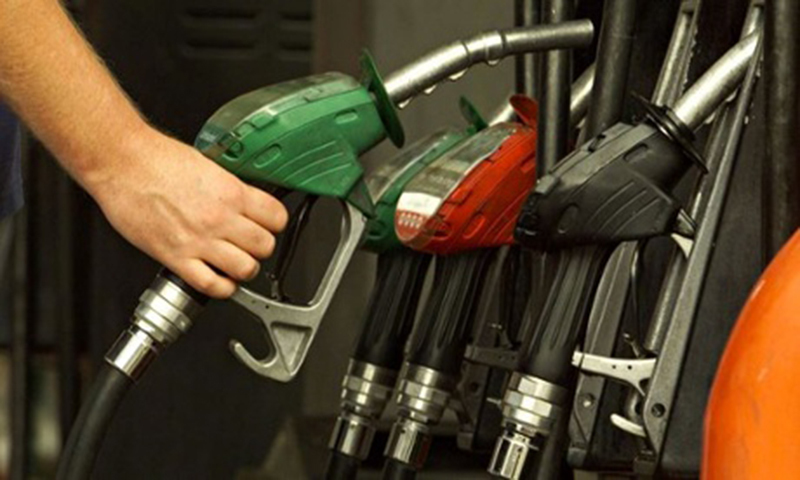
ISLAMABAD: Pakistan raised petrol and diesel prices for Thursday, taking diesel to within 18 paisa of 400 rupees a liter as crude oil stayed above $115 a barrel and a religious party prepared to march on the capital over fuel taxes.
The Petroleum Division said in a notification that petrol will sell for 377.91 rupees a liter, up 1.85 rupees. High-speed diesel will cost 399.82 rupees, up 1.75 rupees. The increase follows a split revision a day earlier, when the government cut petrol by 3.19 rupees and raised diesel by 2.25 rupees for Wednesday.
Petrol has moved in a narrow band since Oct. 23, trading at 377.71 rupees that day and 379.25 rupees on Oct. 27. Diesel has gone only one way, rising from 393.66 rupees over the same stretch. The government continues to levy 114 rupees a liter in taxes and duties on petrol and 100 rupees on diesel, the charges at the center of a growing political dispute.
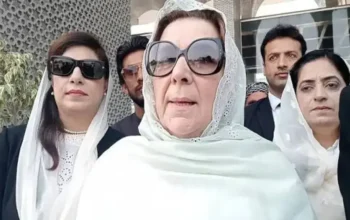
Prime Minister Shehbaz Sharif met Hafiz Naeemur Rehman, chief of the Jamaat-i-Islami party, in Islamabad on Tuesday to discuss the party’s demand that the petroleum levy be scrapped. The two sides agreed to form a joint committee to consider widening the fuel relief program offered since Sept. 17 to owners of motorcycles, rickshaws and vehicles of up to 800cc.
The meeting did not defuse the threat of street action. Rehman said the government had asked for another seven to 10 days to address the demand, yet the party would go ahead with its Islamabad march in mid-November while continuing talks. The sides remain apart on method: Jamaat-i-Islami wants the levy abolished outright, while the government has spoken of phasing it out. The party has said it wants petrol brought down to 225 rupees a liter.
The levy is not easily surrendered. Islamabad relies on it as a major source of non-tax revenue to fund the budget and meet fiscal targets agreed with the International Monetary Fund. Rehman has put monthly collections at about 150 billion rupees. The government, for its part, has said it is already subsidizing petrol by 100 rupees a liter for 12.7 million people, and that the levy itself stands at 80 rupees a liter.
Oil’s latest leg higher adds to the pressure. Brent futures rose $1.81, or 1.6%, to $115.69 a barrel in New York on Wednesday, while West Texas Intermediate gained $2.52, or 2.5%, to $102.42. Yemen’s Houthis said they hit Saudi Arabia’s largest refinery, a 550,000 barrel-a-day facility, with a missile; Saudi authorities have not confirmed the strike.
Traders are also weighing the odds of renewed US military action against Iran. President Donald Trump has said further strikes after next week’s midterm elections are possible, and reports say Washington has alerted several Gulf states to a short, intense campaign. Dennis Kissler, senior vice president of trading at BOK Financial, said in a note that crude futures were again “pricing in nearer term tighter supplies” on news the US is likely to restart military operations soon, possibly on a larger scale than before given the latest attacks on Saudi Arabia and other regional allies.
Pakistan imports most of its petroleum, so swings in Gulf politics and in shipping through the Strait of Hormuz and the Red Sea reach domestic pump prices quickly. Prices have eased from their peaks but remain far above levels before the US-Iran war began on Feb. 28. Diesel reached 520.35 rupees on April 3, after starting from 281 rupees, and is now about 23% below that high and roughly 42% above its starting point. Petrol topped out at 458.41 rupees the same day, having begun its climb from 266 rupees in the first week of March. It now sits about 18% under the peak and also about 42% above its early-March level.
The government has changed how it prices fuel in response. After announcing weekly revisions from early March, Petroleum Minister Ali Pervaiz Malik said on July 17 that prices would be set daily, with the Oil and Gas Regulatory Authority deciding them from international market trends. The shift followed renewed hostilities between Iran and the US that rattled crude markets and raised concern about supplies.
Sharif announced a relief plan on Sept. 13 that takes 100 rupees a liter off petrol for motorcycles, three-wheel rickshaws and cars of up to 800cc. The plan was estimated to cover 11.8 million people. About 10 million two-wheeler users and 800,000 rickshaw users can claim relief on 20 liters a month, worth up to 2,000 rupees each. Another 1 million owners of cars up to 800cc get relief on 30 liters a month, worth up to 3,000 rupees.
Four days later, on Sept. 17, the government brought back austerity and fuel-conservation rules. Shops, markets, malls, bazaars and department, grocery and general stores must close by 9 p.m. every day. Marriage halls and other venues hosting festive events must shut by 10 p.m., and restaurants, cafes and standalone fruit and vegetable stands by 11 p.m. Takeaway and home delivery are exempt. Fuel allocations for official vehicles have been cut by 50% for three months.
Petrol is used mainly by private motorists, rickshaws and two-wheelers, so its cost falls on the middle and lower-middle classes. Diesel powers heavy transport, power plants and large generators, and its price feeds through to the wider economy. The two fuels are the main revenue earners in Pakistan’s oil market, with monthly sales of about 700,000 to 800,000 tons, compared with only about 10,000 tons of demand for kerosene.
Copyright © 2021 Independent Pakistan | All rights reserved