By Staff Reporter
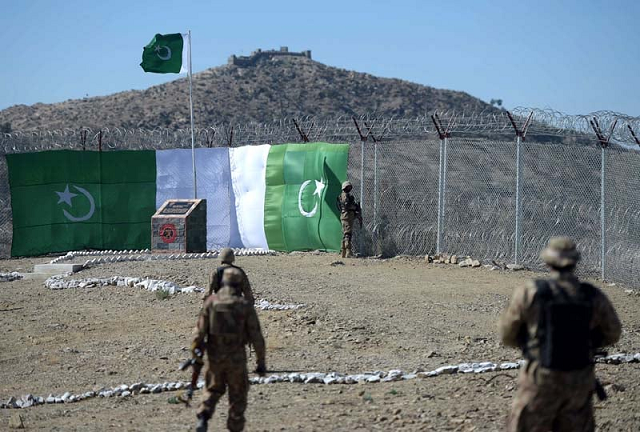
ISLAMABAD: Pakistan’s army destroyed several Afghan Taliban posts near South Waziristan and Parachinar, state media reported on Friday, the latest flare-up on a border where fighting has persisted for months.
Radio Pakistan, citing unnamed security sources, said troops had given a “befitting reply” to unprovoked Taliban firing in the Angoor Adda area on Tuesday.
The broadcaster said heavy weaponry forced Taliban personnel to abandon their posts and flee, and, citing reports, that several Taliban fighters were killed. “Security forces remain committed to the defence of the country and the protection of its people and there will be no compromise on national security,” the report said.
The fighting followed shelling from across the border that struck a civilian area in Angoor Adda, killing one person and injuring five members of the same family. The South Waziristan deputy commissioner said the Taliban had fired on civilian houses and that shops were damaged.
Officials said the fire came from posts inside Afghan territory and hit Pakistani border positions with sniper, small and heavy weapons. Sources said Pakistani forces responded at once, engaging several Afghan border posts, mortar positions and defensive bunkers with small arms and artillery.
On Wednesday, Pakistan’s information ministry said seven Afghan posts had been destroyed and that Afghan forces had suffered heavy casualties, again without giving a breakdown.
The Taliban-run defence ministry offered a conflicting account. It said Pakistani forces had carried out four drone strikes on border facilities and nearby security installations at Angoor Adda, prompting Afghan troops to retaliate. It claimed Pakistani soldiers had been killed and wounded, denied any Afghan casualties and gave no figures. Pakistan dismissed the statement as a “fabrication of lies”.
Khyber Pakhtunkhwa Governor Faisal Karim Kundi condemned the firing and said Pakistan would “never tolerate” attacks on its people or violations of its sovereignty.
The Angoor Adda crossing is among the most sensitive on the border, serving as a key trade route and one of the main points of movement between the two countries.
A deepening confrontation
Islamabad has repeatedly urged the Taliban administration in Kabul to dismantle militant sanctuaries on Afghan soil, particularly those used by the banned Tehreek-i-Taliban Pakistan (TTP) to launch attacks in Pakistan. Officials say those appeals have gone unheeded. The Taliban authorities deny allowing their territory to be used for such attacks.
Relations have been strained since the Taliban took power in 2021 and worsened after deadly border clashes in October last year, which led to a near-total closure of the border. The conflict intensified again in February, when Pakistan declared “an open war”. Pakistan launched Operation Ghazab lil Haq on the night of 26 February in response to unprovoked cross-border firing by Taliban forces.
On 21 September, Pakistan carried out “calibrated” airstrikes on militant hideouts in the border region after major attacks in Khyber Pakhtunkhwa. The government said more than 28 militants were killed. Information Minister Attaullah Tarar described the strikes as part of Operation Ghazab lil Haq.
Days later, Pakistan said it shot down eight drones that entered its airspace near Torkham and Kohat, and carried out “precision aerial and drone strikes” at 10 locations in Afghanistan in response. The Foreign Office delivered a demarche to the Afghan side on 26 September over the 23 September airspace violation. On 1 October, the information ministry said, further strikes killed “multiple terrorists”.
In mid-October, state media reported another exchange of fire in Upper Kurram. Security sources said several Taliban personnel were reportedly killed near Ghuzgarhi, and that the army hit the Taliban’s Topsar post and Shipola base camp with artillery, reportedly destroying the latter. The Foreign Office had said a day earlier that talks with Afghanistan could not be unconditional, but rejected suggestions that Islamabad was unwilling to engage and said it would welcome sincere efforts by friendly countries to help resolve the dispute.
Drones in Balochistan
Separately, Radio Pakistan reported on Friday that security forces foiled a drone attack on a checkpost in the Albat area of Kharan district in Balochistan. Sources said militants used low-grade drones and that all five were destroyed before reaching their targets.
The government last year designated all militant groups operating in Balochistan as “Fitna al-Hindustan”, accusing India of sponsoring a proxy war through them.
On Wednesday, the interior ministry told the National Assembly that security forces had killed 2,410 militants in 5,143 intelligence-based operations in the first nine months of 2026. It said the operations also left 806 injured and led to 3,518 arrests. The figures were presented alongside measures under the National Action Plan to combat terrorism and extremist content online, an area where the government acknowledged continuing challenges.
Attacks have risen every year since 2022, according to the monitoring group ACLED. Its data show attacks in Pakistan rose nearly fourfold, from 658 in 2022 to 2,425 in 2025, while TTP attacks increased more than sevenfold, from 118 to 838.
Khyber Pakhtunkhwa has borne the brunt, but Balochistan has also seen a rise in attacks, with militants targeting convoys, abducting security personnel and civilians, and striking security and civilian installations. Last week, 20 trainee police personnel were abducted by unidentified armed men while travelling between Kalat and Mastung. They came from Kharan (eight), Nushki (five), Chagai (four) and Washuk (three).
Security forces continue operations across the provinces against what the state describes as Indian-sponsored militants and their proxies, yet the groups have kept up attacks on civilian and defence targets.
Copyright © 2021 Independent Pakistan | All rights reserved