By Staff Reporter
ISLAMABAD: Qatar has reserved the right to take “all necessary measures” to protect its ships after a Pakistan-bound liquefied natural gas tanker came under fire near the Strait of Hormuz, hours after Iran was understood to have approved its passage.
Saudi Arabia joined Doha in condemning the attack on the Al Mayeda, a carrier owned by Qatar Gas Transport Company, known as Nakilat. Riyadh said on X that it rejected all violations threatening maritime navigation and global energy supplies.
Qatar’s foreign ministry said it had opened investigations to establish the circumstances of the incident and identify those responsible. It said Qatar reserved its right under international law and the UN Charter to protect its assets, vessels and crews.
Doha also warned of the “reckless and irresponsible” nature of such actions and their grave consequences for regional stability. It pointed in particular to the environmental risks of targeting energy carriers, and to the threat to the marine environment and the water security of countries in the region.
Pakistan had negotiated with Iran to secure safe passage for the Marshall Islands-flagged vessel, which was heading for the strait with Qatari LNG when it was hit on Friday, Bloomberg reported on Sunday, citing people with direct knowledge of the matter. The sources, who were not authorised to speak publicly, said Iranian authorities were understood to have given the green light only hours earlier.
Nakilat said the Al Mayeda was struck by unidentified objects as it passed through Gulf waters on the evening of 30 October. The company said the vessel remained operational, that no crew members were hurt and that there was no environmental impact. All 25 crew were reported safe. India’s shipping minister, Sarbananda Sonowal, said six Indian nationals were among them. A British maritime security agency reported that the attack caused a fire on board. Ship-tracking data showed the carrier turning round and heading back into the Persian Gulf.
There was no public response from Pakistan, which has long been involved in mediation between the United States and Iran. Islamabad had relied on its diplomatic channel to Tehran over the past month to move several Qatari LNG shipments through the strait, and those earlier vessels crossed safely.
It is unclear whether the cargo will now reach Pakistan. If it cannot be delivered, the country may have to buy replacement LNG on the spot market, where prices are more than three times their pre-war levels. Pakistan is already struggling with energy shortages caused by the conflict.
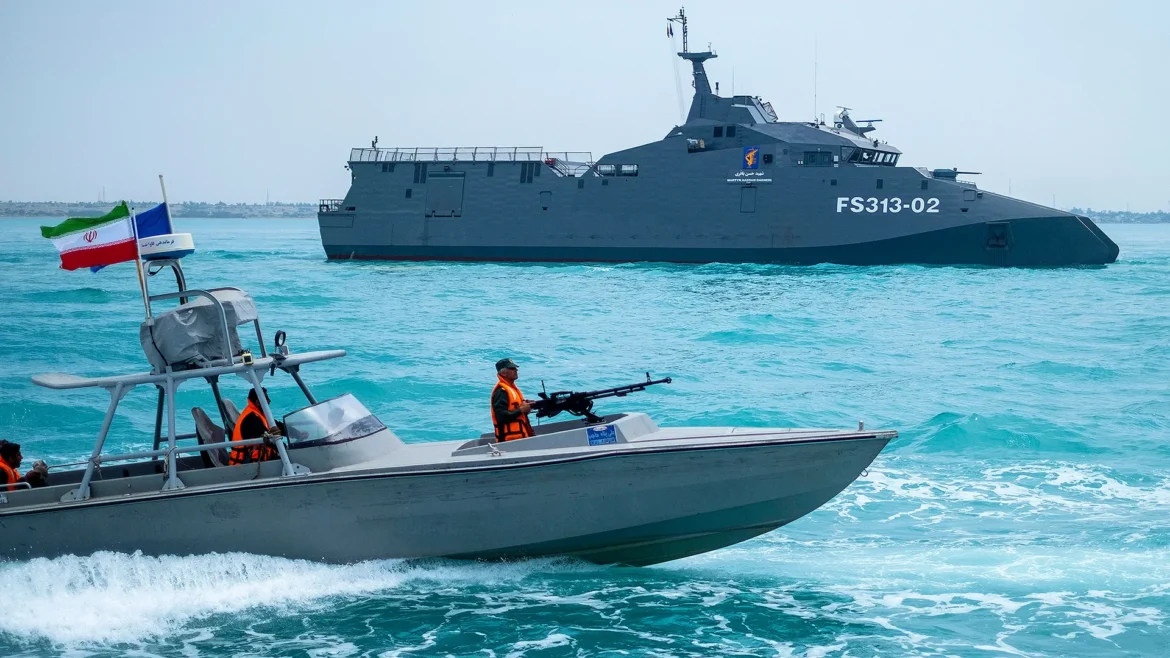
Global shipping has come under frequent attack in and around the strait since the US-Iran war began in late February, disrupting energy supplies and markets. The waterway, a narrow passage between Iran and Oman, carried roughly a fifth of the world’s oil before the war, along with a significant share of global LNG exports. Washington has since set up a protected route, which has allowed oil shipments to climb back towards pre-war levels despite continuing Iranian attacks.
The attack came as Iran’s foreign minister said mediators had agreed a plan to restore traffic through the strait within two days.
Abbas Araghchi told Al Jazeera on Sunday that Qatari and Pakistani mediators had worked on ways to make Iran’s original seven-day plan “more feasible and more widely accepted”. The result, he said, was a two-day sequence.
“On the first day, America will implement a set of measures, and on the second day the Hormuz strait will be reopened,” Araghchi said, adding that traffic would return to its previous state.
He cautioned that no final agreement had been reached and that progress depended on Washington addressing Iran’s questions. Qatari mediators met Iranian officials in Doha on Sunday for a third consecutive day.
Tehran has kept its grip on the strait since the war began, while the US maintains a counter-blockade of Iranian ports. An interim ceasefire in June collapsed and intermittent strikes resumed. Iran presented its proposal to reopen the waterway in mid-September and later confirmed it had received a US response.
Qatari mediators landed in Tehran on Friday. Vice President JD Vance had sent a letter to Iran’s security chief, Mohsen Rezaei, the highest-level US outreach to Tehran in several months.
“I read the letter,” Rezaei, who heads Iran’s supreme national security council, said in a video broadcast on state television. He said he had not yet replied, but called the changed tone “a good sign”. He insisted that Iran would maintain its blockade until its conditions were met, including the release of frozen assets.
Donald Trump said on Saturday that talks were “going fine”, but that Iran was “not very reliable”. He said the US had knocked out much of Tehran’s military but still had to “take care of” one or two targets. Trump has said the US will not strike before Tuesday’s midterm elections. He has not ruled out action afterwards.
Benjamin Netanyahu pressed Trump on a call on Saturday to resume strikes on Iran immediately after the vote, according to Axios, citing Israeli and US sources. Trump was said to favour giving negotiations more time. The White House and the Israeli prime minister’s office declined to comment. Secretary of State Marco Rubio said Mr Trump had not decided whether to order further strikes and preferred a diplomatic resolution. MS NOW reported on Friday, citing three senior Gulf officials, that the administration had been briefing Gulf allies to prepare for a short, intense round of strikes as soon as 4 November.
Iran’s supreme leader, Mojtaba Khamenei, warned the US and Israel on Saturday against a fresh offensive. He told senior commanders that any threat must be met with an “immediate, impactful and geographically unrestricted response”, according to a statement. He also ordered them to update Iran’s target list to cover “all types of tangible and intangible assets” belonging to what he called the “American-Zionist enemy”.
It was the first reported meeting between Mr Khamenei and the military leadership. He has not been seen in public since before he took over in March, after his father, Ayatollah Ali Khamenei, was killed in US-Israeli strikes.
Copyright © 2021 Independent Pakistan | All rights reserved