By Staff Reporter
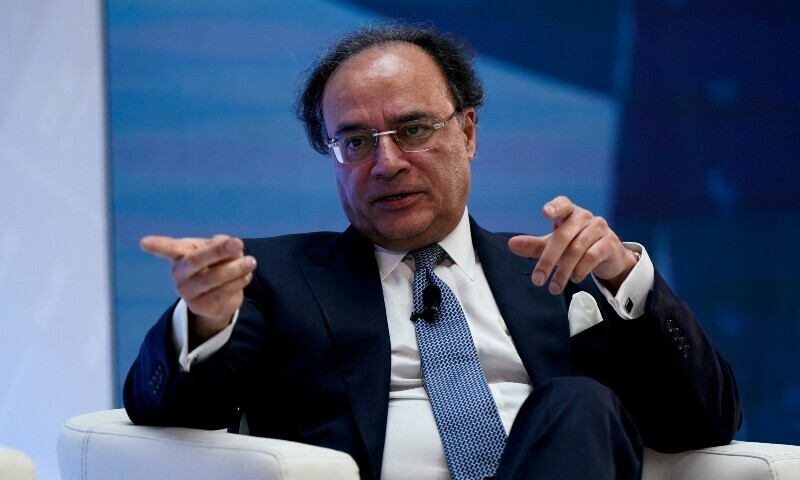
ISLAMABAD: Pakistan is exploring the tokenization of its existing Eurobonds, Finance Minister Muhammad Aurangzeb said on Monday, two months after the nation raised a record $3 billion from a dual-tranche international bond sale.
The government is in discussions on the proposal and wants Cabinet approval before it issues a request for proposals, Aurangzeb said in a virtual keynote at a dialogue on digital assets and banking organized by the Pakistan Banks’ Association with LUMS. The ministry is “looking forward to the Cabinet approval on this before we move ahead,” he said. Officials haven’t said which bonds would be covered or set a timeline.
Tokenization creates digital representations of assets, such as government bonds, on a blockchain, allowing ownership to be recorded and potentially transferred electronically. Aurangzeb said the aim is to test its use in managing sovereign debt, which could open new channels for digital transactions and investment.
He also pointed to remittances as a candidate for the technology. Pakistan received $41.6 billion in remittances in the last fiscal year, and first-quarter inflows suggest the total could top $44 billion this year, he said. “Therefore, having this as a use case makes a lot of sense from a tokenisation perspective,” he said.
The minister said digital assets should be judged by the economic benefits they deliver, and that Pakistan needs innovation that cuts the cost of doing business and draws more people into the formal economy. He listed the questions that should guide the debate: whether families can receive money from abroad more cheaply, whether businesses can be paid sooner, whether entrepreneurs can get financing on reasonable terms, and whether the country can attract productive investment without putting financial stability at risk.
Aurangzeb said Pakistan is shifting from macroeconomic stabilization toward sustainable growth, a transition that requires fiscal discipline, stronger exports and more private investment. Digital innovation should support those goals, with its value shown in results, he said.
He cited two overseas examples: JPMorgan’s use of deposit tokens to move money for institutional clients over blockchain networks, and the Bank for International Settlements’ Project Agora, which is studying how tokenized commercial bank deposits and central bank reserves could improve cross-border settlement.
Aurangzeb urged banks to take a leading part, saying their roles in safeguarding money, managing risk and serving customers will stay central as the technology develops. He asked lenders to build in-house expertise, work with regulators on activities allowed under their mandates and bring their boards along. He also said regulation should reflect differences among products. “A tokenised bank deposit remains a claim on a bank,” he said, while a stablecoin’s risk depends on its issuer, backing and redemption arrangements, and an unbacked cryptoasset carries different risks again.
Pakistan has built a legal framework for the sector in a short time. The Virtual Assets Act 2026, which took effect on March 5, makes the Pakistan Virtual Assets Regulatory Authority responsible for licensing and supervising virtual-asset service providers. The State Bank of Pakistan issued a circular on April 14 allowing regulated entities to open accounts for licensed providers, including segregated client-money accounts, replacing a prohibition. PVARA notified its licensing regulations and opened its licensing portal in August. Existing providers had until Sept. 5 to apply for a no-objection certificate or stop operating.
Aurangzeb credited PVARA’s chairman with moving the country from prohibition and regulatory ambiguity to supervised participation, and acknowledged the roles of the central bank and the Securities and Exchange Commission of Pakistan. He said the central bank’s route is conditional on due diligence and segregation of client funds, and that accounts for holders of no-objection certificates serve a narrower purpose while licensing formalities are completed. Limits remain on banks investing in, trading or holding virtual assets with their own money or customer deposits, he said.
“The task now is to make that framework effective in practice,” he said, calling for capable supervision and clear coordination among institutions.
The finance minister also warned on cybersecurity. “We are under attack 24/7 by state and non-state actors,” he said, adding there is “no room” for complacency. He urged banks and the central bank to follow through on measures to address emerging risks as finance goes digital.
Other speakers included PVARA Chairman Bilal Bin Saqib, State Bank Deputy Governor Saleem Ullah, SEC Commissioner Imtiaz Haider and JPMorgan’s Umar Farooq. Haider called for a clear, value-driven approach to tokenization, urging industry and regulators to ask who benefits and where the regulatory gaps are.
Aurangzeb said Pakistan has taken part in international discussions on blockchain and tokenization, including a dialogue co-convened with the United Nations Office for Digital and Emerging Technologies in New York in late September. He said Pakistan’s coming chairmanship of the G-24 would give it a chance to bring developing-economy views into the debate. He closed by asking banks and other stakeholders for practical recommendations.
The idea isn’t new. In early September, Aurangzeb said the finance ministry was exploring tokenizing some existing Eurobond debt, citing Hong Kong’s experience with digital debt instruments, and was working on a rupee-denominated, dollar-settled bond. He said then that heavy reliance on banks for government borrowing was not sustainable, and that Pakistan needed deeper debt markets and a broader investor base. Monday’s remarks add the Cabinet and RFP steps.
The government’s earlier tokenization effort was with Binance. In December 2025 it signed a memorandum of understanding with the exchange to explore tokenizing up to $2 billion of sovereign bonds, Treasury bills and commodity reserves. The government described that agreement as an assessment phase, not a commitment to deploy tokenized sovereign assets. PVARA and the State Bank are also studying tokenized sovereign notes that could widen access for overseas Pakistanis, speed settlement and make securities ownership more transparent.
The Eurobond sale in early September, on Sept. 3, was Pakistan’s largest single international bond transaction and drew almost $6 billion in orders. It comprised $1.75 billion of 5½-year notes at a 7.50% coupon and $1.25 billion of 10-year notes at 7.90%. The sale followed an April three-year Eurobond and the repayment of a $1.4 billion Eurobond that matured that month. Aurangzeb has said Pakistan received three credit-rating upgrades since April last year.
Eurobonds are government debt securities issued in foreign currencies, usually dollars. Pakistan has used them to meet external financing needs and build foreign-exchange reserves.
Copyright © 2021 Independent Pakistan | All rights reserved