By Staff Reporter
ISLAMABAD: Pakistan’s external debt almost doubled over the past decade to $135.1 billion, the World Bank said, leaving a country that narrowly avoided default in 2023 dependent on IMF disbursements and Chinese rollovers to stay current.
The stock rose from $68.7 billion in 2015, according to the lender’s International Debt Report 2026. Public and publicly guaranteed obligations account for $107.1 billion of the total, with private non-guaranteed debt at $17.6 billion and short-term borrowing at $10.5 billion. A year earlier, the World Bank put Pakistan’s total external debt at $129.7 billion for 2024, including IMF credit.
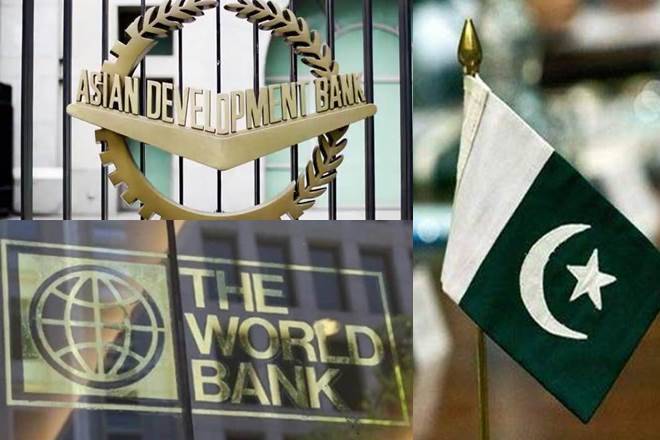
Multilateral lenders hold the largest share of the public and publicly guaranteed debt, at $56.8 billion. Bilateral creditors are owed $42.4 billion and private creditors $7.8 billion. China is Pakistan’s biggest single creditor with $22.4 billion outstanding, followed by the World Bank at $19.2 billion and the Asian Development Bank at $16.8 billion.
Loans from official creditors carry an average maturity of 16 years, a four-year grace period and an average interest rate of 3.6%. Private credit is far more expensive, at an average 8.6%, with a three-year repayment period and a one-year grace period.
China extended the maturities on $2 billion in loans to Pakistan, and the IMF disbursed $2.3 billion under its Extended Fund Facility and Resilience and Sustainability Facility arrangements.
On Oct. 7, IMF staff reached an agreement with Pakistan on the fourth review of the Extended Fund Facility and the third review of the Resilience and Sustainability Facility, which would release about $1.2 billion once the Executive Board approves it. That is roughly $1.0 billion under the former and $210 million under the latter, following talks in Karachi and Islamabad that ran from Sept. 23 to Oct. 7. The Fund also said Islamabad should keep to a FY27 budget built around an underlying primary surplus of 2% of GDP. Local media reported that Pakistan agreed to promptly phase out its fuel subsidy scheme and to improve governance of state-owned companies.
Pakistan has also been testing capital markets. It returned to the dollar bond market in April, its first Eurobond sale since 2021, and in May completed its first yuan-denominated Panda bond in China’s onshore market, raising the equivalent of $250 million with a three-year tenor. The finance minister’s adviser said demand for that first tranche alone exceeded the planned program size of 7.2 billion yuan.
Government data show a narrower measure growing more slowly. The Economic Survey put public external debt at $92.2 billion at the end of March 2026, up $364 million over nine months, of which Eurobonds and international sukuk made up $6.3 billion. The State Bank of Pakistan’s broader tally of external debt and liabilities stood at $137.55 billion at the end of March. The differences reflect what each measure includes.
The central bank’s reserves reached $18.47 billion in the week ended July 3, with total liquid reserves at $23.99 billion.
Regional and global picture
The broader report points to rising pressure on developing economies. In the Middle East, North Africa, Afghanistan and Pakistan region, debt-service and interest ratios improved, but external debt as a share of gross national income rose to 29.4% from 26.7%. That was the largest one-year increase of any region and signals continued accumulation.
Across low- and middle-income countries, external debt rose 5.5% in 2025 to a record $9.4 trillion, the fastest pace in four years, as bond issuance rebounded, the dollar weakened and investors returned. The dollar’s decline accounted for 28.2% of the increase in public and publicly guaranteed external debt.
Debt owed to them rose 5.2% to $5 trillion, compared with a 0.6% gain in 2024. Bondholders’ claims climbed 5.7% to $2.4 trillion, and those of commercial banks and other private lenders rose 4.7% to $2.7 trillion. Gross national income in the group grew 5.1%.
Countries eligible for International Development Association financing paid an average 8.2% on new commitments, the highest since the late 1980s. For that group, the gap between what official and private creditors charge widened to 5.5 percentage points in 2025 from 3.4 points in 2016. Borrowers from the International Bank for Reconstruction and Development fared better, with an average rate of 5.5%, down from 5.8%.
Debt service payments rose for a fifth straight year, up 1.9% to $1.4 trillion, with bondholders receiving 13.7% more at $363.1 billion. From 2022 to 2025, low- and middle-income countries paid about $436.1 billion more in debt service than they received in new financing. That reversed in 2025, when long-term debt flows swung to a net inflow of $45.4 billion from a net outflow of $118.4 billion in 2024.
The IMF Executive Board’s decision on Pakistan’s latest review is the next step.
Copyright © 2021 Independent Pakistan | All rights reserved